How Long to Hold Mounjaro Before Surgery
Surgery planned and wondering about your Mounjaro? UK guidance on when to stop, why aspiration risk matters, and when you can restart safely.
Written by:

Medically reviewed by Chris Armstrong, MPharm
Key Takeaways
Stop Mounjaro at least 7 days before general anaesthetic or sedation surgery. Some hospitals extend this to 14 days. Local anaesthetic-only procedures usually require no pause. Your anaesthetist's written instruction takes priority. Restart only once you are eating normally.
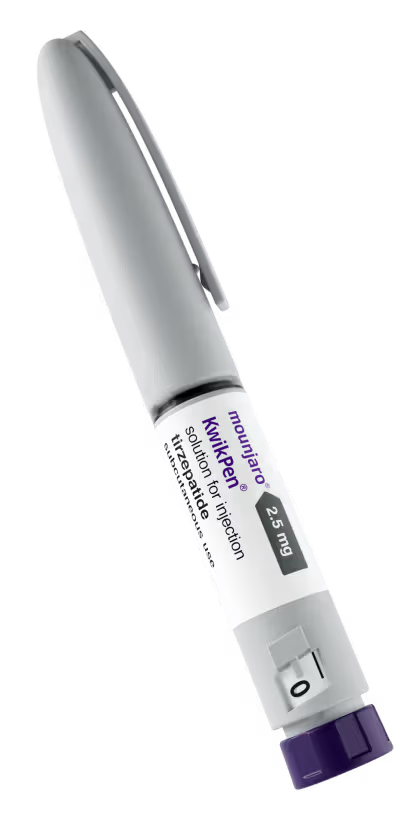
For most planned surgery under general anaesthetic or sedation, UK anaesthetic guidance recommends stopping Mounjaro (tirzepatide) at least 7 days before the procedure. Some hospitals extend this to 14 days, particularly for higher doses or patients with gut symptoms. If your procedure uses only local anaesthetic, with no sedation and no airway management, a pause is not usually required. Your anaesthetist has the final word, and their written instruction takes priority over any general guidance.
Why Mounjaro raises an anaesthetic concern#
Mounjaro slows gastric emptying. That is partly how it reduces appetite. Under anaesthesia, your airway reflexes are suppressed. If food or liquid remains in your stomach, it can be regurgitated and inhaled into the lungs. This is called pulmonary aspiration and it is a serious complication.
Standard overnight fasting does not fully solve this problem when you are taking Mounjaro, because the drug can keep the stomach slower than usual even after a long fast. That is why surgical teams ask you to stop the medication in advance.
Reported practice from NHS anaesthetic units points to 7 days as a common minimum for elective surgery under general anaesthetic. Some units use 14 days, particularly for patients on higher doses. The difference reflects clinician judgement rather than a single agreed protocol, because UK guidance recommends individualised risk assessment rather than a rigid rule.
Procedure type matters#
Not every procedure carries the same aspiration risk. The table below summarises current practice based on pharmacokinetic principles and clinician-reported experience across NHS and private settings. It is not a substitute for your anaesthetist's instruction, which always takes precedence.
| Procedure type | Airway risk | Typical UK practice |
|---|---|---|
| Local anaesthetic only (e.g. skin lesion, dental injection) | None | No pause required |
| Sedation for endoscopy or colonoscopy | Moderate | 7 days minimum, confirm with team |
| Day-case surgery under general anaesthetic | High | 7 days minimum |
| Major elective surgery | High | 7-14 days, dose-dependent |
| Emergency surgery | Variable | Anaesthetist manages risk; inform team immediately |
Note: cataract surgery in the NHS is almost always performed under topical local anaesthetic drops, with no sedation. It does not usually require a Mounjaro pause, but confirm with your surgical team if you have been offered sedation as part of your procedure.
Does your dose change the timing?#
Tirzepatide has a half-life of approximately 5 days. UK guidance does not formally stratify the hold period by dose; the 7-to-14-day range used in practice reflects clinical caution and individualised risk assessment rather than a dose-specific published rule.
In general, clinicians tend to apply longer pauses for patients on higher doses (10mg, 12.5mg, 15mg) or those who have noticeable gut symptoms such as reflux, nausea, or slow digestion. If you are still on the 2.5mg or 5mg starting doses and have no gastrointestinal symptoms, a 7-day pause is more commonly applied. Discuss your specific dose with your anaesthetist at pre-assessment.
What to tell your surgical team#
Tell your surgical team:
- That you take Mounjaro (tirzepatide)
- Your current dose
- How long you have been on that dose
- Any gut symptoms, such as reflux, nausea, or slow digestion
- Whether it is prescribed for weight management or type 2 diabetes
NHS pre-assessment forms now often include a GLP-1 medication field. If you are using a private hospital or travelling abroad for surgery, you may not be asked directly. Volunteer this information yourself. A UK community pharmacist can help you prepare what to say if you cannot reach your GP before your pre-op appointment.
Blood sugar during the pause#
If you take Mounjaro for type 2 diabetes, stopping it temporarily can cause blood sugar to rise. Check your glucose more frequently during the pause. Contact your GP or diabetes nurse before stopping, so they can advise on whether any short-term adjustment is needed. Follow your sick-day rules and drink plenty of water. Signs of raised blood sugar include increased thirst, frequent urination, and tiredness. If your glucose rises significantly, call your GP or diabetes team.
If you take Mounjaro for weight management only and do not have diabetes, blood sugar is unlikely to be a concern during a short pause. Appetite may return more strongly, but a pause of 1 to 2 weeks does not cause meaningful weight regain.
Got questions? Speak to a pharmacist on WhatsApp now
Prefer to browse first? View treatments
If you miss a dose before surgery#
The Mounjaro UK Summary of Product Characteristics states that a missed dose can be taken if more than 4 days remain until your next scheduled dose. If fewer than 4 days remain until your next scheduled injection, skip that dose and continue on your usual schedule.
For surgical planning, this means: if you realise late that you should have stopped earlier, do not take the missed dose. Contact your surgical team and anaesthetist to confirm whether your procedure can go ahead safely or needs rescheduling.
For emergency surgery, tell the anaesthetic team immediately that you are on Mounjaro and when your last dose was. They will manage the aspiration risk directly, for example by using rapid sequence induction.
Restarting after surgery#
Most people can restart Mounjaro once they are eating normally again and have no ongoing nausea or vomiting. The appropriate time to restart varies depending on the procedure and your recovery; follow your anaesthetist's or surgeon's written guidance on timing. Restart at the dose you were on before the pause.
If you have had upper gastrointestinal surgery or bariatric surgery (such as gastric bypass or sleeve gastrectomy), do not restart Mounjaro without first confirming with your prescriber. Your gut anatomy and absorption will have changed, and a dose review is needed before resuming.
For more on managing Mounjaro week to week, including what to do with missed doses in other situations, the guide on Mounjaro weight loss results and timeline covers the treatment arc in more detail.
If you are planning elective surgery and want to speak to a clinician about your Mounjaro treatment beforehand, you can start a free weight loss consultation with Totiva.
Medical Information: This article is for informational purposes only and does not constitute medical advice. Always consult a qualified healthcare professional before starting, stopping, or changing any treatment.