Can Mounjaro Cause Heavy Bleeding or Body Aches?
Mounjaro doesn't directly cause bleeding, but hormonal shifts from rapid weight loss can affect your periods and cause muscle aches. Here's what to expect.
Written and medically reviewed by:

Key Takeaways
Mounjaro doesn't directly cause bleeding, but rapid weight loss can temporarily disrupt periods and hormone levels. Body aches are usually linked to reduced nutrient intake. Most symptoms settle within a few months.
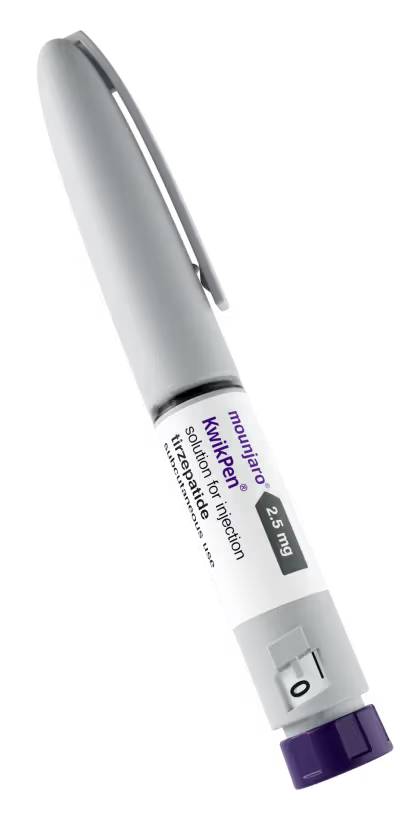
Mounjaro doesn't directly cause bleeding. That's the short answer. But if you've noticed heavier periods, unusual spotting, muscle aches, or even a bit of bruising around your injection site since starting tirzepatide, you're not imagining things. These symptoms have real, explainable causes, and most of them are linked to what Mounjaro does rather than a direct pharmacological effect on bleeding or pain pathways.
This article covers the three types of bleeding and pain that people most commonly ask about: menstrual changes, gastrointestinal symptoms, and body aches. Understanding why they happen, and knowing when to take action, makes the whole experience a lot less worrying.
Mounjaro and your menstrual cycle#
Menstrual changes are probably the most frequently reported and least officially documented side effect of Mounjaro (tirzepatide). They're not listed in the UK Summary of Product Characteristics (SmPC), but women taking the medication regularly report them: heavier periods, spotting between cycles, or cycles that shift in timing.
The reason this happens isn't the drug acting directly on your uterus. It's about fat and hormones.
Body fat is metabolically active. It produces oestrogen, and when you lose fat rapidly, circulating oestrogen levels can fluctuate quite significantly. Your hypothalamus, which regulates the hormonal cascade behind your menstrual cycle, is sensitive to these shifts. Rapid calorie restriction and weight loss are well-established causes of menstrual irregularity, even without medication, because they can disrupt the regular release of the hormones that drive ovulation.
Mounjaro produces some of the fastest early weight loss of any currently available treatment. In the SURMOUNT-1 trial, participants lost around 22.5% of their body weight on average at the highest dose. That kind of change, happening over weeks rather than years, creates real hormonal turbulence for some women, particularly in the first three to six months.
What kinds of changes do women report?#
The most commonly reported pattern is heavier or more painful periods in the early months of treatment. Some women also describe more cramping than usual, spotting between periods, or cycles becoming irregular in length.
For most, these changes settle as the rate of weight loss slows and the body adjusts to a new hormonal equilibrium. After six months or so, many women actually find their cycles become more regular than before, particularly if they were previously overweight or had irregular cycles linked to excess oestrogen or insulin resistance.
What about women with PCOS?#
Polycystic ovary syndrome is partly driven by insulin resistance, which disrupts the hormones controlling ovulation. Tirzepatide's mechanism of action includes improving insulin sensitivity, which means it can actually be beneficial for cycle regularity in women with PCOS. Some women with PCOS report more regular periods after a few months on Mounjaro, rather than disruption.
That said, the initial hormonal adjustment period can still produce some changes even in this group, so it's worth tracking your cycle when you start treatment.
A note on contraception#
This is worth knowing. Mounjaro slows gastric emptying, which can reduce how well your body absorbs oral contraceptive pills. If you're taking the combined or progestogen-only pill, you should use additional barrier contraception (such as condoms) for four weeks after starting Mounjaro or after each dose increase. This is especially important because improved fertility following weight loss can catch people off guard. If you're unsure, speak to your prescribing pharmacist or GP.
When to see your GP about menstrual changes#
Most menstrual changes on Mounjaro are temporary and manageable. But some symptoms warrant prompt medical attention:
- Periods that stop entirely for more than three months
- Bleeding that becomes so heavy you're soaking through a pad or tampon every hour for several hours
- Severe pelvic pain that's new or worsening
- Spotting that continues to worsen after six months on the medication
- Any bleeding if you're postmenopausal (this should always be investigated regardless of medication)
NICE guidance on heavy menstrual bleeding (NG88) is a useful reference point: soaking through protection hourly, or bleeding lasting more than seven days consistently, is considered clinically significant and warrants investigation. Mounjaro doesn't cause these issues on its own, but rapid hormonal change can unmask underlying conditions, so don't dismiss symptoms that feel genuinely out of the ordinary.
If you experience unexpected symptoms, you can also report them to the MHRA via the Yellow Card scheme. It's a simple online process and helps build the evidence base for newer medications like tirzepatide.
Body aches and muscle pain on Mounjaro#
Body aches are a less talked about but fairly common complaint among people starting Mounjaro. The clinical trials didn't highlight musculoskeletal pain as a primary adverse effect, but that doesn't mean there's no connection.
The most likely explanation comes down to nutrition and electrolytes rather than tirzepatide acting directly on muscle tissue.
Why Mounjaro can leave you feeling achy#
Mounjaro is very effective at suppressing appetite. For most people, that's the point. But eating significantly less means you're potentially taking in less of several nutrients that your muscles and joints depend on:
Magnesium is probably the biggest culprit. Magnesium deficiency is extremely common in the general population, and it becomes more likely when food intake drops. Low magnesium manifests as muscle cramps, spasms, a heaviness in the legs at night, or a general full-body stiffness. If your aches feel more like cramps or night-time restlessness rather than soreness, magnesium is worth looking into.
Vitamin D and calcium work together for bone and muscle health. People who are overweight are frequently vitamin D deficient to begin with, so as appetite decreases on Mounjaro, intake can drop further. Joint aches and generalised fatigue are typical symptoms.
Vitamin B12 is often low in people with insulin resistance or type 2 diabetes, and deficiency causes nerve-related symptoms including pain, tingling, and weakness. If you're taking metformin alongside Mounjaro, the risk is higher because metformin reduces B12 absorption.
Electrolyte loss is also a factor in the early weeks. Rapid weight loss, especially in the first month, includes water weight. Water carries electrolytes, and losing them quickly can cause muscle cramping and achiness.
What about injection site reactions?#
If your pain is localised rather than widespread, consider where you're injecting. Tenderness, mild swelling, bruising, or a small lump at the injection site are all common and usually resolve within a few days. Rotating your injection site each week (between abdomen, thigh, and upper arm) and avoiding the exact same spot twice in a row can make a real difference here.
Managing body aches on Mounjaro#
The practical steps that help most:
- Review your diet quality. Even if your overall calories have dropped, prioritising nutrient-dense foods (leafy greens, legumes, dairy or fortified alternatives, oily fish) helps maintain your micronutrient intake.
- Adequate protein. Aim for at least 1.2–1.6g of protein per kilogram of body weight. This helps preserve muscle mass during weight loss and reduces the risk of sarcopenic aches as you lose weight.
- Consider targeted supplementation. A good-quality magnesium supplement (glycinate or malate forms absorb well) and vitamin D are reasonable to discuss with your pharmacist. B12 is worth checking via a blood test if you're taking metformin.
- Keep moving. Gentle exercise, whether that's walking, swimming, or some light stretching, helps maintain circulation and reduces stiffness. Rest makes it worse over time.
- Stay hydrated. Mounjaro can reduce your thirst alongside your appetite. Consciously drinking enough water supports both muscle function and electrolyte balance.
- Hot and cold therapy. For localised soreness, alternating warm and cold packs can ease muscle tension.
If body aches are severe, come on suddenly, or are accompanied by dark urine and significant weakness, see a doctor promptly. Rare but serious muscle conditions like rhabdomyolysis (muscle breakdown) can occur with medications, and while they're not specifically associated with tirzepatide, unexplained severe muscle pain should always be assessed.
Gastrointestinal symptoms and bleeding risk#
The question of whether Mounjaro causes gastrointestinal bleeding comes up, partly because the GI side effects of the medication can be uncomfortable enough that people worry something more serious is going on.
The official position, based on the UK SmPC and clinical trial data, is that bleeding is not a recognised adverse reaction to tirzepatide. However, the GI side effects (nausea, vomiting, diarrhoea, constipation, acid reflux) are real and common, particularly in the early weeks or after a dose increase.
Prolonged vomiting can, in some cases, cause minor irritation or small tears in the oesophageal lining (a condition called Mallory-Weiss syndrome), which can result in small amounts of blood in vomit. This isn't a direct drug effect but a mechanical consequence of severe vomiting. Similarly, chronic acid reflux can irritate the oesophagus and occasionally cause minor bleeding.
If you notice blood in your vomit or stool, that warrants same-day medical attention regardless of what medication you're taking. Don't wait and see.
It's also worth noting that if you take NSAIDs (such as ibuprofen) regularly for aches and pains while on Mounjaro, you're adding a known GI bleeding risk. NSAIDs irritate the stomach lining. If you're finding that muscle or joint pain requires regular pain relief, speak to your GP or pharmacist about safer alternatives.
A note on Mounjaro's UK licensing status#
Mounjaro is currently licensed in the UK by the MHRA for the treatment of type 2 diabetes in adults. Its use for weight management in people without diabetes is technically off-label in many private prescribing settings, though NICE approved tirzepatide for weight management (under the brand name Mounjaro) in England in early 2024 for use within specialist weight management services.
This is worth knowing if you're navigating the difference between NHS and private access. A pharmacist-led service can help you understand your options.
If you're considering Mounjaro or exploring weight loss treatments, Totiva's weight loss service offers pharmacist-led consultations with transparent pricing and no subscription required. The consultation is free, and you only pay for treatment if it's suitable for you.
When to escalate any symptom#
A useful rule of thumb: if a symptom is new, worsening rather than stable, or severe enough to affect your daily life, it's worth getting it checked rather than waiting it out.
Specifically seek medical help promptly for:
- Any postmenopausal bleeding
- Blood in vomit or black/tarry stools
- Periods so heavy you can't manage them with standard protection
- Severe or sudden-onset muscle pain, especially with weakness or dark urine
- Abdominal pain that is severe or persistent (which could indicate pancreatitis, a rare but serious Mounjaro risk)
For milder symptoms, tracking them over a few weeks gives you useful information. If they're improving, that's reassuring. If they're plateauing or worsening, they're worth discussing with whoever is managing your Mounjaro prescription.
Got questions? Speak to a pharmacist on WhatsApp now
Prefer to browse first? View treatments
Starting or reviewing your treatment#
Side effects are a normal part of adjusting to any medication, and Mounjaro is no exception. Most of what people experience, whether that's menstrual changes, muscle aches, or GI discomfort, follows predictable patterns and tends to improve over time. Understanding why they happen makes them considerably easier to manage.
If you're still in the process of deciding whether Mounjaro is right for you, or you'd like a pharmacist to review your current symptoms, starting a consultation with Totiva takes a few minutes and gives you access to a clinical review without leaving your home. There's no pressure, no subscription, and no cost until a treatment is approved and you decide to go ahead.
Medical Information: This article is for informational purposes only and does not constitute medical advice. Always consult a qualified healthcare professional before starting, stopping, or changing any treatment.