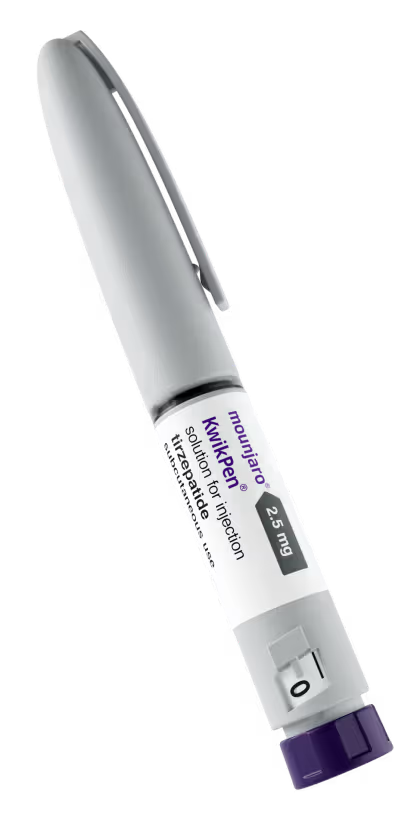
Does Mounjaro Affect Fertility and Your Menstrual Cycle?
Mounjaro doesn't directly disrupt fertility or periods, but the weight loss it causes can shift your hormones significantly. Here's what to expect.
Written by:

Medically reviewed by Chris Armstrong, MPharm
Key Takeaways
Mounjaro doesn't directly affect fertility, but the weight loss it causes can shift hormones and change your cycle. Stop it at least one month before trying to conceive. Oral contraceptives may be less reliable during treatment, so use a backup method.
Mounjaro doesn't directly cause fertility problems or menstrual changes. There's no clinical evidence that tirzepatide itself interferes with ovulation, sperm production, or reproductive hormones. That said, the significant weight loss it produces can absolutely affect your cycle and your chances of conceiving, and not always in the ways you might expect.
This guide covers what's actually happening hormonally when you take Mounjaro, what cycle changes are normal, when to be concerned, and what you need to think about if you're trying to conceive or want to avoid pregnancy.
How weight loss affects your menstrual cycle#
Your menstrual cycle is exquisitely sensitive to changes in body composition and energy availability. When weight shifts quickly, your hormones respond.
Fat cells don't just store energy. They actively produce oestrogen. If you're carrying excess weight, those extra fat cells can produce enough oestrogen to disrupt the normal hormonal signalling between your brain and ovaries, sometimes tricking your body into suppressing ovulation. This is one reason irregular periods and absent cycles are more common in women with obesity.
As Mounjaro drives weight loss, that excess oestrogen production decreases. For some women, this actually restores a more regular cycle. For others, particularly if weight loss is rapid, the opposite can happen: the hypothalamus (the part of your brain that regulates reproductive hormones) can interpret rapid calorie restriction as a threat and reduce sex hormone production. This is called functional hypothalamic amenorrhea, and it can cause periods to become irregular or stop temporarily.
Women typically need at least 17% body fat to maintain a regular cycle. If weight loss is very fast or accompanied by significant calorie restriction, you can dip below the threshold your body needs to sustain regular ovulation.
What period changes are commonly reported on Mounjaro#
Because the hormonal effects are indirect and vary between individuals, the pattern of changes is quite unpredictable. Some women report heavier periods when they start losing weight, as oestrogen levels shift. Others notice lighter periods, spotting between cycles, or cycles that temporarily disappear.
Heavier or more intense periods#
This is more common in the early weeks of treatment. As oestrogen levels fluctuate during weight loss, the uterine lining can be affected, leading to heavier or more crampy periods than usual. For most women this settles within two to three cycles.
Spotting between periods#
Intermenstrual spotting can occur during any hormonal transition, and starting Mounjaro is no different. If spotting is light and brief, it's usually not a concern. If it's heavy or prolonged, speak to your GP to rule out other causes.
Periods stopping temporarily#
If you lose weight rapidly in the first few months of treatment, your periods may become irregular or pause. This is generally temporary. Research suggests most cycle changes resolve within one to three months as your body adjusts to its new weight and the rate of loss stabilises.
Improvements for women with PCOS#
Polycystic ovary syndrome (PCOS) is partly driven by insulin resistance and elevated androgens. Because Mounjaro improves insulin sensitivity significantly, many women with PCOS notice genuine improvements in their cycle regularity, reduced androgen-related symptoms, and more predictable ovulation. For this group, Mounjaro's effects on the menstrual cycle are often a welcome change rather than a concern.

Mounjaro and fertility in women#
The connection between Mounjaro and fertility is indirect but meaningful, particularly for women whose weight has been affecting their reproductive health.
Excess body weight is associated with anovulation (cycles where you don't actually ovulate), irregular periods, and reduced IVF success rates. NHS fertility clinics in England use BMI thresholds to determine eligibility for funded treatment, and many women are unable to access IVF on the NHS because their BMI exceeds local commissioning criteria. For these women, achieving meaningful weight loss with Mounjaro's help could genuinely open the door to fertility treatment.
There's also the PCOS angle. Women with PCOS who are also insulin resistant often find that improving insulin sensitivity restores more reliable ovulation. This is the mechanism behind the so-called "Ozempic baby" phenomenon that's been widely reported, and the same applies to Mounjaro (tirzepatide) given its potent effects on insulin regulation.
Improved weight and metabolic health also benefit pregnancy outcomes more broadly. Higher BMI is associated with increased risk of gestational diabetes, pre-eclampsia, and complications during labour. Losing weight before conception, rather than during pregnancy, reduces these risks.
Is Mounjaro safe if you're trying to conceive?#
Currently, no. The official guidance from the MHRA and the Mounjaro Summary of Product Characteristics (SmPC) is clear: Mounjaro should be stopped before attempting to conceive. The recommendation is to stop at least one month before trying to get pregnant, as tirzepatide has a relatively long half-life and takes time to clear from your system.
Animal studies have shown adverse effects on embryo development at high doses, and there are no adequate human studies on tirzepatide use during pregnancy. Until safety data exists, the precautionary approach is to discontinue treatment before conception.
If you're actively trying to conceive, speak to your prescriber about transitioning off Mounjaro safely. The weight loss and metabolic improvements you've achieved should persist for a meaningful period after stopping.
What if you accidentally conceive while on Mounjaro?#
This is more common than many people realise, and it's largely because Mounjaro's effects on weight loss can restore ovulation in women who weren't ovulating regularly before. If your cycles were irregular, you may not have expected to be fertile.
If you discover you're pregnant while taking Mounjaro, stop the medication immediately and contact your GP or midwife. You should also contact the UK Teratology Information Service (UKTIS), which provides evidence-based guidance on medication exposure during pregnancy. Don't panic: a brief exposure in early pregnancy before you knew you were pregnant is a different situation to continued use throughout, and your healthcare team can advise you based on your specific circumstances.
Mounjaro and contraception: an important interaction#
This is genuinely important and not discussed enough. Mounjaro slows gastric emptying, which means it affects how quickly oral medications are absorbed. When you start Mounjaro, or after each dose increase, the absorption of oral contraceptive pills can be altered, particularly in the early weeks of each new dose.
The Mounjaro SmPC advises that women taking oral contraceptives should add a barrier method (such as condoms) for at least four weeks after starting Mounjaro and for four weeks after each dose increase. This reduces the risk of unintended pregnancy during the dose adjustment period.
If you'd prefer to avoid this complexity, non-oral contraceptives (the implant, intrauterine devices, the injection, or patches) are not affected by Mounjaro's gastric effects and are simpler to manage alongside treatment.
Speak to your GP or a pharmacist if you're unsure how your contraception is affected. This is particularly important given that, as noted above, Mounjaro can restore ovulation in women who may not have expected to be fertile.
Does Mounjaro affect fertility in men?#
This is an area where the evidence is genuinely limited, and competitors' content has largely glossed over it. The honest answer is: we don't have specific tirzepatide data on male reproductive outcomes.
What we do know is that weight loss in men generally improves reproductive hormones. Obesity in men is associated with lower testosterone, higher oestrogen (again, fat cells producing oestrogen), and reduced sperm quality. Studies of weight loss interventions in men show improvements in testosterone levels and sperm parameters following significant weight reduction.
There's also research on GLP-1 receptor agonists more broadly suggesting potential beneficial effects on male reproductive hormones, though the evidence base is still developing and the studies are small.
If you're a man taking Mounjaro and planning to try for a baby, there's no current clinical guidance recommending you stop the medication before attempting conception. However, this is worth discussing with your GP, particularly if you have any concerns about libido or sexual function during treatment.
Got questions? Speak to a pharmacist on WhatsApp now
Prefer to browse first? View treatments
When to speak to a doctor about cycle changes#
Most menstrual changes on Mounjaro are temporary and resolve as your weight stabilises. However, certain symptoms warrant a GP appointment:
- Periods that stop entirely for more than three months
- Unusually heavy bleeding (soaking a pad or tampon every hour for several hours)
- Severe pelvic pain
- Spotting that persists beyond a few weeks
- Any cycle change that concerns you, particularly if you're trying to conceive
Don't assume all cycle changes are due to Mounjaro. Other causes (thyroid conditions, endometriosis, fibroids, perimenopause) can present similarly and deserve investigation.
Practical steps if you're planning a pregnancy#
If you're taking Mounjaro and thinking about trying for a baby in the next year or so, here's a sensible framework:
- Talk to your prescriber early. Give yourself time to plan the transition off Mounjaro. The current guidance recommends stopping at least one month before trying to conceive.
- Sort your contraception in the meantime. Use reliable contraception while you're still on Mounjaro. If you're on the pill, use a backup method or switch to a non-oral option.
- Track your cycle. As your weight changes, your cycle may shift. Using a period tracking app or ovulation tests can help you understand your own pattern and identify when ovulation is resuming.
- Think about pre-conception health. Start folic acid (400mcg daily) at least one month before you start trying. Your GP can advise on any other pre-conception checks relevant to your situation.
- If you have PCOS, discuss with your GP whether the improvements you've seen on Mounjaro make your fertility picture clearer, and what additional support (such as referral to a gynaecologist or fertility specialist) might be appropriate.
If you're taking Mounjaro through Totiva and have questions about how to plan a transition ahead of trying for a baby, our pharmacist team can help you understand your options. You can explore our weight loss treatments or reach out through your account for support.
The bigger picture#
Mounjaro is a powerful medication, and the weight loss it produces has real reproductive consequences, mostly positive for people whose weight has been affecting their hormones and fertility, but requiring careful planning for those who want to conceive.
It doesn't directly damage fertility, disrupt ovulation, or harm sperm. But it does change your hormonal environment substantially, and that warrants thoughtful management, not alarm.
If you're considering starting Mounjaro and have questions about how it fits with your reproductive plans, a pharmacist-led consultation is a good starting point. Totiva offers free online consultations for weight loss treatment, reviewed by UK clinicians, with no subscription required. You can start a consultation here and discuss your specific situation before committing to treatment.
Medical Information: This article is for informational purposes only and does not constitute medical advice. Always consult a qualified healthcare professional before starting, stopping, or changing any treatment.