Does Coffee Cause Hair Loss?
Worried your daily coffee is thinning your hair? Current evidence says moderate consumption is not a recognised cause of hair loss. Here's what actually is.
Written and medically reviewed by:

Key Takeaways
Drinking coffee does not cause hair loss. No NHS, NICE or MHRA guidance lists caffeine as a hair loss trigger. Caffeine shampoos are cosmetics with limited evidence. Pattern baldness, iron deficiency, and thyroid issues are far more likely causes.
No, drinking coffee does not cause hair loss. Neither the NHS, NICE, nor the MHRA list caffeine as a recognised trigger for alopecia, and there is no good clinical evidence that your morning cup is thinning your hair.
Where the worry comes from#
Some concern comes from a theoretical chain of reasoning involving caffeine, cortisol, and DHT (dihydrotestosterone), the hormone that shrinks hair follicles in people with androgenetic alopecia (pattern hair loss). However, any such chain would only be relevant at doses well above normal dietary levels, and the mechanistic link between cortisol and DHT in humans has not been established in NHS, NICE, or clinical guidance. For most people drinking 2 to 4 cups a day, there is no meaningful hormonal effect on the scalp.
The UK Food Standards Agency (FSA) advises staying below 400 mg of caffeine daily for healthy adults. That is roughly 4 medium-strength coffees. The NHS also publishes guidance on safe caffeine intake, and staying within this range is considered safe for general health. No good evidence suggests it worsens hair loss.
What about caffeine shampoos?#
This is where it gets interesting. Some in vitro studies (experiments on isolated hair follicle cells, not in living people) have found that caffeine applied directly to follicles may help extend the anagen phase, the active growth stage of the hair cycle. These are lab findings, not clinical proof, and they cannot be extrapolated to drinking coffee.
Topical caffeine products like Alpecin and Plantur 39 are popular in the UK. But they are classified as cosmetics by the MHRA, not licensed medicines. They are not recommended by NICE or the NHS for treating hair loss. Any effect is likely modest at best, and the in vitro data does not translate cleanly to real-world scalp conditions.
Drinking coffee and applying caffeine to your scalp involve completely different mechanisms. One does not substitute for the other.
What actually causes hair loss#
If you are noticing thinning or shedding, coffee is almost certainly not the reason. The most common causes in the UK are:
- Androgenetic alopecia (pattern baldness): affects around half of men by their 50s. It is driven by genetic sensitivity to DHT, not by diet or caffeine intake.
- Telogen effluvium: a temporary shedding phase triggered by stress, illness, surgery, or rapid weight loss. Shedding typically starts 2 to 3 months after the trigger and resolves within 6 months in most cases, though in some cases it can take up to 12 months. Persistent shedding beyond that is worth discussing with your GP.
- Nutritional deficiencies: low ferritin (stored iron) is a particularly common finding in UK women with diffuse hair loss. Vitamin D and B12 deficiencies also appear frequently. A GP can check these with a standard blood test.
- Thyroid disorders: an underactive or overactive thyroid can cause diffuse shedding and is worth ruling out if the cause is unclear.
If your hair loss is gradual, follows a recognisable pattern (receding hairline or thinning crown), and runs in your family, androgenetic alopecia is the most likely explanation. Knowing the cause matters, because it shapes what will actually help.
Got questions? Speak to a pharmacist on WhatsApp now
Prefer to browse first? View treatments
What men with pattern hair loss can do#
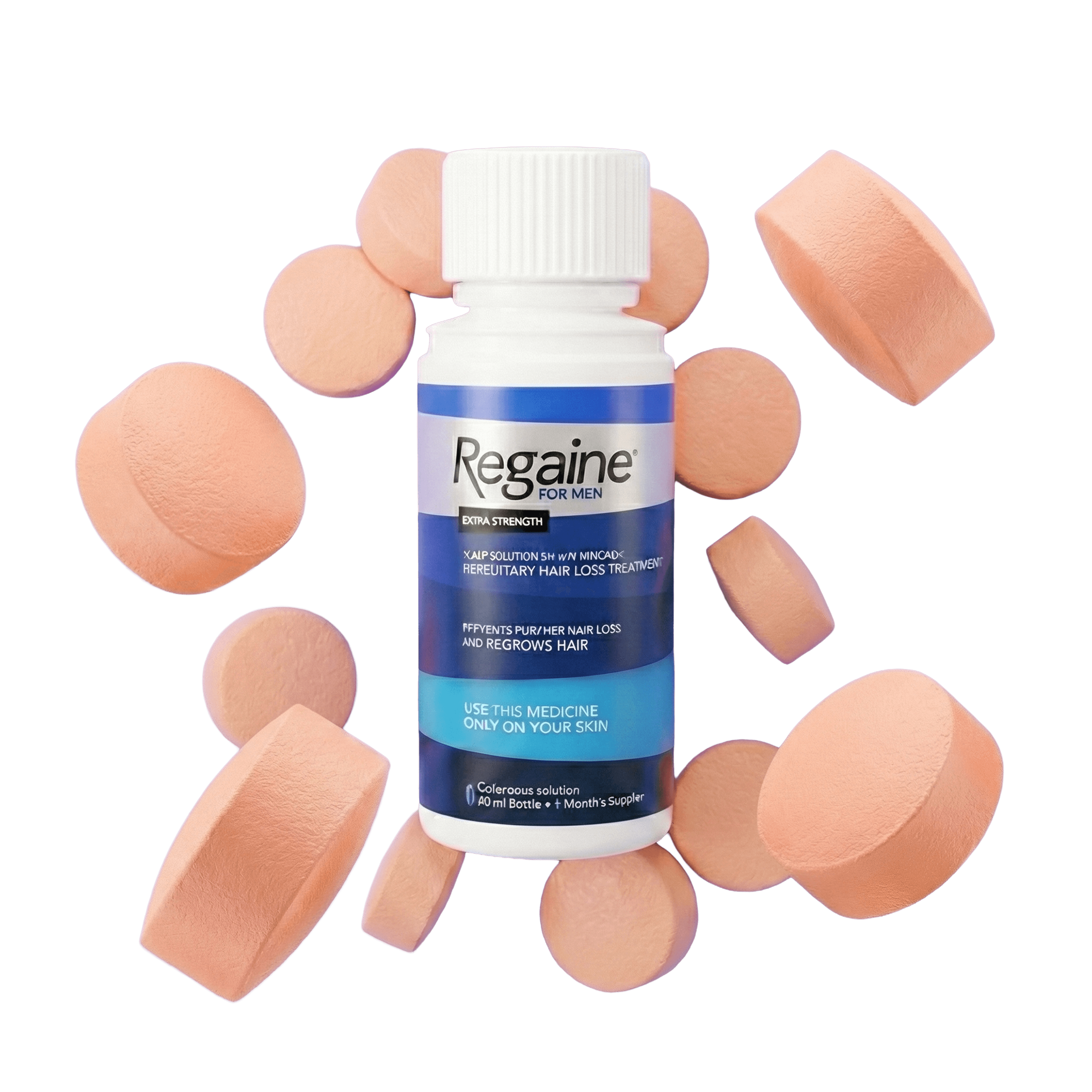
For men with androgenetic alopecia, two treatments have solid clinical evidence behind them. Regaine (minoxidil) is a licensed topical treatment applied to the scalp; it is available without a prescription from UK pharmacies and can support regrowth in the early stages. Finasteride is a once-daily prescription tablet that works by reducing DHT and is a potent option for slowing progression. It is not suitable for women of childbearing potential, and like all medicines it carries potential side effects, including sexual side effects, which a clinician can discuss with you before prescribing.
Totiva's hair loss service offers both, prescribed by UK-registered clinicians after an online consultation. Totiva's hair loss treatments are for men only. Women experiencing hair loss should speak to their GP, who can assess for nutritional deficiencies, thyroid issues, hormonal causes, and refer to a trichologist if needed.
For a detailed comparison of the two main treatments, the guide on finasteride vs minoxidil covers the evidence clearly.
Cut back on coffee if you want to, but do not expect it to change your hairline. If you are concerned about shedding, the more useful step is working out whether the cause is genetic, nutritional, or something else entirely.
FAQs#
Does decaffeinated coffee change anything for hair loss? There is no evidence that decaf coffee affects hair loss differently from regular coffee. Caffeine at normal dietary levels is not a recognised cause of hair loss, so switching to decaf is unlikely to make any difference to your hair.
Can caffeine shampoo replace a proper hair loss treatment? No. Caffeine shampoos are cosmetics, not licensed medicines. The evidence for them is based on lab studies, not large clinical trials. If you have androgenetic alopecia, minoxidil or finasteride have far stronger evidence behind them.
What blood tests should I ask my GP for if my hair is shedding? A GP investigating hair loss will typically check ferritin (stored iron), full blood count, thyroid function (TSH), vitamin D, and sometimes B12. These cover the most common reversible causes of diffuse shedding in the UK.
Medical Information: This article is for informational purposes only and does not constitute medical advice. Always consult a qualified healthcare professional before starting, stopping, or changing any treatment.