Does CoQ10 Help With Weight Loss? What the Evidence Actually Shows
CoQ10 is popular in health circles, but does it actually help you lose weight? A pharmacist looks at the evidence and what genuinely works instead.
Written by:

Medically reviewed by Callum Armstrong, MPharm, Independent Prescriber (IP)
Key Takeaways
CoQ10 doesn't reliably help with weight loss. Clinical trials show no significant effect on body weight or BMI. It has other legitimate uses, but if weight loss is your goal, GLP-1 medications have far stronger evidence.
CoQ10 supplements line the shelves of every health food shop in the UK, and you'll find plenty of bold claims online about their benefits. But if you're hoping CoQ10 might help shift some weight, the honest answer is: the evidence isn't there. That's not to say it's a useless supplement, but weight loss simply isn't something it reliably delivers.
Here's a proper look at what CoQ10 actually does, what the clinical trials show, and where it might genuinely be useful.
What Is CoQ10?#
Coenzyme Q10 (CoQ10) is a naturally occurring compound your body produces in almost every cell. Its main job is helping your mitochondria generate ATP, which is essentially the energy currency your cells run on. Without CoQ10, the mitochondrial electron transport chain can't function properly, and energy production slows.
CoQ10 exists in two main forms: ubiquinone (the oxidised form) and ubiquinol (the reduced, active form). Your body switches between them as needed, though some research suggests ubiquinol may absorb better in older adults or people with certain health conditions.
Organs that burn a lot of energy, particularly the heart, liver, and kidneys, contain especially high concentrations of CoQ10. Levels naturally decline with age, which is one reason supplementation gets discussed more as people get older.
You can get small amounts from food: oily fish like mackerel and sardines, organ meats, whole grains, and soya beans all contain CoQ10. But the quantities are modest, which is why some people turn to supplements, typically in doses of 30 to 200 mg per day, taken with a meal containing some fat to improve absorption.
In the UK, CoQ10 is classified as a food supplement rather than a licensed medicine. That means it's regulated for safety, but manufacturers cannot legally claim it treats or prevents any medical condition.
Statins and CoQ10: A UK-Specific Issue Worth Knowing#
Before getting into the weight loss evidence, it's worth flagging something relevant to a significant chunk of the UK population. More than 8 million people in England take statins, and there's a well-documented interaction: statins reduce circulating CoQ10 levels by blocking the same metabolic pathway the body uses to produce it.
Whether this reduction causes the muscle aches some statin users experience is still debated among researchers, and the NHS currently doesn't recommend routine CoQ10 supplementation for everyone on statins. That said, some clinicians do suggest it for patients experiencing persistent muscle symptoms. If you're on a statin and considering CoQ10, it's worth a conversation with your GP or pharmacist before starting.
CoQ10 may also interact with warfarin, potentially affecting how well your blood-thinning medication works. Anyone on anticoagulants should check with a pharmacist first.
Does CoQ10 Actually Help With Weight Loss?#
This is the central question, and the short answer is no, at least not meaningfully on its own.
Two systematic reviews and meta-analyses of randomised controlled trials (which represent the strongest type of evidence available) have looked specifically at CoQ10 and body weight. Both found no statistically significant effect on body weight or BMI in adults. One review, published in the journal Nutrients, pooled data from multiple trials and concluded that CoQ10 supplementation did not produce clinically meaningful reductions in body weight or waist circumference.
There is some observational data suggesting that people with obesity tend to have lower circulating CoQ10 levels than people of a healthy weight. This has led to speculation that correcting a deficiency might help with weight management. But lower CoQ10 in people with obesity could just as easily be a consequence of excess body fat rather than a cause of it. Correlation isn't causation, and the intervention trials haven't shown that supplementing CoQ10 reverses this association.
The theory that boosting cellular energy production might speed up metabolism and therefore help burn more calories sounds plausible, but your body doesn't work quite that simply. Metabolic rate is influenced by muscle mass, thyroid function, physical activity, and a range of hormonal signals. Adding more CoQ10 when your levels are already adequate doesn't appear to meaningfully change how much energy your body burns.
So while CoQ10 is genuinely important for cellular function, taking it as a weight loss supplement isn't supported by current clinical evidence.
Where CoQ10 Does Have a Role#
Just because CoQ10 won't shift weight doesn't mean it has no value. There are areas where the evidence is more encouraging.
Cardiovascular health is probably the most studied application. NICE guidance on chronic heart failure (NG106) doesn't currently include CoQ10 as a recommended treatment, but some research suggests it may help improve symptoms and exercise capacity in people with heart failure, particularly when used alongside standard medications.
Migraines are another area where there's reasonable evidence. Some studies have found that CoQ10 supplementation can reduce migraine frequency, and it's mentioned in NICE's headache management guidance as a preventive option worth considering.
Antioxidant protection, energy support in people with genuine CoQ10 deficiency, and potential benefits for certain neurological conditions are also areas of ongoing research. The evidence base is more solid here than it is for weight loss.
Lemon Water, Supplements, and Other Weight Loss Trends#
CoQ10 isn't the only supplement or wellness hack that gets promoted for weight loss with more enthusiasm than evidence. Lemon water is another one worth addressing, since it regularly trends on social media.
The reality is nuanced. Drinking warm water before meals can modestly increase metabolic rate and may help with satiety. If swapping your usual cup of tea with two sugars (around 40 calories) or a glass of Ribena (around 50 calories per serving) for lemon water means you're consistently consuming fewer calories over time, that's a genuine if indirect benefit.
There's also a small human study suggesting that drinking 500 ml of warm lemon water twice daily before meals led to average weight loss of 1 to 4 kg over three weeks in female participants. Methodological limitations make it hard to draw firm conclusions, but the calorie-swapping effect is real. One lemon contains roughly 15 to 30 calories, and lemon water as a replacement for high-calorie drinks is a sensible, low-risk swap.
The catch is that lemon water is quite acidic, and frequent consumption without rinsing your mouth can contribute to dental erosion over time. It's worth being mindful of that, especially if you're drinking it several times a day.
But neither lemon water nor CoQ10 are going to produce meaningful, sustained weight loss on their own. They're at best supporting players, not the main act.
Got questions? Speak to a pharmacist on WhatsApp now
Prefer to browse first? View treatments
What Actually Works for Weight Loss#
The NICE obesity management guideline (NG246) is clear on this: sustained weight loss requires a combination of dietary change, increased physical activity, and behavioural support. For most people, the most effective approach involves consistently reducing calorie intake while building movement into daily life.
Beyond lifestyle changes, there's now a generation of clinically proven medications that produce significant, sustained weight loss in people who meet the eligibility criteria.
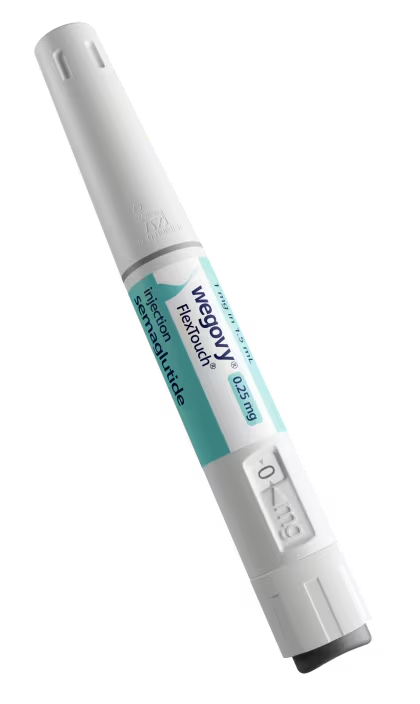
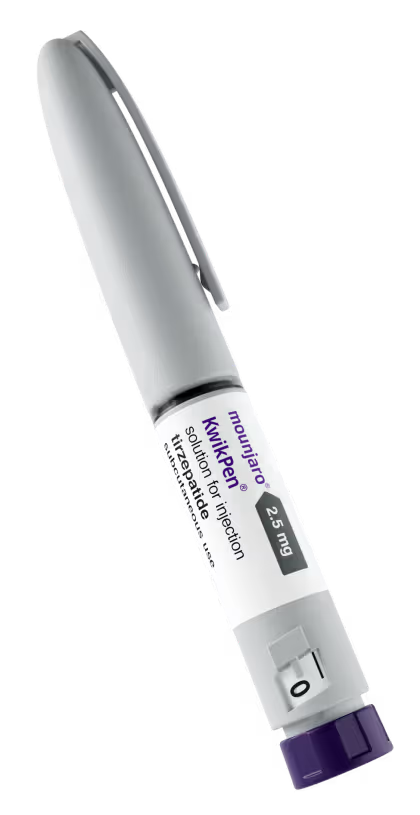
GLP-1 receptor agonists like semaglutide (the active ingredient in Wegovy) and tirzepatide (Mounjaro) work by mimicking gut hormones that regulate appetite and slow stomach emptying. They make you feel fuller for longer and reduce appetite signals in the brain. The clinical trial results are compelling: Wegovy has been shown to produce around 15% body weight loss on average, while Mounjaro trials have demonstrated up to 22.5% in some participants.
For context, that's the difference between medication that helps and medication that genuinely transforms health outcomes. Conditions linked to excess weight, including type 2 diabetes risk, sleep apnoea, joint pain, and cardiovascular disease, all improve with that level of weight reduction.
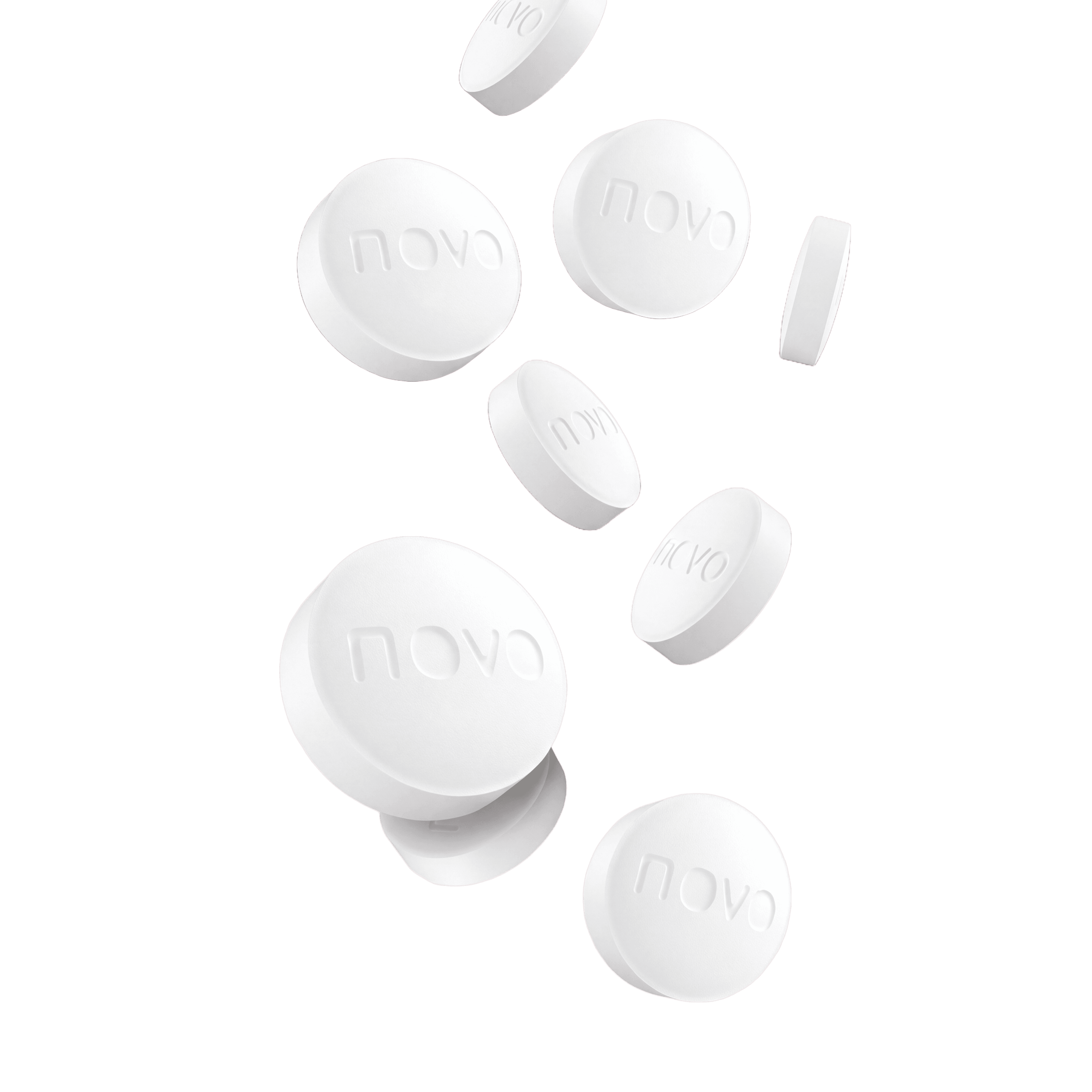
Wegovy (semaglutide) is also now available in tablet form, which removes the need for injections entirely. For people who are needle-averse, this is a significant development.
NHS eligibility for Wegovy currently requires a BMI of 35 or above with at least one weight-related health condition. Private prescriptions through registered UK pharmacies can sometimes offer access to people with a BMI above 30. You can explore your options through Totiva's weight loss service, which offers clinician-led consultations and access to treatments including Wegovy and Mounjaro.
A Realistic Picture of CoQ10's Role in a Weight Loss Plan#
If you're already taking CoQ10 for another reason, such as cardiovascular support or because you're on a statin and experiencing muscle symptoms, there's no reason to stop. It's generally safe, well-tolerated, and there may be benefits beyond weight management that make it worthwhile for you.
But if weight loss is your primary goal and you're considering CoQ10 as part of your strategy, the evidence doesn't support it as a meaningful intervention. Spending money on high-dose CoQ10 supplements when the clinical trials haven't shown a weight loss effect is unlikely to be the best use of your resources.
Focus first on the things that do have strong evidence behind them: reducing calorie-dense foods, building activity into your routine, getting adequate sleep (which significantly affects appetite hormones), and if appropriate, speaking to a clinician about whether medication could help.
If you're unsure whether GLP-1 medication might be suitable for you, Totiva's online consultations are a straightforward way to get a pharmacist-led assessment without a GP referral. The consultation is free, and you only pay if treatment is recommended and you choose to proceed. You can start a weight loss consultation here.
The Bottom Line#
CoQ10 is a genuinely important molecule for cellular energy production, and there are legitimate reasons to supplement it in certain situations. But weight loss isn't one of them, at least not based on the current clinical evidence.
If you're searching for something that actually moves the needle on weight, the evidence sits firmly behind dietary change, physical activity, and for people who qualify, GLP-1 medications. Those are the interventions that produce real, measurable, and sustained results.
Medical Information: This article is for informational purposes only and does not constitute medical advice. Always consult a qualified healthcare professional before starting, stopping, or changing any treatment.