Does Collagen Help With Weight Loss? What the Evidence Actually Shows
Collagen is one of the UK's best-selling supplements, but does it actually help you lose weight? Here's an honest look at the science.
Written by:

Medically reviewed by Callum Armstrong, MPharm, Independent Prescriber (IP)
Key Takeaways
Collagen may modestly support fullness and muscle preservation, but it is not a proven weight loss treatment. For meaningful results, evidence-based options like Orlistat or GLP-1 medications (Wegovy, Mounjaro) are far more effective.
Collagen supplements are everywhere right now. Walk into any Holland & Barrett or scroll through Amazon and you'll find shelves of powders, capsules and drinks all promising to support your skin, joints and, increasingly, your waistline. But does collagen actually help with weight loss, or is it another supplement with more marketing than evidence behind it?
The honest answer is: collagen has some genuinely interesting properties that may support weight management, but it is not a weight loss treatment on its own. Here is what the research actually shows, and how to think about where it fits in a broader approach to managing your weight.
What Is Collagen?#
Collagen is the most abundant structural protein in the human body, making up around 30% of your total protein content. It forms the framework of your skin, bones, tendons, cartilage and connective tissue. There are at least 28 known types, though Types I, II and III do the heavy lifting for most of your body's structural needs.
From your mid-twenties onwards, your body's natural collagen production starts to decline. This process accelerates with age, and is worsened by UV exposure, smoking, poor diet and excess alcohol. By the time most people notice the effects on their skin and joints, the decline has been going on for years.
The supplements you see on shelves typically contain hydrolysed collagen, also called collagen peptides. This is collagen that has been broken down into smaller amino acid chains to improve absorption. The key amino acids are glycine, proline and hydroxyproline. One important caveat: collagen is an incomplete protein. It lacks sufficient tryptophan and is low in several other essential amino acids, so it cannot replace a balanced, protein-rich diet.
The Proposed Links Between Collagen and Weight#
There are a few mechanisms researchers have explored when looking at collagen and body weight. None of them are proven to cause meaningful weight loss on their own, but they are worth understanding.
Satiety and appetite#
Protein, in general, is well-established as the most filling macronutrient. It stimulates the release of satiety hormones like GLP-1 and peptide YY, while suppressing ghrelin (the hormone that makes you feel hungry). High-protein diets have also been shown to increase thermogenesis, which is the amount of energy your body generates as heat during digestion.
Collagen is a protein, so it shares some of these appetite-suppressing properties. Some small studies have suggested that hydrolysed collagen peptides may be particularly satiating compared to other protein sources like whey or casein, though the evidence here is limited and the sample sizes are small. The effect, if real, is modest, and you would likely get similar or better satiety benefits from whole food protein sources like chicken, fish, eggs or Greek yoghurt.
Muscle mass preservation#
Maintaining lean muscle mass during weight loss is important for a few reasons. Muscle is metabolically active tissue, meaning it burns more calories at rest than fat. Losing muscle alongside fat (which commonly happens during a calorie deficit) can slow your metabolism and make weight regain more likely.
Some research suggests that collagen peptide supplementation, when combined with resistance training, may help preserve or even increase muscle mass during weight loss. A few trials have found modest improvements in fat-free mass in older adults and those with sarcopenia (age-related muscle loss) who supplemented with collagen while exercising. Whether this translates to meaningful differences for otherwise healthy adults is less clear.
Joint support and staying active#
This is perhaps the most practical argument for collagen during a weight loss journey. If joint pain is stopping you from exercising, anything that reliably reduces that pain is indirectly helping you manage your weight. There is reasonable evidence that collagen peptides can support joint comfort, particularly in people with osteoarthritis or exercise-induced joint discomfort. Getting and staying active is one of the most important pillars of long-term weight management, so this is not a trivial benefit.
Collagen and belly fat#
A few studies have looked specifically at whether collagen peptides, combined with exercise, affect abdominal fat. Some have reported modest reductions in body fat, including visceral fat, in participants who supplemented versus those who did not. However, these studies tend to be small, industry-funded, and conducted over short periods. They are interesting rather than conclusive.
The Regulatory Picture in the UK#
This is where things get very clear. Collagen supplements in the UK are classified as food supplements, not medicines. This means they are not subject to the same rigorous clinical testing requirements as licensed medicines. They cannot legally make specific health claims about treating or preventing disease, including claims about causing weight loss.
The Food Standards Agency (FSA) oversees food supplement labelling in the UK, and any health claims must be registered on the GB Nutrition and Health Claims Register. Currently, no approved health claim exists for collagen and weight loss. The European Food Safety Authority (EFSA) previously reviewed collagen hydrolysate and concluded there was insufficient evidence to support claims related to joints, skin and weight, a finding that still broadly applies in the UK post-Brexit.
If you experience an unexpected side effect from a collagen supplement, you can report it through the MHRA's Yellow Card scheme at yellowcard.mhra.gov.uk. This is worth knowing, because supplements are not side-effect free by default just because they are not medicines.
Should You Take Collagen for Weight Loss?#
Collagen is generally safe for most people and has a reasonable evidence base for skin and joint health. If you are already taking a collagen supplement for those reasons, the modest potential benefits around satiety and muscle preservation are a reasonable bonus. But buying collagen specifically to lose weight is unlikely to deliver meaningful results.
If weight loss is your actual goal, the evidence points firmly towards calorie management (usually a deficit of 500-600 kcal per day), regular physical activity (the NHS recommends at least 150 minutes of moderate activity per week for adults), adequate sleep and, where appropriate, evidence-based medical treatments.
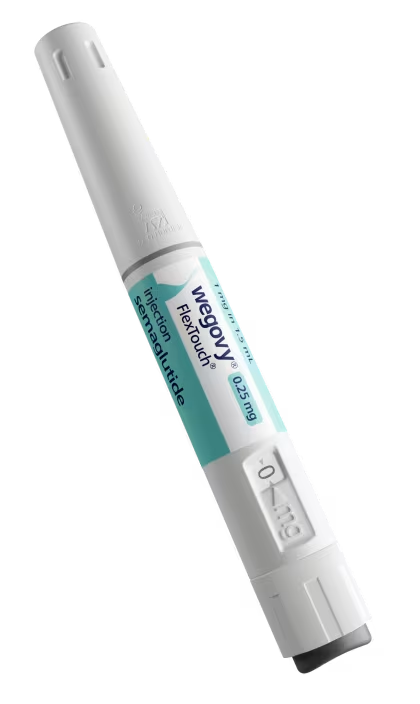
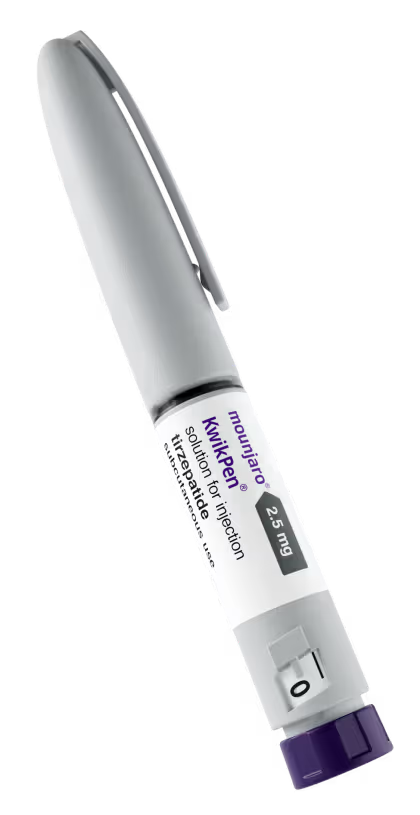
NICE guidelines on obesity management (CG189) do not include collagen supplementation in their recommendations. They do, however, support the use of Orlistat and, more recently, GLP-1 receptor agonists like semaglutide (Wegovy) and tirzepatide (Mounjaro) for eligible adults.
How Collagen Compares to Actual Weight Loss Medications#
To give you a sense of what clinical evidence looks like when treatments actually work, it is worth briefly comparing the collagen picture to what we know about licensed weight loss medications.
Orlistat, the lipase inhibitor available as Xenical on prescription or Alli over the counter, blocks around 30% of dietary fat from being absorbed. Clinical trials show it can help people lose 5-10% of their body weight within a year when combined with a reduced-calorie diet and exercise. That is a meaningful, reproducible result demonstrated across large, well-designed trials.
The newer GLP-1 receptor agonists have shown even more impressive results. Semaglutide (Wegovy) produced average weight loss of around 15% of body weight in the STEP 1 trial. Tirzepatide (Mounjaro) has shown up to 22.5% body weight reduction in trials, making it one of the most effective weight loss medications available.
These medications work through fundamentally different mechanisms to collagen. GLP-1 agonists mimic gut hormones that regulate appetite and blood sugar, producing a strong, sustained reduction in hunger that most people find difficult to achieve through willpower and supplementation alone.
If you are interested in exploring prescription weight loss options, Totiva's weight loss service offers clinician-led online consultations for Wegovy and Mounjaro. Totiva is a GPhC-registered UK online pharmacy (registration 9012997), and the consultation is free. You only pay if a treatment is approved and you choose to proceed. For GLP-1 medications specifically, a short video call with a clinician is required before the first prescription, which is a regulatory requirement to ensure safety.
Got questions? Speak to a pharmacist on WhatsApp now
Prefer to browse first? View treatments
Food-First Sources of Collagen#
If you are wary of supplements or simply want to support your collagen levels through diet, there are good food sources. Bone broth is the most concentrated dietary source. Skin-on fish (particularly salmon and mackerel), chicken with skin, egg whites and pork crackling all contain meaningful amounts of collagen or its precursor amino acids. Vitamin C is essential for collagen synthesis, so eating plenty of citrus fruit, peppers and berries supports your body's own production.
For most people, a varied diet with adequate protein and plenty of collagen-supporting nutrients will do more for their overall health than a supplement capsule, at considerably less cost.
Collagen Supplementation and Menopause#
One population where collagen deserves particular attention is perimenopausal and postmenopausal women. Oestrogen plays a role in collagen synthesis, and the hormonal changes of menopause accelerate collagen loss significantly. This affects not just skin and joints but also bone density and connective tissue throughout the body.
Menopausal weight gain, which often involves a shift in fat distribution towards the abdomen, is a distinct issue from general obesity and has its own drivers. Collagen supplementation is unlikely to reverse menopausal weight gain on its own, but the evidence for joint and skin support in this group is reasonably strong. If menopausal weight gain is a concern, speaking to a GP about all available options (including HRT, which has its own evidence base for body composition) is more likely to be productive than relying on supplements.
Timing and How to Take Collagen#
If you do decide to take collagen, a common question is when to take it. There is no strong clinical evidence that timing makes a significant difference to outcomes. Some people prefer taking it in the morning mixed into coffee or a smoothie, others take it post-workout to support muscle recovery. A dose of around 10-15g of hydrolysed collagen per day is what most of the positive studies have used, though formulations vary significantly between brands.
Collagen is generally well tolerated. The most commonly reported side effects are mild digestive discomfort, particularly when first starting. People with fish, shellfish or egg allergies should check the source of their collagen carefully, as marine-sourced products can trigger reactions.
Ready to see if treatment could work for you?
The Bottom Line#
Collagen can play a supporting role in a weight management plan, mainly through its effects on satiety, muscle preservation and joint health. But the evidence does not support using it as a primary weight loss intervention. No UK regulatory body endorses it for this purpose, and the trials that do show positive effects are typically small and short-term.
For meaningful, sustained weight loss, the evidence points to calorie management, regular activity, behavioural support and, for those who are eligible, clinically proven medications. If you have a BMI over 30, or over 27 with a weight-related health condition, prescription options like Wegovy or Mounjaro are worth exploring with a clinician.
If you would like to understand whether prescription weight loss treatment is right for you, Totiva's pharmacist-led consultation is a straightforward, free place to start.
Medical Information: This article is for informational purposes only and does not constitute medical advice. Always consult a qualified healthcare professional before starting, stopping, or changing any treatment.