Where Do You Lose Weight From First?
Your body doesn't shed fat evenly. Here's the science behind fat loss patterns, what affects them, and what to realistically expect on your journey.
Written and medically reviewed by:

Key Takeaways
Your body decides where fat comes off first based on genetics, sex hormones, and age. You cannot target specific areas. Consistency with diet, movement, and sleep drives overall fat loss, including in stubborn areas, over time.
Your body doesn't let you choose where it loses fat from first. That's the honest answer, and it's one worth understanding properly before you set your expectations.
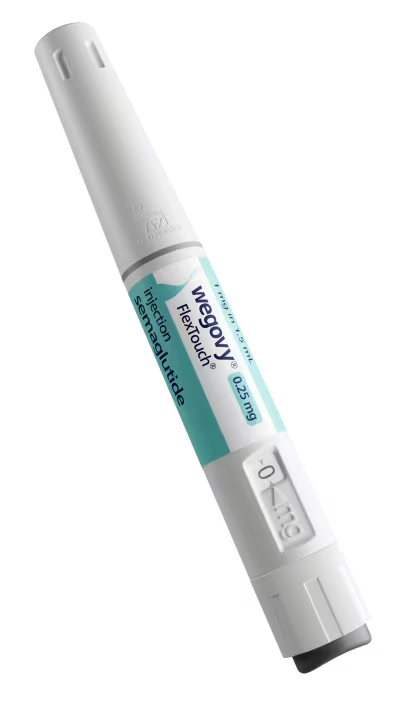
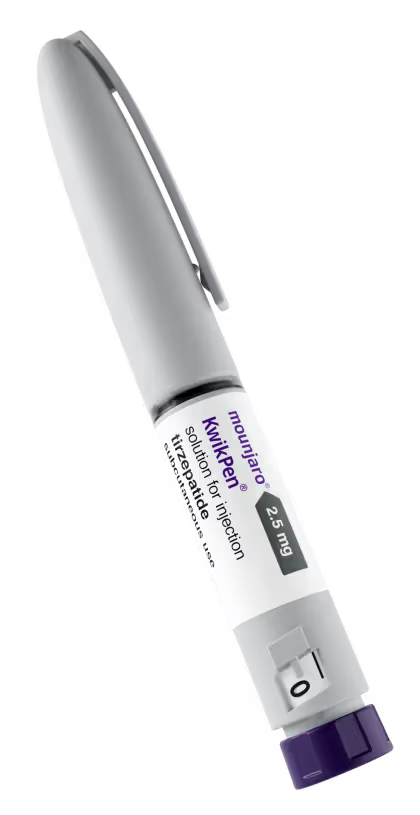
Whether you're just starting out with diet and exercise or you're taking a GLP-1 medication like Wegovy or Mounjaro, the order in which your body sheds fat is largely out of your hands. Genetics, sex hormones, age, and your current body composition all play a role. What you can control is the consistency of your approach and the quality of support around you.
Weight Loss vs Fat Loss: They're Not the Same Thing#
Before getting into fat loss patterns, it helps to understand what's actually happening when the number on the scale drops.
"Weight loss" covers a lot of ground. In the early weeks of a new diet or medication, much of what you lose is water weight. Glycogen (your body's stored carbohydrate) holds onto water, and when you start eating less or your appetite decreases, glycogen stores deplete and water follows. This can account for several kilograms in the first week or two, which is why early progress often looks dramatic and then slows down.
After that initial stage, genuine fat loss begins. This is a slower process, and it's the one that actually changes your body composition over time. True fat loss involves your body breaking down stored fat (in the form of triglycerides) into fatty acids and glycerol, which are then used for energy. That's where the real work happens.
There are two main types of body fat worth knowing about:
- Subcutaneous fat: stored just beneath the skin, the kind you can pinch. Most of your body fat falls into this category.
- Visceral fat: stored deeper in the abdomen, surrounding your internal organs. This is the type more strongly linked to metabolic conditions like type 2 diabetes, cardiovascular disease, and fatty liver disease.
Visceral fat tends to respond well to a consistent calorie deficit and increased physical activity. In fact, many people find that their waist measurement decreases before their overall weight shows a dramatic change, precisely because visceral fat is often mobilised early.
So Where Does Fat Come Off First?#
This varies between individuals, but some patterns do emerge from the research.
Many people notice changes in their face, neck, and upper body relatively early. Others find that their midsection responds first, particularly if they carry a lot of visceral abdominal fat. There's no universal order, and anyone promising you otherwise is guessing.
What most people experience is this: changes start to become noticeable in the areas where you carry the most fat, or where your body is genetically predisposed to mobilise it first. You might not see it on the scale, but you might notice your clothes fitting differently, or a ring sitting looser on your finger.

What Influences Where You Lose Fat First?#
Genetics#
Genetic factors are probably the biggest determinant of where your body stores and releases fat. If people in your family carry weight in their hips and thighs, there's a reasonable chance you do too, and you'll likely lose from those areas in a similar pattern.
Recent genetic research has identified over 50 genetic markers associated with how individuals respond to dietary changes in terms of fat loss. This is still an emerging area, but it confirms what many people already sense: two people can follow identical programmes and see very different results in terms of where they slim down first.
Sex and Hormones#
Sex hormones have a significant influence on fat distribution. People assigned male at birth tend to accumulate more fat in the abdominal region (the classic "apple" shape), while those assigned female at birth typically store more in the hips, thighs, and buttocks (the "pear" shape).
This matters for fat loss patterns too. Research suggests that men tend to lose proportionally more from the trunk early on, while women may lose more from the hips and thighs. Neither is faster or healthier overall, just different.
Estrogen plays a key role in directing fat storage towards the lower body in women. When oestrogen levels decline during perimenopause and menopause, fat distribution tends to shift more centrally, which is why many women notice an increase in abdominal fat during this life stage even without significant changes to their diet or activity levels.
Age#
As we age, several things change simultaneously. Lean muscle mass begins declining from around our late twenties, and fat mass tends to increase even if overall weight stays roughly the same. This shift in body composition means that older adults may find fat loss harder to achieve in certain areas, and may lose proportionally more muscle during a calorie deficit if they're not also doing resistance training.
For women in particular, the hormonal changes of menopause significantly affect where weight accumulates and how easy it is to shift. This is a real biological process, not a motivational failure.
Your Starting Body Fat Percentage#
Where you begin matters. People with higher body fat percentages often see more noticeable early changes in areas like the face and abdomen, where larger depots of fat are being reduced. Those who are already relatively lean may notice smaller absolute changes but potentially more visible proportional shifts.
Measuring body fat percentage (rather than just weight) gives you a clearer picture of progress. Smart scales, DEXA scans, or a conversation with a healthcare professional can all help here.
The Spot Reduction Myth#
No article on this topic would be complete without addressing it directly: you cannot target fat loss at specific body parts through exercise.
This idea, known as spot reduction, has been thoroughly examined in research and consistently fails to hold up. Doing hundreds of sit-ups will strengthen your core muscles, but it won't preferentially burn the fat sitting on top of them. Fat is mobilised from stores throughout the body in response to a calorie deficit, not from the muscles being worked.
This doesn't mean exercise is pointless. Far from it. Resistance training builds muscle, which raises your resting metabolic rate over time. Cardiovascular exercise increases your overall calorie expenditure. Both contribute to fat loss. But neither lets you pick the postcode.
What About GLP-1 Medications?#
GLP-1 receptor agonists like semaglutide (Wegovy) and tirzepatide (Mounjaro) have changed the conversation around weight loss significantly. These medications work by mimicking hormones that regulate appetite and satiety, helping people eat less without the constant mental effort of willpower-based dieting.
So do they change where you lose weight from? Not fundamentally. The same principles of fat mobilisation apply, but the magnitude of loss is often greater. Clinical trials show that people taking semaglutide at the Wegovy dose can lose around 15% of their body weight on average, while tirzepatide (Mounjaro) has shown average losses of up to 22.5% in trials. With greater overall fat loss comes more visible change across the body, including in areas that might have seemed stubborn before.
Visceral fat, in particular, appears to reduce substantially on GLP-1 medications, which has significant implications for metabolic health beyond just aesthetics.
You might also wonder about Victoza, the liraglutide medication licensed for type 2 diabetes. At its diabetes dose of up to 1.8mg daily, Victoza typically produces more modest weight loss of around 2 to 3kg over six to twelve months. This is a secondary benefit rather than the primary purpose of the medication. Saxenda, which contains the same active ingredient at a higher dose (3.0mg), is specifically licensed for weight management in adults with a BMI of 30 or above, or 27 and above with weight-related health conditions.
If you're considering weight loss treatment and want to understand which options might be right for you, Totiva's weight loss service covers Mounjaro, Wegovy (including oral tablets), and other evidence-based treatments, with clinician-led consultations to assess suitability properly.
Got questions? Speak to a pharmacist on WhatsApp now
Prefer to browse first? View treatments
What Does a Realistic Timeline Look Like?#
This is what most people actually want to know, and it's where honest guidance is thin on the ground.
Weeks 1 to 4: Mostly water weight. The scale may drop noticeably. Don't read too much into this, good or bad. If you're starting a GLP-1 medication, you're likely on a starter dose and may not feel dramatic appetite suppression yet.
Months 1 to 3: Genuine fat loss begins. You might notice subtle changes in how clothes fit, particularly around the waist or face. Weight loss during this period on GLP-1 medications is often steady if doses are being titrated upwards.
Months 3 to 6: Changes become more visible. Body composition is shifting, even if the scale doesn't always reflect it immediately. This is often when people notice changes in areas they didn't expect, like the neck and upper arms.
Beyond 6 months: Continued fat loss, but progress may slow as the body adapts. Resistance training becomes increasingly important for preserving lean muscle. Plateaus are normal and usually temporary.
Practical Steps That Actually Help#
Regardless of where your body decides to lose fat from first, these habits support the process:
- Maintain a modest calorie deficit (around 500 calories below your daily needs is a commonly cited target for losing roughly 0.5kg per week)
- Eat adequate protein to protect muscle mass during fat loss, around 1.2 to 1.6g per kg of body weight daily
- Do resistance training at least twice a week to preserve and build lean muscle
- Prioritise sleep as poor sleep raises cortisol, which promotes fat storage particularly around the abdomen
- Manage stress for the same reason: chronically elevated cortisol is genuinely linked to central fat accumulation
- Stay consistent over months rather than weeks, because the visible changes in specific body areas take time
A Note on Visceral Fat#
Visceral fat (the fat stored around your organs) deserves special attention because reducing it matters for health, not just appearance. Even modest weight loss of 5 to 10% of body weight can produce meaningful reductions in visceral fat and measurable improvements in blood pressure, cholesterol, blood glucose, and inflammation markers.
This is why focusing purely on aesthetics can be misleading. The changes happening inside your body during sustained weight loss are often more significant than what you can see in the mirror.
Ready to see if treatment could work for you?
When to Seek Professional Support#
If you've been trying to lose weight through diet and exercise alone without meaningful progress, or if you have a BMI above 30 (or above 27 with a health condition like type 2 diabetes or hypertension), it may be worth exploring whether medication is appropriate for you.
NICE guidelines support the use of GLP-1 medications for weight management in people who meet eligibility criteria and have not achieved sufficient results through lifestyle changes alone. Your GP can discuss NHS pathways, though waiting times vary considerably across the country.
For those who want a quicker route to assessment, Totiva offers pharmacist-led online consultations with a required video call before your first GLP-1 prescription. There's no subscription and no upfront cost: you pay only if you're approved for treatment. You can start a weight loss consultation here.
The Bottom Line#
Where you lose weight from first is largely determined by your biology, not your workout routine. Genetics, sex hormones, age, and body composition all shape the pattern. The spot reduction idea is a myth, but consistent effort across diet, movement, and sleep produces real change across your whole body over time.
If you're on or considering a GLP-1 medication, the same principles apply, but the scale and pace of change can be considerably greater. The areas that feel most stubborn may still be the last to respond, but with sustained weight loss, most people do eventually see change in the places they care about most.
Medical Information: This article is for informational purposes only and does not constitute medical advice. Always consult a qualified healthcare professional before starting, stopping, or changing any treatment.