Why You're Not Losing Weight in a Calorie Deficit
Eating less but the scales won't move? A UK pharmacist explains the real reasons a calorie deficit stops working and what to do next.
Written and medically reviewed by:

Key Takeaways
A calorie deficit is essential for fat loss, but tracking errors, metabolic adaptation, poor sleep, certain medications, and underlying conditions like hypothyroidism or PCOS can all stall progress. If changes are not working after 8-12 weeks, a GP review is worth requesting.
If you are eating less than you burn and the scales are not moving, you are not imagining things. A calorie deficit is necessary for fat loss, but it is rarely sufficient on its own. Several biological, hormonal, and practical factors can stall weight loss even when your numbers look right on paper.
Your deficit may not be as big as you think#
Tracking errors are the most common reason. Studies consistently show people underestimate their calorie intake by 20–40%, often by forgetting cooking oils, drinks, sauces, and weekend meals. A black coffee is fine, but a large oat milk latte adds around 130 kcal without registering as a meal.
For a more reliable picture, weigh food with a kitchen scale rather than estimating portions, and log everything for at least two weeks. If you want a clearer target, calculate your total daily energy expenditure (TDEE) using your basal metabolic rate (BMR) adjusted for activity level, then subtract 300–500 kcal from that figure.
Our guide to high-protein, low-calorie foods can also help you build meals that are harder to overeat.
Your metabolism has adjusted#
This is the part most articles skip. When you eat less for weeks or months, your body responds by reducing how many calories it burns. This process, called adaptive thermogenesis, can cut your total energy expenditure by 10–15% beyond what you would predict from weight loss alone.
Put simply: the deficit that worked in week one may have effectively closed by week eight. Your body is not broken. It is running an evolved survival response that prioritises keeping weight stable.
At the same time, fat loss reduces muscle mass to some degree, and muscle is metabolically active tissue. Less muscle means a lower BMR, which tightens the deficit further. This is why strength training during a cut matters: it protects lean tissue and keeps your resting calorie burn higher.

Water is masking fat loss#
Fat loss and weight loss are not the same thing. Your body holds water in fat cells, in muscle glycogen (each gram of glycogen binds roughly 3 g of water), and in response to inflammation from new exercise. It is entirely possible to lose fat steadily for 2–3 weeks while the scale stays flat because water weight is filling the gap.
This is particularly pronounced in the first few weeks of a new programme and in the week before a period in women. Weighing yourself at the same time each morning, after using the toilet and before eating, and averaging across a week gives a far more reliable trend than any single reading.
Medical reasons are more common than people realise#
If you have been in a genuine deficit for 8–12 weeks with minimal movement, it is worth asking your GP for a blood test. Several conditions actively work against fat loss:
- Hypothyroidism: an underactive thyroid slows metabolism. Around 1 in 50 women in the UK has the condition, and many are undiagnosed.
- PCOS (polycystic ovary syndrome): insulin resistance associated with PCOS makes the body store fat more readily, especially around the abdomen.
- Insulin resistance: even without a diabetes diagnosis, chronically elevated insulin suppresses fat burning. HbA1c and fasting glucose tests can flag this.
- Cushing's syndrome: a less common condition caused by excess cortisol, which can cause fat redistribution — particularly to the abdomen, face, and upper back — alongside other features such as stretch marks, high blood pressure, or muscle weakness. It is typically investigated by a GP or specialist when these features are present alongside resistant weight gain, rather than being a first-line consideration.
You are entitled to ask your GP for thyroid function tests and an HbA1c check if weight loss is unexpectedly resistant. The NHS Health Check programme (available to adults aged 40–74 in England) also screens for several of these markers.
Your medication could be the cause#
This is the angle most online articles miss entirely, and as a pharmacy topic it matters a lot. Several medicines commonly prescribed in the UK cause weight gain or make fat loss significantly harder:
| Medicine | Common use | Effect on weight |
|---|---|---|
| Mirtazapine | Depression | Increases appetite, often significantly |
| Quetiapine | Bipolar, depression | Metabolic effects, increased appetite |
| Prednisolone | Inflammation | Fluid retention, fat redistribution |
| Propranolol | Hypertension, anxiety | May reduce exercise capacity, which can indirectly affect energy expenditure |
| Depo-Provera | Contraception | Associated with weight gain in some users |
| SSRIs (e.g. sertraline, paroxetine) | Depression, anxiety | Variable; weight effects differ between individual SSRIs — paroxetine has stronger evidence for weight gain than others, and not all users are affected |
If you are taking any of these and struggling to lose weight, do not stop the medication without speaking to a clinician first. But do raise the issue: sometimes an alternative with a more neutral weight profile is available.
Got questions? Speak to a pharmacist on WhatsApp now
Prefer to browse first? View treatments
Sleep debt and stress are not soft factors#
Poor sleep raises ghrelin (the hunger hormone) and reduces leptin (the satiety hormone), which drives calorie intake up even when you are consciously restricting. In one controlled study, participants ate around 385 additional calories per day after a week of short sleep compared to well-rested controls — though it is worth noting this was a single small study and individual responses may vary.
Chronic stress raises cortisol, which promotes visceral fat storage and increases cravings for calorie-dense foods. If you are sleeping under 6 hours a night or under sustained pressure at work, addressing those factors is likely to move the scales more than shaving another 100 kcal off your lunch.
When a calorie deficit alone has biological limits#
For some people, hunger hormone dysregulation makes maintaining a deficit genuinely very difficult, regardless of willpower. Leptin resistance (where the brain stops responding to the signal that fat stores are full) and chronically elevated ghrelin can make calorie restriction feel unsustainable rather than merely challenging.
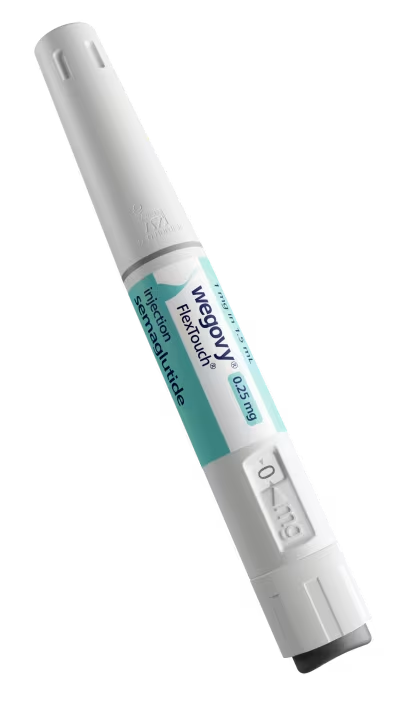
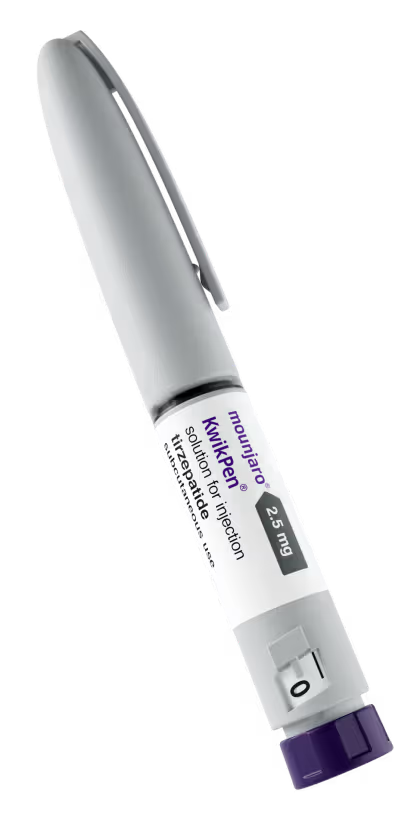
This is the biological basis behind licensed GLP-1 receptor agonist medicines. Options available in the UK include injectable Wegovy (semaglutide), oral Wegovy tablets (oral semaglutide), Mounjaro (tirzepatide), and Foundayo (an oral GLP-1 treatment). They reduce appetite signalling directly, making it physiologically easier to stay in a deficit. NICE guidelines set out eligibility thresholds that vary by medicine: for example, Mounjaro (tirzepatide) is assessed under NICE technology appraisal TA1026, which covers adults with a BMI of 35 or above with at least one weight-related comorbidity, or those with a BMI of 30–34.9 in certain commissioned pathways. These are not quick fixes, but for people whose biology is actively working against dietary restriction, they represent a clinically supported option.
If you are in that position, Totiva's weight loss service offers a free online consultation with UK-registered clinicians who can assess whether a GLP-1 medicine — including oral options such as oral Wegovy tablets or Foundayo — is appropriate for you.
Medical Information: This article is for informational purposes only and does not constitute medical advice. Always consult a qualified healthcare professional before starting, stopping, or changing any treatment.