How Long Does a 1,000 Calorie Deficit Take to Work?
A 1,000 kcal daily deficit can produce roughly 0.9 kg of weight loss per week in theory. Here's what to realistically expect, week by week.
Written and medically reviewed by:

Key Takeaways
A 1,000 kcal daily deficit produces roughly 0.9 kg of fat loss per week, though early weeks include water weight. Expect 10-15 kg over six months. Progress slows after month two due to metabolic adaptation.
A consistent 1,000 calorie daily deficit produces roughly 0.9 kg (2 lb) of weight loss per week in theory. In practice, most people lose faster in the first two weeks (largely water weight) and slower after month two as the body adapts. Here is what the timeline actually looks like, what slows things down, and how to keep progress moving.
The maths behind it#
Your Total Daily Energy Expenditure (TDEE) is the number of calories your body burns each day to maintain its current weight. A deficit is the gap between what you eat and what you burn. To lose roughly 1 kg of fat, you need to create a deficit of around 7,700 kcal. At 1,000 kcal per day, that works out to about 7.7 days per kilogram.
Here is a worked example. A 35-year-old woman who is 5'6", weighs 85 kg, and has a sedentary desk job has a TDEE of approximately 1,950 kcal/day. Eating 950 kcal/day would be unsafe (below the NHS minimum of 1,200 kcal/day for women). So she would create part of the deficit through diet and part through exercise: eating 1,400 kcal/day and burning around 550 kcal through daily walking and two gym sessions per week. That combination hits the 1,000 kcal target without dropping below safe thresholds.
For men, the NHS minimum is around 1,500 kcal/day. Going below these floors risks nutrient deficiency, muscle loss, and fatigue.
What to expect and when#
| Timeframe | Expected weight loss | What is actually happening |
|---|---|---|
| Week 1-2 | 1.5-3 kg | Mostly water and glycogen, not fat |
| Weeks 3-4 | 0.7-1 kg per week | True fat loss begins |
| Months 2-3 | 0.5-0.9 kg per week | Metabolic adaptation starts |
| Months 4-6 | 0.3-0.7 kg per week | Adaptation more pronounced; plateau risk increases |
| 6 months total | 10-15 kg (realistic range) | Varies significantly by starting weight and adherence |
The early drop looks dramatic but is mostly fluid. Glycogen (the stored form of carbohydrate in muscle) holds roughly 3 g of water per gram. When you cut calories, glycogen depletes fast and fluid follows. True fat loss is slower and steadier.
Why progress slows down#
Metabolic adaptation is the main reason weight loss stalls despite maintaining a deficit. As you lose weight, your body becomes lighter and needs fewer calories to function. It also becomes more efficient, burning fewer calories for the same activities. This is not a flaw or failure. It is a normal physiological response.
After 2-3 months on a 1,000 kcal deficit, your TDEE may have dropped by 200-400 kcal. What was a 1,000 kcal deficit is now only 600-800 kcal. This is why weight loss slows even when nothing in your routine has changed.
Practical strategies to manage this include:
- Recalculate your TDEE every 4-6 weeks as your weight changes and adjust your intake or activity accordingly.
- Refeed days: One or two days per week eating at maintenance can temporarily raise leptin levels and reduce the severity of adaptation.
- Increase protein intake: Aiming for 1.6-2.2 g of protein per kg of body weight daily helps preserve muscle mass during aggressive deficits. Muscle is metabolically active, so keeping it protects your metabolic rate.
- Resistance training: Two to three sessions per week of strength training significantly reduces muscle loss compared to diet alone.
Got questions? Speak to a pharmacist on WhatsApp now
Prefer to browse first? View treatments
Is a 1,000 calorie deficit right for you?#
NICE guidance (NG246, 2023) and NHS advice both suggest a 500-600 kcal deficit as the starting point for most adults. A 1,000 kcal deficit is appropriate for people with a higher starting BMI (typically 30 or above) because they have more body fat to draw on and are less likely to lose proportionally more muscle. For someone with a BMI of 25-27, a 1,000 kcal deficit may be too aggressive and increase the risk of muscle loss and nutritional gaps.
People with type 2 diabetes, hypothyroidism, or PCOS may find weight loss slower than the calculations suggest because of hormonal effects on metabolism and medication side effects. These groups benefit from working with a GP or dietitian rather than self-managing a large deficit.
If you find a 1,000 kcal deficit genuinely unsustainable through food changes alone, that is worth taking seriously. Hunger, fatigue, and binge-restrict cycles are common reasons people abandon aggressive calorie restriction. Research consistently shows that moderate deficits (500-750 kcal) produce similar or better long-term results because adherence is higher.
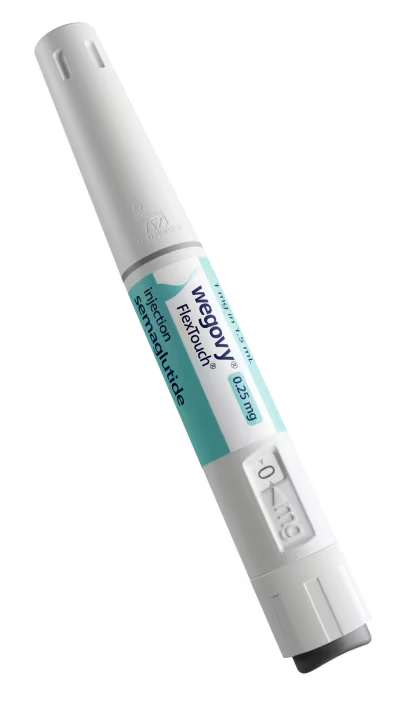
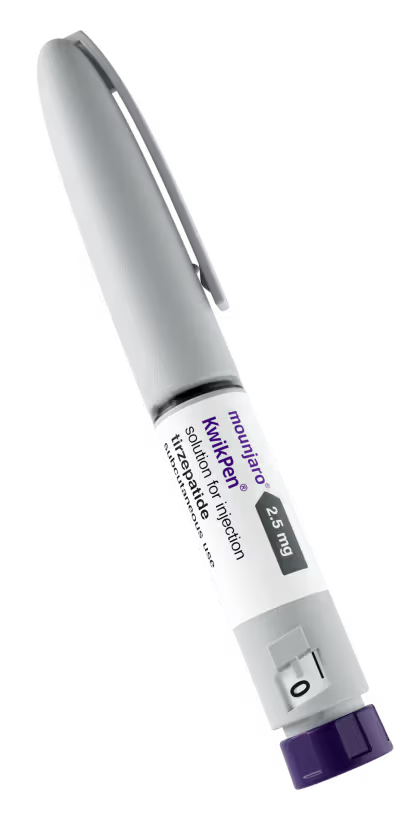
For people with a BMI over 30 (or over 27 with weight-related conditions) who cannot sustain a meaningful deficit through diet and lifestyle, GLP-1 medications such as Wegovy (semaglutide) or Mounjaro (tirzepatide) are now approved in the UK. These work partly by reducing appetite, which makes sustaining a deficit significantly easier. You can read more at the Totiva weight loss service page.
Practical ways to build the deficit#
A 1,000 kcal gap does not have to come entirely from eating less. A practical split might be:
- Cut 600-700 kcal from food (removing one high-calorie meal or snack, reducing portion sizes, and switching to lower-calorie versions of everyday foods)
- Burn 300-400 kcal through exercise (a brisk 45-60 minute walk burns approximately 200-300 kcal; a 30-minute run burns 300-400 kcal)
The NHS Eatwell Guide is a useful framework for checking that a reduced-calorie diet still covers all five food groups. The free NHS Weight Loss Plan app provides a structured 12-week programme with calorie targets built in, which many people find easier than tracking manually.
If you want structured support, NHS Tier 2 weight management services offer dietitian-led group programmes for adults with a BMI over 30. Ask your GP for a referral.
For a detailed look at how protein choices support weight loss, see our guide to high-protein, low-calorie foods.
If you are considering medication to help sustain a deficit, you can start a free weight loss consultation with Totiva to find out whether a GLP-1 treatment is suitable for you.
Medical Information: This article is for informational purposes only and does not constitute medical advice. Always consult a qualified healthcare professional before starting, stopping, or changing any treatment.