Does Rosemary Oil Cause Hair Loss?
Rosemary oil won't directly cause hair loss, but misuse can trigger scalp irritation and shedding. Here's what the evidence actually shows.
Written by:

Medically reviewed by Callum Armstrong, MPharm, Independent Prescriber (IP)
Key Takeaways
Rosemary oil does not cause hair loss directly. Shedding after starting it is usually due to scalp irritation or pre-existing conditions. The evidence for hair growth benefit is limited and not endorsed by the NHS or NICE.
Rosemary oil does not directly cause hair loss. There is no clinical evidence linking it to permanent shedding or follicle damage. However, some people do notice more hair coming out after they start using it, and there are real reasons why that can happen.
Why shedding can happen after you start using it#
The most likely explanation is telogen effluvium. This is a temporary form of shedding where hairs shift from the growth phase into the resting phase all at once, usually triggered by a change to the scalp environment. Starting any new scalp product, including rosemary oil, can disturb the scalp enough to do this. The shedding typically begins 2 to 3 months after the trigger, which is why it can feel confusingly unconnected to the product.
A second cause is contact dermatitis, an allergic or irritant reaction to the oil itself. Rosemary essential oil contains compounds including 1,8-cineole and alpha-pinene, which are known sensitisers. Applying undiluted essential oil directly to your scalp increases the risk considerably. Signs include redness, itching, flaking, or a burning sensation. If the scalp becomes inflamed, some temporary hair loss can follow.
It is also worth asking whether the shedding you are experiencing started before you began using rosemary oil. Female pattern hair loss affects around 1 in 3 women by the age of 70, and many women notice it first in their 30s and 40s. Other common causes include iron deficiency (low ferritin), thyroid dysfunction, and hormonal changes after pregnancy or stopping the contraceptive pill. People often start trying products like rosemary oil around the same time they notice these changes, which can make the product look like the cause when it is not.
Does rosemary oil actually do anything useful?#
There is some evidence it might help, but it is modest. A 2015 study published in SKINmed compared twice-daily rosemary oil application with 2% minoxidil over six months in 100 adults with androgenetic alopecia (pattern hair loss). Both groups showed similar improvements in hair count by the end of the trial. That sounds encouraging, but the study was small, unblinded, and relied on subjective hair counting. It has not been replicated at scale. Treat the finding as interesting, not conclusive.
Retail rosemary oil products also vary considerably. Unlike a licensed medicine, rosemary essential oil is not standardised for its active components, so the concentration of 1,8-cineole or rosmarinic acid in a product like Mielle Organics Rosemary Mint Oil may differ from what was used in the 2015 trial. Neither the NHS nor NICE recommends rosemary oil for hair loss. It is regulated as a cosmetic in the UK under the Office for Product Safety and Standards, not as a medicine.
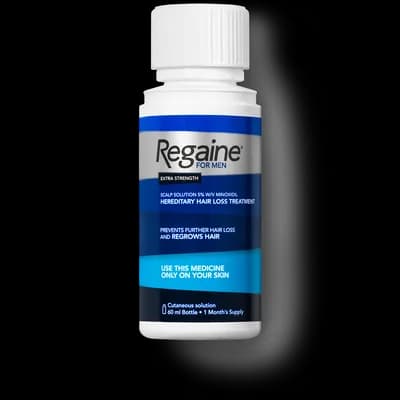
If you want a treatment with a stronger evidence base, topical minoxidil 5% is available over the counter in the UK following MHRA reclassification, without a prescription.
How to use it without making things worse#
If you want to try rosemary oil, a few steps reduce your risk:
- Always use a formulated product rather than applying neat essential oil. Even formulated products vary in quality and concentration.
- Patch test on your inner arm for 48 to 72 hours before applying it to your scalp.
- If you develop redness, itching, or a rash, stop using it. A mild reaction can be treated with OTC 1% hydrocortisone cream for up to 7 days, but do not apply it to broken or infected skin. If symptoms do not improve within a week, see your GP.
- If you are pregnant or breastfeeding, speak to your GP or midwife before using any topical essential oil product. There is no reliable clinical data on safety in pregnancy, so professional advice is essential before use.
- If you suspect a safety problem with a cosmetic product, you can report it to the Office for Product Safety and Standards (OPSS), which covers cosmetics in the UK. The MHRA Yellow Card scheme is for medicines, not cosmetics.
Got questions? Speak to a pharmacist on WhatsApp now
Prefer to browse first? View treatments
When shedding is a sign of something else#
If your hair loss is significant, spreading, or has been going on for more than 3 months, a GP appointment is the right step. Ask for a blood test checking ferritin, full blood count, and thyroid function. These are common, treatable causes of shedding that a scalp oil cannot fix.
For men experiencing pattern hair loss, the finasteride vs minoxidil comparison guide covers the two main evidence-based options in detail. Totiva's hair loss service is for men only; women should speak to their GP about suitable treatments.
Medical Information: This article is for informational purposes only and does not constitute medical advice. Always consult a qualified healthcare professional before starting, stopping, or changing any treatment.