Healthy Snacks to Buy in the UK: A Pharmacist's Guide
From supermarket shelves to your kitchen, a pharmacist breaks down which snacks are genuinely nutritious, how to read labels, and what to avoid.
Written and medically reviewed by:

Key Takeaways
The best snacks combine protein, fibre, or healthy fat: think nuts, Greek yoghurt, eggs, oatcakes with hummus, and raw vegetables. Use the NHS Food Scanner app to check labels quickly. Avoid snacks marketed as healthy that are mainly sugar and refined carbs.
The best healthy snacks combine protein, fibre, or healthy fat with minimal added sugar and salt. Think plain nuts, Greek yoghurt, oatcakes with hummus, hard-boiled eggs, fresh fruit, and raw vegetables with a dip. These options keep you fuller for longer, cause a gentler rise in blood sugar, and are available in every major UK supermarket.
Why most people reach for the wrong thing#
Hunger is not always the reason you snack. Boredom, stress, and tiredness all trigger the urge to eat, and in those moments, ultra-processed foods (factory-made products with long ingredient lists full of additives and refined ingredients) are the easiest grab. They are engineered to override your sense of fullness, which is why a packet of biscuits disappears faster than a handful of almonds.
Before reaching for a snack, drink a glass of water and wait five minutes. Thirst is often mistaken for hunger, and this simple check can save you 200 calories without any willpower.
What makes a snack genuinely healthy#
A useful rule of thumb: if your snack contains at least one of protein, fibre, or healthy fat, it will slow digestion and keep blood sugar steadier. If it is mainly refined carbohydrate and sugar, it will spike your energy briefly and leave you hungrier within an hour.
For adults managing weight or blood sugar, the glycaemic index (GI) of a snack matters. Low-GI options release glucose gradually. High-GI snacks (rice cakes, most cereal bars, flavoured popcorn) cause a faster spike, which can increase cravings later.
A practical UK portion guide:
| Snack | Sensible portion | Approximate calories | Key benefit |
|---|---|---|---|
| Mixed unsalted nuts | Small handful (30g) | 170-200 kcal | Protein, healthy fat |
| Plain Greek yoghurt | 150g pot | 90-110 kcal | Protein, probiotics |
| Hard-boiled egg | 1 large | 78 kcal | Complete protein |
| Oatcakes with hummus | 2 oatcakes + 2 tbsp | 150 kcal | Fibre, protein |
| Apple with almond butter | 1 apple + 1 tbsp | 160 kcal | Fibre, healthy fat |
| Carrot and celery sticks | Large handful | 30-40 kcal | Fibre, vitamins |
| Mini Babybel Light | 1 portion (20g) | 42 kcal | Protein, calcium |
| Edamame beans | 80g | 85 kcal | Plant protein, fibre |
Reading UK traffic light labels#
Most UK packaged snacks carry a front-of-pack traffic light label showing fat, saturated fat, sugar, and salt, each coloured red, amber, or green per 100g or per serving. The NHS advises aiming for more greens and ambers, and avoiding snacks with any reds where possible.
One practical shortcut: download the free NHS Food Scanner app. You scan a barcode and it flags the nutritional profile and suggests healthier alternatives from the same category. It takes seconds and is far faster than reading the back of a packet.
Be wary of marketing claims. Under UK food labelling law, a product labelled "high protein" must contain at least 20% of its energy from protein. "Low sugar" means no more than 5g of sugar per 100g. These thresholds are worth knowing because many snacks that claim to be healthy sit just outside these definitions.
HFSS regulations introduced in the UK in 2022 restrict how high fat, salt, and sugar products can be promoted in store, including end-of-aisle placement and multi-buy deals. If a product is still prominently displayed in these spots, it may have narrowly avoided HFSS classification rather than genuinely being healthy.
Snacks worth buying in UK supermarkets#
These are consistently available, reasonably priced, and nutritionally sound:
- Plain unsalted nuts (Tesco, Sainsbury's, Aldi): almonds, walnuts, and Brazil nuts are all good. Avoid honey-roasted or heavily salted varieties.
- Nakd bars: made from blended dates, nuts, and fruit. No added sugar, though naturally high in sugar, so one bar rather than two.
- Plain oatcakes (Nairn's or supermarket own-brand): low sugar, reasonable fibre. Pair with cottage cheese or nut butter.
- Mini Babybel Light or Babybel Protein: convenient, portion-controlled, and genuinely a good protein source.
- Plain edamame pods: increasingly available in the chilled aisle. High in plant protein and fibre.
- Plain rice cakes with nut butter: the rice cake alone is low in nutrients, but adding protein and fat transforms it.
- Pomegranate seeds: Tesco stocks these in small pots. High in antioxidants and a manageable portion.
Avoid products that Tesco's "healthy snacks" search returns alongside genuinely nutritious options, including Jammie Dodger Minis, Party Rings, and Toffee Crisp bars. These appear because of keyword matching, not nutritional merit.
Snacking with specific health conditions#
Type 2 diabetes or pre-diabetes: focus on low-GI options. Nuts, eggs, plain yoghurt, and vegetables are good choices. Avoid fruit juices, cereal bars with added sugar, and anything with glucose-fructose syrup in the first few ingredients. The NHS Diabetes Prevention Programme includes snack guidance as part of its lifestyle curriculum.
High cholesterol: walnuts and almonds have good evidence for modest LDL reduction. Swap saturated-fat-heavy snacks (cheese in large portions, crisps) for these where possible.
Nut allergy: seeds are a useful alternative. Pumpkin seeds and sunflower seeds offer similar fat and protein profiles. Roasted chickpeas are widely available and safe for most nut-allergic individuals, though always check manufacturing lines.
Gluten intolerance or coeliac disease: rice cakes, plain nuts, fruit, vegetables, and certified gluten-free oatcakes are all reliable. Check that oatcakes are specifically labelled gluten-free, as standard oats are often cross-contaminated.
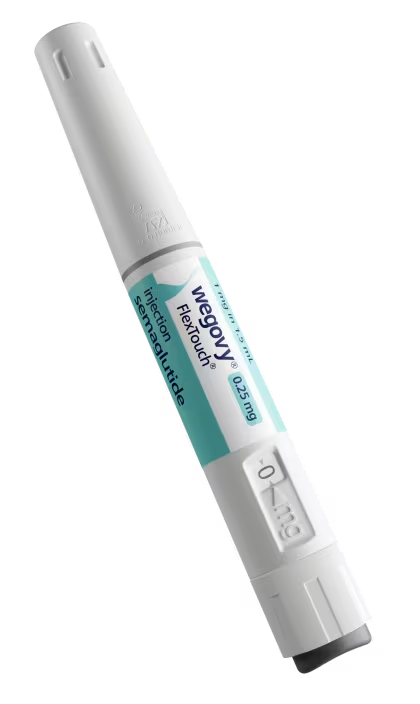
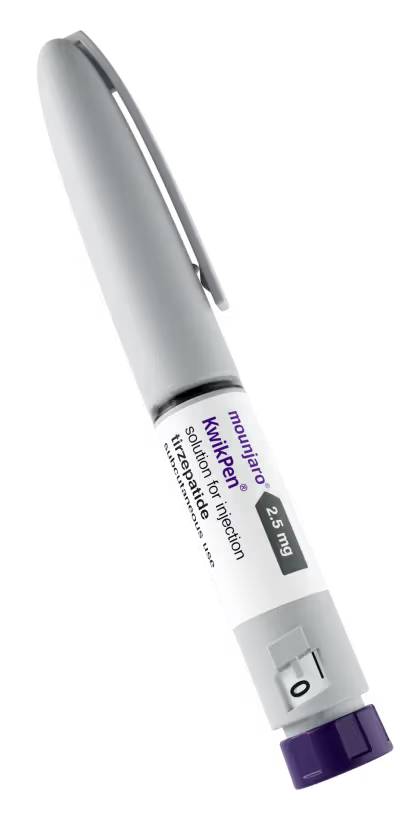
On a GLP-1 medication (such as Wegovy or Mounjaro): appetite suppression from these medicines means you may not feel hungry between meals at all. If you do snack, prioritise protein to help preserve muscle mass during weight loss. Small portions of Greek yoghurt, a boiled egg, or a small handful of nuts are appropriate. Avoid eating out of habit rather than hunger, as these medications work partly by reinforcing satiety signals. You can read more about eating well alongside weight loss treatment on the Totiva weight loss service page.
Got questions? Speak to a pharmacist on WhatsApp now
Prefer to browse first? View treatments
Snacking on a budget#
Healthy snacking does not require specialist health food shops. Aldi and Lidl stock unsalted nuts, plain yoghurt, and fresh fruit at prices well below branded alternatives. Buying loose or larger bags of nuts and portioning them yourself saves money compared to snack packs. A 500g bag of mixed nuts divided into 30g portions works out at roughly 30-40p per serving. Frozen edamame is cheaper than chilled and nutritionally identical.
Bananas remain one of the most cost-effective snacks available. One medium banana provides around 3g of fibre, 27g of carbohydrate (moderate GI), and useful amounts of potassium. Paired with a tablespoon of peanut butter, it becomes a balanced snack with protein and healthy fat.
If snacking is part of a broader effort to manage your weight, the UK weight loss diet plan guide covers meal structure in more detail.
Medical Information: This article is for informational purposes only and does not constitute medical advice. Always consult a qualified healthcare professional before starting, stopping, or changing any treatment.