Eating Out in a Calorie Deficit: The UK Restaurant Guide
Which UK restaurants make calorie counting easiest, what to order at each, and how to handle menus without calorie labels.
Written by:

Medically reviewed by Chris Armstrong, MPharm
Key Takeaways
Chains with 250+ employees must display calories by law in England, making places like Nando's, Wagamama and Pizza Express easy to navigate. Aim for meals under 700 kcal and watch sauces, sides and alcohol, which are the main hidden calorie sources.
Restaurants with calorie-labelled menus are your best bet when eating out in a deficit. In England, any food business with 250 or more employees has been legally required to display calorie counts on menus since April 2022. That covers most major UK chains, making places like Nando's, Wagamama, Pret a Manger, Pizza Express, Zizzi, and McDonald's far easier to navigate than smaller independents.
Which chains have to show calories by law#
The April 2022 regulations in England apply to businesses with 250 or more employees, which includes most national and large regional chains. Scotland and Wales do not have equivalent mandatory legislation, though many chains apply consistent labelling across the UK voluntarily.
Exempt businesses include small cafes, independent restaurants, and takeaways below the 250-employee threshold. When you eat at an unlabelled venue, a rough estimate is your only option (more on that below).
Chains currently displaying calories include:
- Nando's (calorie counts printed per dish)
- Wagamama (full nutritional breakdown online and in-restaurant)
- Pizza Express and Zizzi (calories on menus)
- Pret a Manger (displayed on packaging and boards)
- Greggs (displayed in-store and online)
- McDonald's (shown on menu boards and app)
- Subway (shown per 6-inch and footlong option)
- Wetherspoons (available via app and in-restaurant menus)
What a typical deficit meal target looks like#
NICE guidelines recommend a daily calorie deficit of 500–600 kcal for safe, sustained weight loss, which equates to roughly 0.5 kg per week. If your total daily energy expenditure is around 2,200 kcal, your daily target is about 1,600 kcal. A restaurant main meal sitting at 500 to 700 kcal leaves reasonable room for breakfast and an evening snack without blowing the day.
A useful mental benchmark: aim for a restaurant meal (starter, main, and soft drink combined) that comes in under 700 kcal. That is achievable at most of the chains above if you know what to order.
Low-calorie meal examples at popular UK chains#
| Chain | Lower-calorie option | Approx. kcal |
|---|---|---|
| Nando's | 1/4 chicken (breast) + corn on the cob + side salad | 480 kcal |
| Wagamama | Grilled chicken donburi | 530 kcal |
| Pizza Express | Leggera Pollo Pesto (with hole, no dough disc) | 510 kcal |
| Pret a Manger | No-Bread Egg Pot + a black coffee | 290 kcal |
| Subway | 6-inch Turkey Breast on Hearty Italian, salad, no sauce | 310 kcal |
| Greggs | Chicken salad baguette | 370 kcal |
These are approximations based on published nutritional data, which chains update periodically. Always check the current menu before ordering.
The hidden calorie traps most people miss#
Sauces and dressings are the most common problem. A Caesar dressing can add 150 to 200 kcal to a salad that would otherwise be light. Mayonnaise-based sauces on the side of a wrap or burger are similarly dense. Asking for dressings on the side, choosing vinaigrette over creamy options, and swapping flavoured sauces for a squeeze of lemon are easy wins.
Alcohol is significant and often overlooked. A large glass of wine (250ml) contains around 190 kcal. A pint of regular lager is roughly 180 kcal. Two drinks add the equivalent of a small meal before you have touched the menu. Spirits with a diet mixer (for example, a single gin and slimline tonic) come in at around 60 kcal and are the lowest-calorie route if you want to drink. The NHS publishes calorie figures for common alcoholic drinks if you want to check a specific drink before ordering.
Sides and extras accumulate quietly. Chips with a Nando's main add around 300 kcal. Bread before an Italian meal, halloumi starters, and dips all land before the main course. A protein-first strategy helps here: order a higher-protein main, skip the bread basket, and choose a vegetable side over starchy options.
Ordering at restaurants without calorie labels#
When labels are not available, use broad principles rather than guessing exact numbers:
- Grilled, baked, or steamed dishes are consistently lower in calories than fried or creamy ones
- Tomato-based sauces (for example in Italian food) carry far fewer calories than cream or butter-based sauces
- At Indian restaurants, tandoori dishes, dals, and raita-based sides are lighter choices than kormas, bhunas, and anything described as "rich" or "creamy"
- At Chinese restaurants, steamed dishes with soy-based sauces are lower than deep-fried options or anything in sweet-and-sour batter
- Asking for sauce on the side at any restaurant gives you control over how much you add
For reference, the NHS Eatwell Guide recommends that a main meal should make up roughly a third of your daily intake. If you are targeting 1,600 kcal per day, that puts a rough ceiling of around 550 kcal on a restaurant main.
Got questions? Speak to a pharmacist on WhatsApp now
Prefer to browse first? View treatments
If you are taking a weight-loss medication#
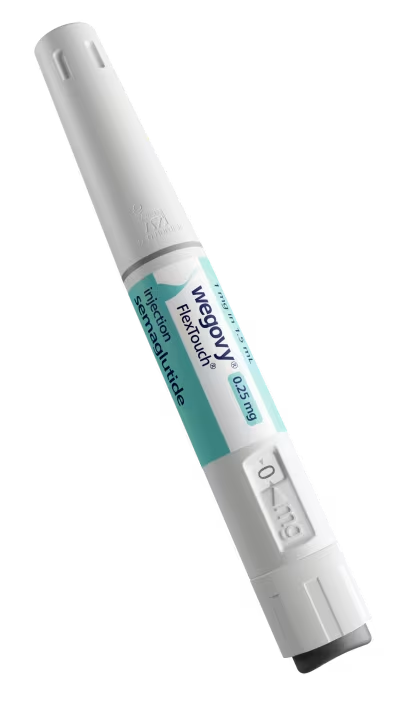
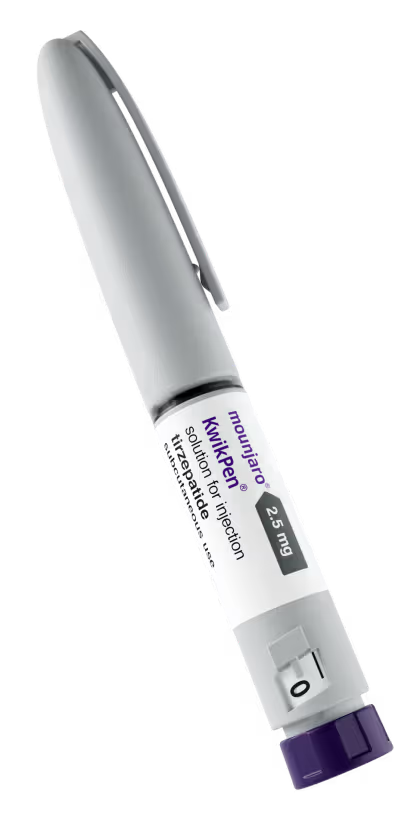
If you are using a GLP-1 medication like Mounjaro (tirzepatide), Wegovy (semaglutide injection), Wegovy tablets (oral semaglutide), or Foundayo (oral semaglutide), your appetite may be noticeably reduced at mealtimes. This can make restaurant eating easier in one sense (smaller portions feel satisfying) but also creates a risk of eating too little protein, which matters for preserving muscle mass during weight loss.
When appetite is suppressed, prioritising protein in whatever you do eat becomes more important. Choosing a grilled chicken main with vegetables over a bread-heavy starter and a small dessert is generally a better approach for meeting your protein needs. Nausea is also more common in the early weeks of treatment, so very rich or fatty restaurant meals are more likely to be uncomfortable. Our high-protein, low-calorie foods guide has practical ideas if you are planning ahead.
For anyone considering medical weight management alongside lifestyle changes, Totiva's weight loss service offers clinician-assessed access to treatments including Mounjaro and Wegovy.
How often can you eat out and still lose weight#
Frequency matters less than what you order. One restaurant meal per week that fits within your calorie target has no meaningful impact on progress. Two or three restaurant meals per week is also manageable if you apply the principles above consistently. Where people run into difficulty is treating every restaurant visit as an occasion to abandon the plan entirely, rather than simply making slightly different choices from the menu.
If you want to understand how your daily deficit translates to weekly weight loss over time, the guide on how long a 1,000 calorie deficit takes to work covers the maths in detail.
Medical Information: This article is for informational purposes only and does not constitute medical advice. Always consult a qualified healthcare professional before starting, stopping, or changing any treatment.