Retatrutide long-term side effects: what happens after months of treatment
What the current trial data shows (and doesn't) about retatrutide's cumulative effects on the heart, gut, pancreas and body composition over extended use.
Written and medically reviewed by:

Key Takeaways
Retatrutide's longest published data runs to around 48-84 weeks, not years, but results so far are genuinely exciting. Heart rate, gut symptoms, muscle loss and gallbladder risk all need longer-term monitoring once (and if) it's licensed — and the field is moving fast.
Retatrutide's long-term side effects aren't fully known yet, and that's the honest starting point for anyone interested in this drug. The longest published trial data we have runs to 48 weeks (Phase 2), with Phase 3 results now reporting out over roughly 72 to 84 weeks depending on the study. That's genuinely useful data — and the early signals are impressive — but it's not the same as five or ten years of real-world use, which is what we'd normally want before calling something's long-term safety "established." This piece looks specifically at what happens to the body over extended treatment, what current data can and can't tell us, and what ongoing monitoring would likely involve if retatrutide eventually gets a UK licence.
If you're after a general rundown of retatrutide's side effects, including the more common short-term ones like nausea and injection site reactions, we've covered that separately. This one focuses on the cumulative and chronic picture.
What "long-term" actually means for retatrutide right now#
Retatrutide is a triple receptor agonist, activating GLP-1, GIP and glucagon receptors simultaneously — a genuinely novel mechanism that has generated considerable excitement in the medical community. It's still investigational. Neither the MHRA nor the EMA has granted it a marketing authorisation, so it can't legally be prescribed in the UK outside of clinical trials, though that is expected to change as the Phase 3 programme matures.
The main efficacy and safety data come from the Phase 2 trial published in the New England Journal of Medicine, which followed participants for 48 weeks. Eli Lilly's Phase 3 programme, including the TRIUMPH-4 trial in obesity with osteoarthritis and the TRANSCEND-T2D-1 trial in type 2 diabetes, has started reporting results, with TRIUMPH-4 showing average weight loss of around 71.2 lbs — figures that have drawn widespread attention even among specialists accustomed to the GLP-1 drug class. These are meaningful numbers, and the trajectory of the science is encouraging. That said, even the longest running arms of these studies haven't yet reached the kind of multi-year follow-up that regulators typically want before granting a full licence, and post-marketing surveillance (the sort that eventually revealed things like pancreatitis signals with earlier GLP-1 drugs) simply hasn't had time to happen yet.
So when people ask about "long-term side effects", the accurate answer is: here's what 48 to 84 weeks of trial data shows, here's what we're still waiting to find out — and here's why the field is watching closely and optimistically.
Do the gut side effects settle down or build up over time?#
Nausea, vomiting, diarrhoea and constipation are the most commonly reported side effects with retatrutide, as they are with Mounjaro and Wegovy. The pattern in trials is reassuring in one important respect: these symptoms cluster around dose increases rather than building steadily throughout treatment. Most people find the first few weeks after a dose step-up are the hardest, then things settle before the next increase.
What's less clear is whether this pattern holds for people who stay on a stable, higher maintenance dose for a year or more. Some trial participants on the top 12mg dose did report ongoing mild-to-moderate gastrointestinal symptoms well into the later weeks of the 48-week Phase 2 trial, suggesting that full tolerance doesn't always develop, even if symptoms become more manageable. For the majority of participants, though, gut symptoms were manageable enough to continue treatment and achieve substantial weight loss. If you're on a GLP-1 class medicine long-term, it's worth flagging persistent gut symptoms to your prescriber rather than assuming they'll simply fade with time.

Want to hear when Retatrutide is available?
Heart rate: does the increase persist?#
This is one of the more distinctive findings with retatrutide compared with older GLP-1 medicines. In the Phase 2 trial, the highest dose group saw an average resting heart rate increase of around 6. beats per minute at 24 weeks, which then declined somewhat by weeks 36 to 48. That trajectory — rising then partially settling — is encouraging, and suggests the body does adapt to some degree over time. What we don't yet know is what happens with heart rate at 2, 3 or 5 years of continuous use, and ongoing Phase 3 monitoring will help answer that.
A small number of participants had mild rhythm changes (arrhythmias), though no increase in heart attacks or major cardiac events has been reported so far. Laboratory research on isolated human heart tissue has also looked at retatrutide's direct effects on heart muscle contraction, adding another layer to ongoing cardiac monitoring in trials.14 If you have an existing heart rhythm condition, this is the sort of detail worth raising directly with a cardiologist or GP as part of any future treatment discussion.
Pancreas and gallbladder: a class-wide concern that matters more over time#
Acute pancreatitis is a recognised, if uncommon, risk across the GLP-1 and dual GLP-1/GIP receptor agonist class, serious enough that the MHRA strengthened its warnings in 2025 to include necrotising and fatal cases. It's worth keeping this in perspective: these events remain rare, and a recent systematic review and meta-analysis of randomised controlled trials looked specifically at pancreatitis and pancreatic cancer rates across this drug class, finding that the overall benefit-risk balance for most patients remains favourable.
Gallbladder and biliary tract disease is another consideration, particularly because the risk appears linked to the speed and amount of weight loss rather than the specific molecule. Studies published in JAMA Internal Medicine and The Lancet have both found an association between GLP-1 receptor agonist use and gallbladder or biliary disease. Given that retatrutide produces some of the largest weight loss figures seen in this drug class — up to 24% of body weight at the highest dose in Phase 2 data — this is an area that warrants close monitoring over extended treatment, even though retatrutide-specific long-term gallbladder data isn't yet available. Awareness and regular check-ins with a prescriber are the practical takeaway here.
The thyroid signal, and why it shapes long-term monitoring#
Rodent studies have shown that GLP-1 receptor agonists can activate thyroid C-cells, leading to calcitonin release and C-cell proliferation. It's important to note that this finding hasn't been confirmed as a human risk with currently licensed GLP-1 medicines — years of real-world use with semaglutide and other agents haven't produced a clear human thyroid cancer signal. That said, it remains a reason for ongoing surveillance, and it's why people with a personal or family history of medullary thyroid cancer or MEN2 syndrome are typically excluded from GLP-1 and related trials, retatrutide included.
Got questions about Retatrutide? Speak to a pharmacist on WhatsApp
Prefer to browse first? View treatments
Muscle and bone: what sustained weight loss can do to your body composition#
Rapid, large-scale weight loss — whatever the cause — tends to take some lean muscle mass along with fat. This isn't a unique concern with retatrutide, but its greater efficacy means the absolute amount of muscle at risk could be larger simply because more total weight is being lost. Data from Mounjaro trials found muscle mass reductions in a meaningful proportion of users, with around 5.7% of participants in one analysis showing more significant losses.
The good news is that this is a manageable issue with the right lifestyle approach. Over months of treatment, resistance exercise and adequate protein intake are genuinely important, and the weight loss itself brings substantial metabolic benefits that far outweigh muscle loss concerns for most people. If you're losing weight quickly on any GLP-1 based treatment, ask your prescriber or a dietitian about protein targets and strength training — it makes a real difference.
Tolerance, dose escalation and the maintenance phase#
One open question with any drug this potent is whether people need higher doses over time to maintain the same effect, or whether the side effect profile changes once someone has been on a stable maintenance dose for many months rather than still titrating upward. Current data mostly reflects the titration period, since that's what most trials to date have focused on. Longer Phase 3 data, once fully published, should start to answer whether the safety and efficacy profile on a stable long-term dose looks different from the picture during dose escalation — and the expectation, based on analogous drugs, is broadly positive.
What happens if you stop: rebound and metabolic reversal#
This is one of the clearer long-term patterns across the whole GLP-1 drug class, and there's no reason to expect retatrutide to behave differently given its shared mechanisms. Extension data from the STEP 1 trial with semaglutide showed that participants regained a substantial proportion of lost weight within a year of stopping treatment, along with reversal of some of the cardiometabolic improvements gained during treatment. Similar findings have emerged from newer research tracking the trajectory of weight regain after GLP-1 receptor agonist cessation. Tirzepatide's SURMOUNT-4 trial found the same pattern: continuing treatment maintained weight loss, while stopping led to regain.
The practical implication — and the way to think about it positively — is that these medicines work as long as they're taken, which means continued access to treatment is important. Anyone considering this class of treatment should think about it as a long-term commitment rather than a short course, and discuss with a prescriber what a sustainable, ongoing plan looks like for their circumstances.
Want to hear when Retatrutide is available?
What ongoing monitoring would likely involve#
Nobody can currently prescribe retatrutide in the UK outside a trial setting, so there's no established NHS or private monitoring protocol for it specifically. But based on how NICE and prescribers currently manage licensed GLP-1 medicines under guidance such as NICE NG246 on overweight and obesity management, long-term use of a drug like this would likely involve regular checks on kidney function, blood glucose, lipid profile, weight trajectory and mental wellbeing, alongside monitoring for gallbladder symptoms and any signs of pancreatitis. Given retatrutide's additional glucagon receptor activity and its potential effects on liver fat — seen in early data on metabolic dysfunction-associated steatotic liver disease, where results look promising — liver function monitoring would probably feature too.
A word on buying retatrutide privately#
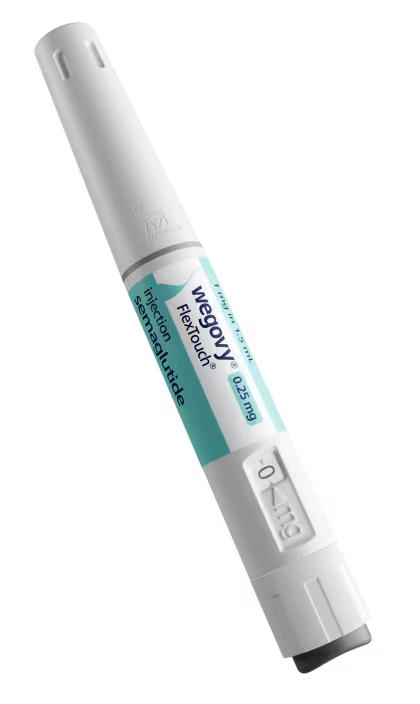
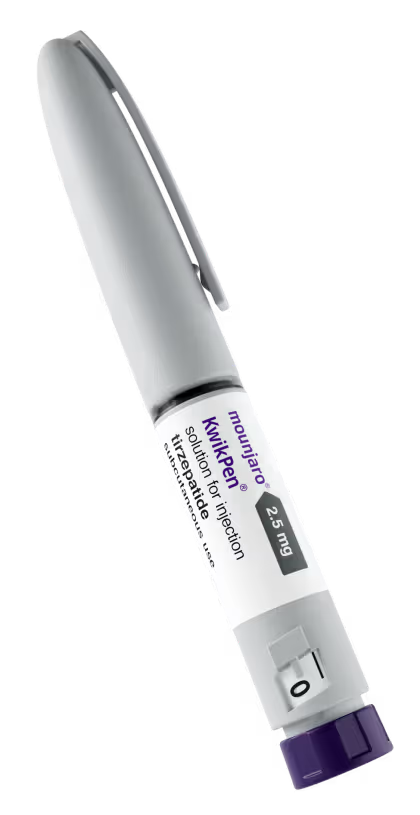
Because retatrutide hasn't been approved anywhere yet, any product sold online claiming to be retatrutide is not going through the regulatory checks that licensed medicines require. The MHRA has taken enforcement action against illegal manufacturing operations producing unlicensed weight-loss medicines, and there's no way to verify the contents, dose or sterility of anything bought this way. If you're interested in GLP-1 based weight loss treatment now, options like Mounjaro and Wegovy are licensed, MHRA-approved medicines available through a proper clinical assessment, including through Totiva's weight loss service, where eligibility is checked by a UK-registered prescriber before anything is dispensed.
Talking to a healthcare professional#
Retatrutide's long-term safety picture is still being written — quite literally, as more trial data gets published — and the story so far is one of genuine promise alongside normal scientific scrutiny. If you're weighing up whether to wait for it, considering trial participation, or wondering how it might compare with a medicine you're already using, the best next step is an honest conversation with a pharmacist, GP or prescriber who can look at your specific health history rather than general trial averages. Suitability for any weight-loss treatment, current or future, always comes down to an individual clinical assessment.
Want to hear when Retatrutide is available?
Medical Information: This article is for informational purposes only and does not constitute medical advice. Always consult a qualified healthcare professional before starting, stopping, or changing any treatment.