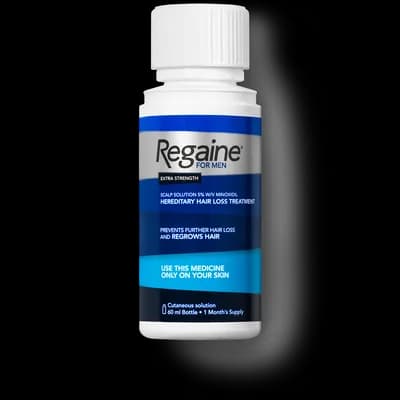
Does Minoxidil Work for Receding Hairlines? The Evidence
Minoxidil can help with receding hairlines, but there's a catch. We explain what works, what doesn't, and why timing matters for frontal hair loss.
Written and medically reviewed by:

Key Takeaways
Minoxidil helps 60% of men with receding hairlines by thickening existing hair and slowing recession. It works best when started early, before complete baldness develops.
Does Minoxidil Work for Receding Hairlines? The Evidence#
Minoxidil does work for receding hairlines, but with important limitations. It's most effective when hair follicles are still present but thinning, rather than completely bald areas. Studies show about 60% of men see improvements, though results are generally more modest at the hairline compared to the crown.
The key is starting treatment early. Once you've lost all hair from an area, minoxidil can't regrow follicles that no longer exist - it can only strengthen and revitalise existing ones.
What Causes Hairlines to Recede?#
Male pattern baldness affects around 50% of men over 50, with many noticing changes much earlier. The process starts when hair follicles become sensitive to dihydrotestosterone (DHT), a hormone derived from testosterone.
Frontal hairlines are particularly vulnerable because these follicles often have more DHT receptors. This explains why you might notice temple recession or a widening parting before thinning elsewhere.
The progression typically follows a predictable pattern - starting with temporal recession, then affecting the crown, eventually meeting to form the classic horseshoe pattern. But catching it early gives you the best chance of maintaining what you have.
How Minoxidil Works on Hairlines#
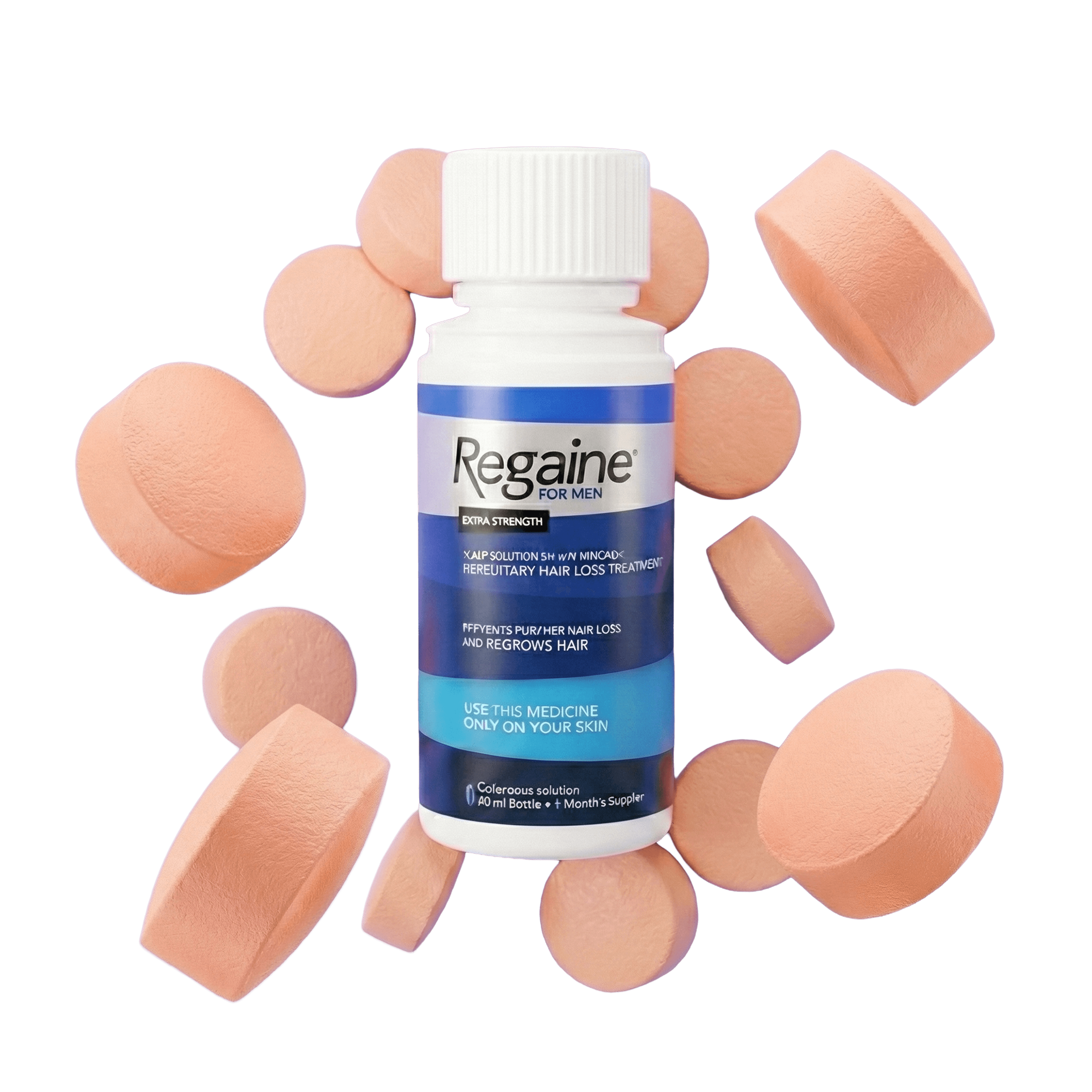
Originally developed as a blood pressure medication, minoxidil's hair growth effects were discovered by accident. The topical solution works by widening blood vessels in the scalp, improving nutrient delivery to hair follicles.
This increased blood flow helps counteract the miniaturisation process caused by DHT sensitivity. However, minoxidil doesn't address DHT levels directly - it's essentially giving struggling follicles better conditions to survive.
For receding hairlines specifically, this means minoxidil is most effective at:
- Thickening existing thin hairs
- Slowing further recession
- Potentially encouraging some regrowth at the hairline edges
But it won't restore a completely bald forehead or fill in deep temple recession.
What the Research Shows#
Clinical studies on minoxidil typically focus on crown balding, where results are generally better than at the hairline. However, research does support its use for frontal hair loss.
A study in the Journal of the American Academy of Dermatology found that 5% minoxidil solution improved hair density at the frontal scalp in 58% of men after 48 weeks. The improvements were modest but statistically significant.
Importantly, minoxidil works best when combined with other treatments. Studies show combination therapy with finasteride achieves success rates of around 90%, compared to 60% for minoxidil alone.
Using Minoxidil for Your Hairline#
If you're considering minoxidil for a receding hairline, timing is crucial. The earlier you start, the better your chances of maintaining and potentially improving your hairline.
You'll need the 5% strength for maximum effectiveness - the 2% version isn't recommended for men. Apply it twice daily to clean, dry scalp, focusing on the thinning areas rather than your hair.
Expect to wait 3-6 months before seeing results. Some men experience increased shedding initially - this is normal and usually indicates the treatment is working by resetting the hair growth cycle.
What to Expect Realistically#
Minoxidil for receding hairlines rarely produces dramatic transformations. More realistic outcomes include:
- Slower progression of hairline recession
- Thicker, healthier-looking existing hair
- Some improvement in coverage, particularly at hairline edges
- Better styling options due to increased hair density
Complete restoration of a juvenile hairline is unlikely with minoxidil alone. If you're looking for more significant changes, you might need to consider combination treatments or discuss other options with a healthcare provider.
Got questions? Speak to a pharmacist on WhatsApp now
Prefer to browse first? View treatments
Combining Treatments for Better Results#
Finasteride, available on prescription, addresses male pattern baldness at its source by reducing DHT levels. When used with minoxidil, it can be particularly effective for hairline preservation.
Unlike minoxidil, finasteride is taken orally and has been shown to slow or stop progression in about 90% of men. Some studies suggest it may even reverse early temple recession.
At Totiva, we can help you understand which treatments might be suitable for your situation. Both medications require ongoing use to maintain benefits.
Side Effects and Considerations#
Minoxidil is generally well-tolerated, but side effects can include:
- Scalp irritation or dryness
- Initial increased hair shedding
- Unwanted facial hair growth (if the solution runs down)
- Rarely, dizziness or rapid heartbeat
Avoid applying minoxidil to irritated or broken skin, and wash your hands thoroughly after use. If you have heart problems, speak to a doctor before starting treatment.
When to See a Healthcare Provider#
Consider getting professional advice if:
- Hair loss is sudden or patchy (could indicate other conditions)
- You're under 18 or over 65
- You have any heart conditions
- Over-the-counter treatments haven't helped after 6 months
The NHS occasionally prescribes minoxidil on the NHS for certain types of hair loss, though male pattern baldness treatment is usually private.
The Bottom Line#
Minoxidil can help with receding hairlines, but it's not a miracle cure. Success depends largely on starting treatment while you still have hair follicles to work with. Results are typically modest but can make a meaningful difference to hair thickness and styling options.
For the best chance of success, consider combining minoxidil with finasteride under medical supervision. Remember that all hair loss treatments require long-term commitment - benefits disappear within months of stopping treatment.
Medical Information: This article is for informational purposes only and does not constitute medical advice. Always consult a qualified healthcare professional before starting, stopping, or changing any treatment.