Topical Finasteride Results: What Regrowth to Expect
Topical finasteride can improve hair counts in a way that looks similar to the tablet, but the trial was short and the product is unlicensed in the UK. Here are the real numbers.
Written and medically reviewed by:

Key Takeaways
Topical finasteride added about 14 more hairs per cm² than placebo over 24 weeks, similar to the tablet. It is unlicensed in the UK, and the trial was short. Judge results after 6 to 12 months.
Topical finasteride can work. In the main phase III trial, men using a finasteride spray gained about 14 more hairs per cm² than men using a dummy spray over 24 weeks, and the result was numerically similar to the tablet. That is a modest, real gain. It is not proof that topical is as good as oral, and in the UK it is an unlicensed treatment.
What 14 extra hairs per cm² looks like#
The trial (Piraccini and colleagues, 2022) randomised 458 men with male pattern hair loss to a finasteride spray, a finasteride tablet or placebo. Researchers counted hairs in a marked 1 cm² patch of scalp. After 24 weeks, the spray group had gained an average of 20.2 hairs. The placebo group gained 6.7.
The true benefit is the gap between the two: about 13 to 14 hairs per cm². On a patch that holds a couple of hundred hairs, that is a small but visible-in-photographs change. Much of the benefit of finasteride is also about holding on to hair you have, not growing back what is already gone.
There are limits to these figures:
- The study ran for only 24 weeks, so it says nothing about results after a year or more.
- Only 323 of the 458 men finished (about 7 in 10).
- The company that makes the spray sponsored it.
- The spray and tablet results were "numerically similar". The trial was not designed to prove they are equal.
Smaller studies and reviews of gels and solutions point the same way, but they are often small and use different strengths.
How long until you can judge it#
Hair grows slowly, so patience matters. In the trial, the spray was already ahead of placebo at week 12. Most hair specialists, including the British Association of Dermatologists, suggest giving a treatment 6 to 12 months before deciding whether it works for you.
A rough timeline:
- Weeks 1 to 12: you may see a little extra shedding. This can happen as weaker hairs make way for new ones. It usually settles.
- Months 3 to 6: hair loss often slows. Some men notice thicker hairs.
- Month 12: the fairest point to compare photos taken in the same light.
- After stopping: any benefit fades over the following months, because DHT damage to follicles resumes.
Take a front, crown and top-down photo on day 1. Memory is a poor judge of slow change.
Why it is unlicensed in the UK#
Finasteride 1 mg tablets are licensed in the UK for male pattern hair loss. Topical finasteride has no marketing authorisation from the MHRA, the UK medicines regulator. Any topical product here is made as an unlicensed medicine, often called a "special", by a specialist manufacturer. A UK prescriber can legally prescribe it. They take responsibility for that choice and should explain that it is not licensed.
This matters for a few reasons. Strength and formulation vary between suppliers. The spray in the trial is not necessarily what a UK pharmacy will dispense. Buying from an unregulated website removes the checks you get from a GPhC-registered pharmacy, such as confirming who you are and reviewing your medical history.
On cost, the NHS does not routinely fund finasteride for hair loss, so treatment is usually a private prescription. NICE CKS guidance on male pattern hair loss covers where a GP, pharmacist or dermatologist fits in.
Does less in the blood mean fewer side effects?#
Probably fewer, but not none. In the trial, peak finasteride levels in the blood were more than 100 times lower with the spray than the tablet. Blood DHT fell by 34.5% with the spray, against 55.6% with the tablet. Side effects and reasons for stopping were similar to placebo, and none of the serious events were linked to treatment.
That is reassuring, but the trial was short and not built to detect rare problems. The MHRA has issued stronger warnings for finasteride tablets. These cover low mood, depression, suicidal thoughts and sexual problems that can carry on after stopping. Tablets now come with a patient card. We cannot assume topical use carries zero risk, because some finasteride still enters the blood. Read more in our guide to post-finasteride syndrome.
On the skin, the more common problems are itching, dryness, stinging and contact dermatitis. Ethanol or propylene glycol in some solutions can cause this. Tell your prescriber if you have reacted to minoxidil before.
Topical, oral or minoxidil#
| Option | Licensed in UK for hair loss | What it does | Main trade-off |
|---|---|---|---|
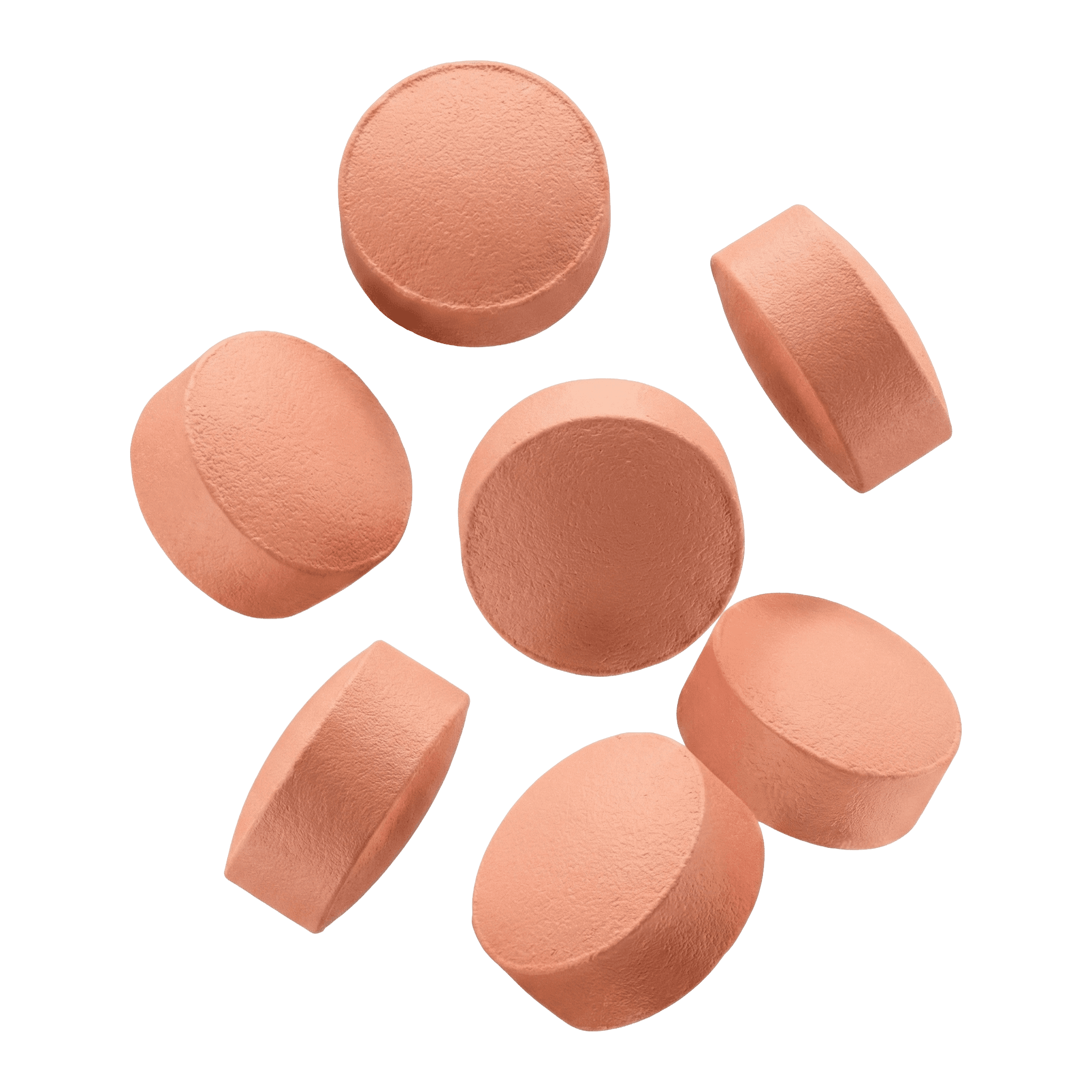
| Finasteride tablet 1 mg | Yes | Lowers DHT throughout the body | Strongest track record, more systemic exposure |
| Topical finasteride | No | Targets the scalp, less in the blood | Shorter trials, less UK supply certainty |
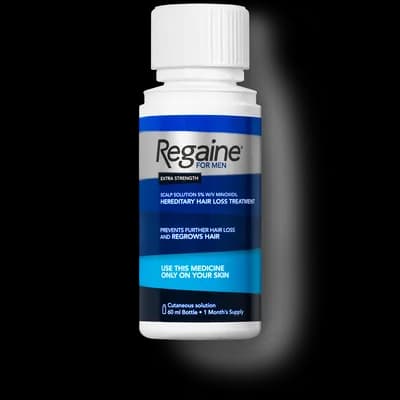
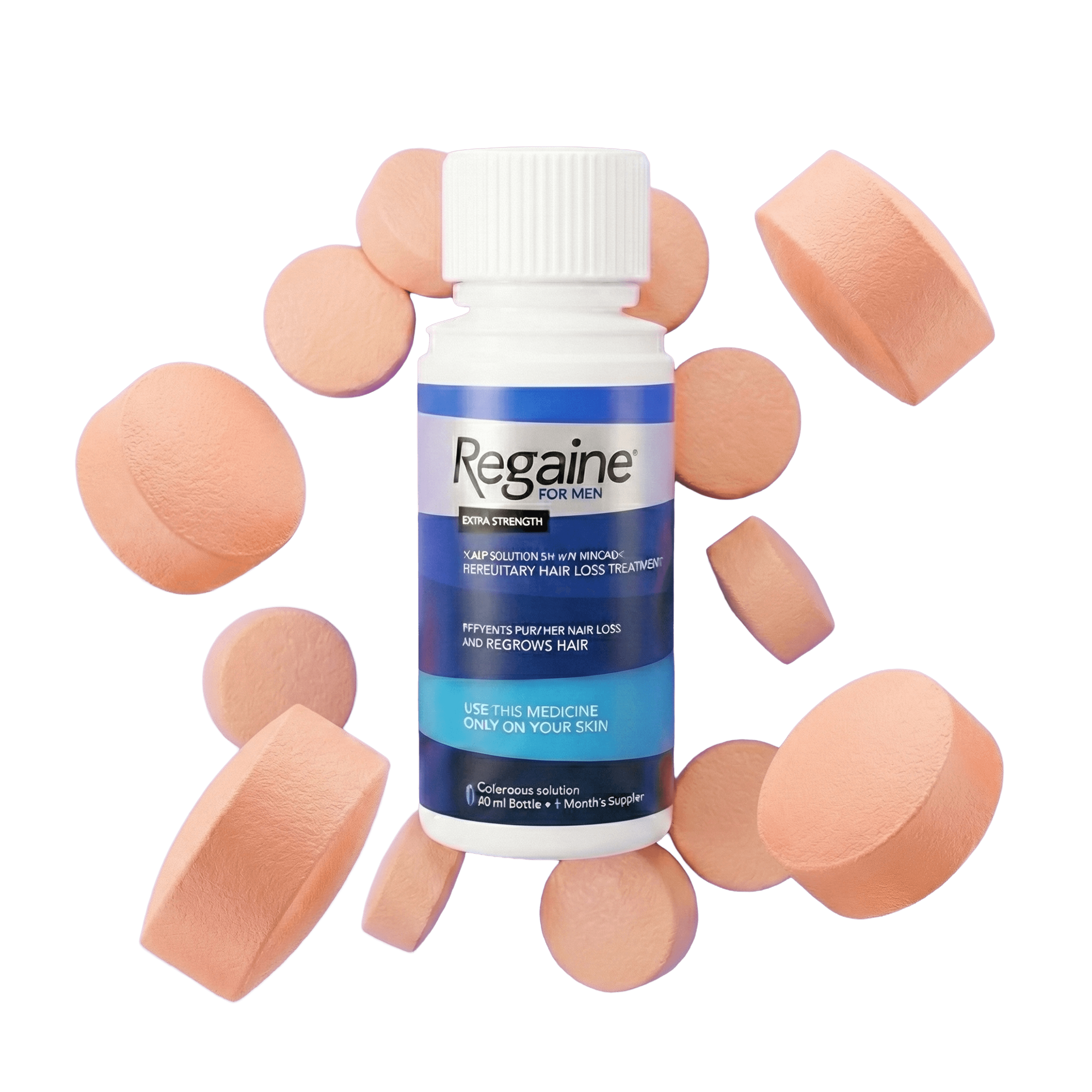
| Minoxidil (such as Regaine) | Yes | Stimulates follicles, does not block DHT | Twice-daily use, can irritate the scalp |
Finasteride and minoxidil work in different ways, so some men use both. Small trials of topical finasteride plus minoxidil suggest the pair beats either alone, but these studies are early. See our guide on finasteride and minoxidil together.
If your main worry is side effects, topical finasteride is a reasonable thing to ask a prescriber about. If you want the most proven route, the tablet has the longest evidence. For a fuller comparison, read finasteride vs minoxidil.
Got questions? Speak to a pharmacist on WhatsApp now
Prefer to browse first? View treatments
Practical points#
Use your prescriber's instructions for your exact product. In general:
- Apply to a clean, dry scalp, usually once a day at the same time.
- Wash your hands after, or wear a glove.
- Let it dry before touching pillows, hats or other people.
- If you miss a dose, skip it. Do not double up.
Women who are pregnant or could become pregnant should not handle finasteride or touch the treated scalp. It can harm a male baby's development. Keep it away from children. Tell your prescriber if you have liver problems.
Finasteride lowers PSA, a blood marker used to check for prostate problems, by around half with the tablet. Topical lowers it less, but tell any doctor ordering a PSA test that you use finasteride.
Sudden, patchy or very itchy hair loss may not be male pattern baldness, so see your GP first. Totiva's hair loss service is for men only and offers finasteride 1 mg tablets (£14.99 for 28) and Regaine liquid (from £33.60 for 60ml). Topical finasteride is not on that list, so a clinician can help you decide whether tablets, Regaine or both fit your situation.
Medical Information: This article is for informational purposes only and does not constitute medical advice. Always consult a qualified healthcare professional before starting, stopping, or changing any treatment.