Minoxidil side effects: what to expect and when to worry
Most men tolerate minoxidil well, but side effects do happen. Here's an honest breakdown of what's common, what's rare, and what to do about it.
Written by:

Medically reviewed by Callum Armstrong, MPharm, Independent Prescriber (IP)
Key Takeaways
Minoxidil is well tolerated by most men. Topical side effects are mainly scalp irritation and temporary shedding. Oral minoxidil can cause fluid retention and increased body hair in some people. Serious side effects are rare at hair loss doses.
Minoxidil is one of only two medicines licensed in the UK for male pattern hair loss (the other being finasteride), and it has a strong track record. Clinical trials show it improves hair coverage in up to three in four men. So if you're considering it, the evidence is genuinely in its favour.
That said, side effects are a fair concern, and it's worth knowing what you might encounter before you start. The reassuring truth is that most men who use minoxidil don't experience significant problems. When side effects do occur, they're usually mild and often settle within a few weeks.
This article covers both topical minoxidil (foam or liquid) and oral minoxidil tablets, since the side effect profiles are quite different. It also addresses some of the more anxiety-inducing questions people have, such as whether minoxidil affects sexual function or causes long-term harm.
How minoxidil works#
Minoxidil was originally developed as a medication for high blood pressure. Researchers noticed that patients taking it were growing more hair, and the rest, as they say, is history. In smaller doses, it increases blood flow to the hair follicles, which helps support the growth cycle.
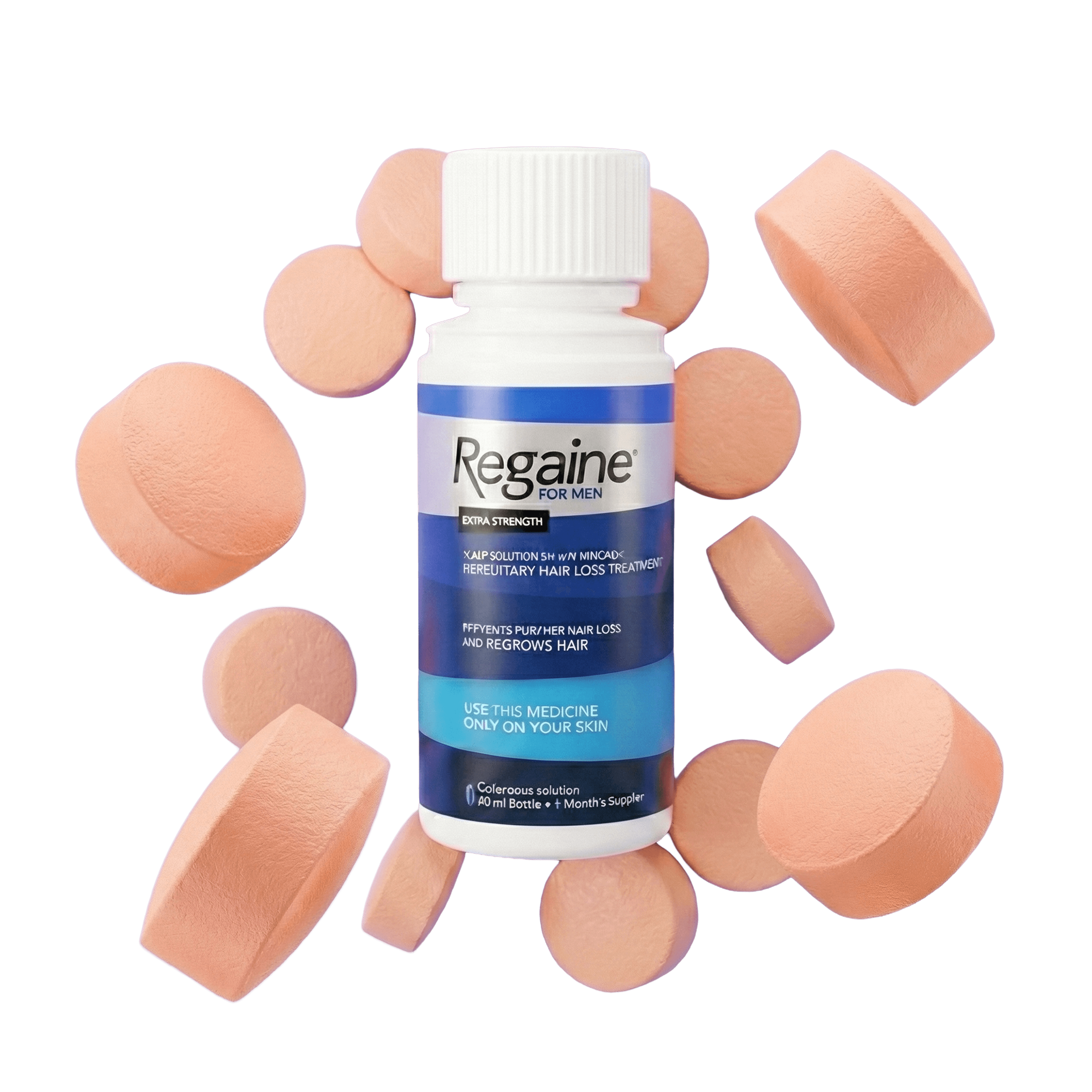
Topical minoxidil (sold as Regaine in the UK) is applied directly to the scalp, either as a 5% foam or a liquid solution. Oral minoxidil is a low-dose tablet, typically taken at 1.25mg to 2.5mg daily for hair loss, much lower than the cardiovascular doses used decades ago.
The route of administration matters a lot when it comes to side effects. Topical treatment keeps the medicine largely localised to your scalp. Oral treatment means it enters your bloodstream, which opens the door to a broader (though still mostly manageable) range of effects.
Common side effects of topical minoxidil#
Most side effects from topical minoxidil are skin-related and limited to the area of application.
The most frequently reported include:
- Scalp dryness, flaking, or itching
- Mild irritation or redness at the application site
- Temporary increased shedding in the first few weeks of use
The initial shedding catches a lot of people off guard. It happens because minoxidil pushes resting hair follicles into an active growth phase, which temporarily dislodges older hairs. It's a sign the treatment is working, not a sign you're losing more hair. It usually settles within four to eight weeks.
Skin irritation is sometimes caused by the propylene glycol in the liquid formulation rather than the minoxidil itself. If you're finding the liquid irritating, switching to the foam version often resolves it, since foam formulations typically contain less propylene glycol.
Rarely, some people absorb enough through the skin to experience mild systemic effects like slight fluid retention or facial puffiness. This is uncommon with standard use.
Common side effects of oral minoxidil#
Oral minoxidil at low doses is increasingly used for hair loss and is generally well tolerated, but because it circulates throughout the body, the side effect profile is broader.
Commonly reported side effects include:
- Fluid retention, particularly around the ankles or lower legs
- Increased facial or body hair (hypertrichosis) - this affects some women more noticeably, though oral minoxidil is generally used off-label in women
- Headaches, especially early in treatment
- A faster or stronger heartbeat (palpitations)
- Dizziness, particularly when standing up quickly
Fluid retention is the most commonly discussed concern with oral minoxidil. At the doses used for hair loss, it's usually mild. Your GP or prescribing pharmacist may occasionally check your blood pressure if there's any concern, particularly if you already have cardiovascular risk factors.
Hypertrichosis (unwanted hair growth elsewhere on the body) is one of the odder side effects. It's thought to occur because minoxidil's hair-stimulating mechanism isn't entirely selective to the scalp. It's more common at higher doses and tends to improve if the dose is reduced or treatment is stopped.
Long-term side effects#
Minoxidil has been used for hair loss for several decades, and long-term safety data are reassuring for the vast majority of users. At the doses used for male pattern baldness, serious long-term side effects are uncommon.
The cardiovascular concerns that come up in discussions about oral minoxidil are largely associated with much higher doses used historically to treat severe hypertension. At hair loss doses (typically 1.25mg to 5mg daily), meaningful cardiovascular effects are rare in otherwise healthy adults.
That said, oral minoxidil is not recommended for people with certain heart conditions, a history of low blood pressure, or those already taking antihypertensive medications without appropriate clinical review. This is exactly why a consultation with a prescriber matters before starting it.
Some studies have looked at extended topical use and found no significant systemic or cardiovascular risk at standard doses. The main long-term concern with topical minoxidil is simply whether you maintain consistent use, because hair regained with minoxidil will gradually be lost again if you stop.
Does minoxidil cause sexual side effects?#
This question comes up frequently, and the short answer is: there's no strong evidence that it does.
Unlike finasteride, which works by blocking DHT (a hormone central to male pattern baldness), minoxidil does not significantly affect testosterone levels or other sex hormones. Research has not found a meaningful link between minoxidil use and erectile dysfunction or reduced libido.
There are anecdotal reports online of men experiencing sexual side effects on minoxidil, but when researchers have looked at this systematically, the association is weak. It's likely that some of these experiences are related to other factors: stress, the psychological impact of hair loss itself, concurrent medications, or taking finasteride at the same time.
If you're using both minoxidil and finasteride together (which is a recognised combined approach, and one Totiva's clinicians can advise on), it's worth knowing that finasteride does carry a well-documented risk of sexual side effects in a minority of men. The two are often conflated.
If you notice changes in libido or erectile function and you're using minoxidil, it's absolutely worth mentioning to your clinician. The picture is rarely simple, and a proper review is more useful than guessing.
Got questions? Speak to a pharmacist on WhatsApp now
Prefer to browse first? View treatments
Do minoxidil side effects go away?#
For most people, yes. The side effects that occur early in treatment, such as scalp irritation, initial shedding, headaches, and mild palpitations, tend to settle as the body adjusts, usually within four to eight weeks.
Fluid retention with oral minoxidil can persist in some people, particularly at higher doses. Hypertrichosis also tends to be ongoing for as long as you're taking the treatment, though it usually improves once you stop.
If any side effect is troublesome or doesn't settle, adjusting the dose or switching from oral to topical (or vice versa) can help. These are conversations worth having with your pharmacist or prescriber rather than just stopping abruptly.
What happens when you stop minoxidil?#
Stopping minoxidil does not cause any withdrawal effect in the medical sense. However, the hair you've retained or regrown while using it will gradually be lost over the following weeks to months, because the underlying hair loss process simply resumes.
This is not a permanent side effect of the drug. It's the natural progression of androgenetic alopecia, unmasked by stopping treatment. It's one of the most important things to understand about minoxidil before starting: it's a maintenance treatment, not a cure. If you stop, the hair goes.
This is why some men use both minoxidil and finasteride together. Finasteride targets the hormonal driver of hair loss (DHT), while minoxidil supports regrowth at the scalp level. Used together, they can be more effective than either alone.
Who shouldn't use minoxidil?#
Minoxidil isn't suitable for everyone. You should avoid it, or only use it under close supervision, if you:
- Have a history of heart disease, heart failure, or serious arrhythmia
- Have low blood pressure or already take medication for high blood pressure
- Have kidney or liver problems
- Are under 18
- Are pregnant or breastfeeding (for women, though note that Totiva's hair loss service is currently for men only)
For oral minoxidil specifically, the interactions with antihypertensive drugs are clinically significant. Taking minoxidil alongside other blood pressure-lowering medications can cause an excessive drop in blood pressure, leading to dizziness or fainting.
This is why topical minoxidil is available over the counter, while oral minoxidil requires a prescription. The prescribing process exists to catch these contraindications.
Reducing the risk of side effects#
For topical minoxidil:
- Apply only to the scalp, not to wider areas of the head or hairline beyond where it's needed
- Let it dry fully before touching or covering with a hat
- If the liquid causes irritation, try the foam version
- Wash your hands thoroughly after applying
For oral minoxidil:
- Take it at the same time each day to maintain steady levels
- Start at the lowest effective dose (a prescriber will guide this)
- Avoid standing up suddenly if you experience dizziness
- Mention any existing blood pressure medications to your prescriber before starting
Reporting side effects in the UK#
If you experience a side effect from minoxidil that concerns you, you can report it directly to the MHRA through the Yellow Card scheme at yellowcard.mhra.gov.uk. This applies to any medicine, including over-the-counter treatments. The scheme helps the MHRA monitor the ongoing safety of medicines in real-world use, and reporting is straightforward.
Your pharmacist can also help you report if needed.
Minoxidil and finasteride together#
If you're considering minoxidil, it's worth knowing that combining it with finasteride is a well-established approach for male pattern baldness. They work through different mechanisms, so they complement each other rather than duplicating the same effect.
If you'd like to explore your options, Totiva's hair loss service offers pharmacist-led consultations for men dealing with male pattern baldness. The consultation is free, and you only pay if treatment is prescribed and approved for you. There's no subscription required, and treatments include finasteride, Regaine (topical minoxidil), and combined options.
You can start a free consultation here to find out what's suitable for you based on your medical history and goals.
Medical Information: This article is for informational purposes only and does not constitute medical advice. Always consult a qualified healthcare professional before starting, stopping, or changing any treatment.