Copper Peptides for Hair Loss: How They Work and How They Compare
Copper peptides (GHK-Cu) show promise for hair growth, but the evidence is limited. Here's an honest look at the science, how they compare to minoxidil and finasteride, and what to look for on a UK product label.
Written and medically reviewed by:

Key Takeaways
Copper peptides (GHK-Cu) may support scalp health and hair density via improved blood flow and reduced inflammation, but evidence from human trials is limited. They are not MHRA-licensed and work best as a complement to, not a replacement for, minoxidil or finasteride.
What copper peptides actually do on the scalp#
Copper peptides can support scalp health and may modestly improve hair density, but they are not a proven hair loss treatment in the way that minoxidil or finasteride are. The most studied compound is copper tripeptide-1, also written as GHK-Cu. It is a small protein fragment bound to a copper ion, first isolated from human plasma in the 1970s.
Research, mostly from lab and animal studies, suggests GHK-Cu may help hair in several ways:
- Stimulating dermal papilla cells. These cells sit at the base of each follicle and control the hair growth cycle. An in vitro study (Pyo HK et al., Archives of Pharmacal Research, 2007) found GHK-Cu prolonged the growth phase and increased follicle size in human hair cultures.
- Promoting new blood vessel formation. Copper upregulates vascular endothelial growth factor (VEGF), which encourages blood supply to follicles. Better circulation means more oxygen and nutrients reaching the root.
- Reducing scalp inflammation. Chronic low-grade inflammation is linked to follicle miniaturisation in androgenetic alopecia (male and female pattern hair loss). GHK-Cu appears to suppress some pro-inflammatory signalling in cell studies, though this has not been confirmed at a clinical level in large human trials.
- Supporting collagen and keratin production. This improves the structural environment around the follicle.
One important caveat: most of this evidence comes from cell cultures and mice, not from large randomised controlled trials in people. The human data is limited to small studies.
Does the ingredient actually reach the follicle?#
This is a question most copper peptide marketing sidesteps. The follicle sits in the dermis, below the outer layers of skin. Standard cosmetic serums penetrate the epidermis to varying degrees, but reaching the follicle at a biologically meaningful concentration is not guaranteed.
A study measuring skin absorption of copper from copper-containing products (Hostynek JJ et al., American Journal of Clinical Dermatology, 2004) found that topical application does raise skin copper levels, suggesting some penetration does occur. However, the extent to which cosmetic-grade GHK-Cu formulations deliver an effective dose to the dermal papilla is not established. Products paired with microneedling (dermarolling) likely improve absorption, since needles create microchannels through the outer skin layer. If you choose to combine the two, avoid microneedling on skin with an active infection, open wounds, or an inflammatory scalp condition such as seborrhoeic dermatitis or psoriasis. A needle depth of 0.5 mm is appropriate for most home devices; go deeper only under clinical supervision. Home dermarolling devices are not regulated as medical devices at this depth in the UK, and if you have any underlying scalp condition or are using prescription treatments, you should consult a clinician before combining microneedling with any active.
A frank evidence comparison#
Here is how copper peptides sit alongside the licensed treatments for male pattern hair loss:
| Treatment | Evidence quality | DHT blocking | Licensed in UK | Typical UK cost |
|---|---|---|---|---|
| Finasteride 1mg | Strong (large RCTs) | Yes | Yes (men only) | From £14.99 for 28 tablets |
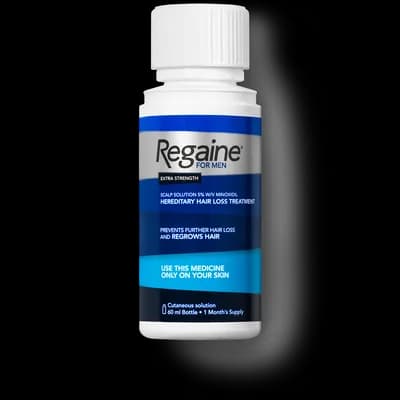
| Minoxidil (topical) | Strong (large RCTs) | No (vasodilator) | Yes (men and women — see note below) | From £33.60 for Regaine 60ml |
| Copper peptides (GHK-Cu) | Weak (small, preclinical) | Unclear | No | £20–£60 per month |
Note on topical minoxidil licensing: In the UK, topical minoxidil 5% is licensed for men only. Topical minoxidil 2% (for example, Regaine for Women) is licensed for women. The appropriate product and strength should be confirmed with a clinician or pharmacist.
Finasteride works by blocking the enzyme that converts testosterone into DHT, the hormone that miniaturises follicles in androgenetic alopecia. Minoxidil works differently: it opens ATP-sensitive potassium channels in smooth muscle cells, causing vasodilation and increasing blood flow to the scalp. It does not block DHT.
Copper peptides are sometimes claimed to reduce DHT. The evidence for this is thin. One source cited by manufacturer marketing mentions possible DHT-reducing effects, but no peer-reviewed human trial has confirmed this mechanism. Treat that claim with scepticism.
Copper peptides are not licensed by the MHRA as a medicine. Under UK law, any product making a medicinal claim (such as "treats hair loss" or "regrows hair") would require MHRA authorisation as a medicine. Most UK products are sold as cosmetics and are legally restricted to claims like "supports scalp health" or "promotes a healthy hair growth environment". If a product you find online promises to cure or treat hair loss, that is a red flag.
Reading a copper peptide product label#
If you want to try a copper peptide serum, look for:
- GHK-Cu or glycyl-L-histidyl-L-lysine copper listed in the first half of the ingredients list (INCI order reflects concentration).
- A stated concentration, even if approximate. Research has used concentrations broadly in the range of 1–5%. Products that list GHK-Cu near the bottom of a long ingredients list are likely underdosed.
- No unsubstantiated claims of regrowing or curing hair loss on the label.
UK serums from dermatology-focused brands typically cost £20–£60 for a one to two month supply. Compounded formulations at clinical concentrations can be prepared by UK specials pharmacies under a prescriber's direction. This requires a private prescription and is not available over the counter.
Using copper peptides alongside licensed treatments#
There is no known interaction between GHK-Cu serums and minoxidil or finasteride. Many people use them as a complement rather than a replacement, applying the serum separately from minoxidil to avoid dilution. There is no head-to-head clinical trial of GHK-Cu combined with minoxidil, so no one can tell you the combination works better than minoxidil alone. What is reasonable to say is that the combination is unlikely to cause harm, and the mechanisms are different enough that an additive effect is biologically plausible.
Microneedling combined with copper peptide serum is a common approach. Published data supports microneedling alone as a useful add-on for androgenetic alopecia, but no trial has specifically tested GHK-Cu plus microneedling against minoxidil in a head-to-head comparison.
How long before you see results?#
Hair grows slowly. If copper peptides have any effect on density or shedding, it is unlikely to be visible before three to six months of consistent daily use. This is similar to the timeline for minoxidil. If you see no change after six months, the treatment probably is not working for you.
Got questions? Speak to a pharmacist on WhatsApp now
Prefer to browse first? View treatments
Safety and tolerability#
Copper peptide serums are generally well tolerated. Mild scalp irritation or itching is the most commonly reported side effect. Copper hypersensitivity is rare but possible; if you develop contact dermatitis or a rash, stop use and see your GP. There is also a theoretical risk of excess copper accumulation with prolonged or high-dose topical use, which is of particular relevance for anyone with Wilson's disease (a condition affecting copper metabolism). If you have Wilson's disease or any related condition, speak to your specialist before using copper-containing topical products.
For women who are pregnant or breastfeeding, topical copper peptide serums have not been studied in this group and are classed as cosmetics, so safety data is limited. The safest approach is to avoid them until more is known, and to discuss any hair loss during or after pregnancy with your GP or a trichologist.
Finasteride and pregnancy — a separate and important warning: Finasteride (an oral tablet for male pattern hair loss) is absolutely contraindicated in women who are pregnant or may become pregnant, due to the risk of harm to a male foetus. This contraindication applies to finasteride tablets and any finasteride-containing product; it is not a concern with copper peptide serums, which do not contain finasteride.
If you want to try a licensed treatment#
For men dealing with male pattern hair loss, the evidence-based starting point is still minoxidil, finasteride, or both. Totiva's hair loss service (available to men aged 18 and over) offers online consultations for finasteride and Regaine, with payment only after a clinician approves your treatment. Women experiencing hair loss should speak to their GP, as the Totiva hair loss service is for men only.
For context on how the two licensed treatments compare, this guide to finasteride vs minoxidil is a useful starting point.
Medical Information: This article is for informational purposes only and does not constitute medical advice. Always consult a qualified healthcare professional before starting, stopping, or changing any treatment.