
Will Collagen Help with Hair Loss? Here's What the Evidence Actually Shows
Collagen supplements are everywhere, but do they actually help with hair loss? We look at the science, the limitations, and what treatments genuinely work — including for women experiencing hair thinning after weight loss.
Written and medically reviewed by:

Key Takeaways
Collagen supplements are not a proven treatment for hair loss. They have no effect on DHT-driven androgenetic alopecia, and there is limited evidence they help with other types of hair thinning. Women experiencing hair loss — including those using GLP-1 weight loss drugs — are frequently targeted with collagen marketing, but the evidence does not support it as a meaningful solution. For real results, finasteride and minoxidil are MHRA-approved options; for women, minoxidil and, in some cases, low-dose finasteride may be appropriate following a clinical consultation.
Collagen supplements have become one of the most heavily marketed health products in the UK, with promises ranging from plumper skin to thicker hair. If you're experiencing hair thinning — whether you're a woman who's noticed more hair on the shower floor, or someone whose hair has changed after starting a weight loss medication — it's natural to wonder whether a collagen supplement could help. The honest answer is: probably not in any significant way, at least not on its own. Here's why, and what actually does work.
What Collagen Is and Why It Matters for Hair#
Collagen is the most abundant structural protein in the human body, making up around 30% of total protein content. It provides tensile strength to skin, cartilage, tendons, and connective tissue. At least 28 types of collagen exist, though Types I and III are most relevant to hair because they form part of the extracellular matrix (ECM) surrounding hair follicles.
Each hair follicle sits within the dermis, a skin layer that's about 70% collagen. The dermal papilla, a cluster of specialised cells at the base of each follicle, sits within this collagen-rich environment and plays a central role in regulating the hair growth cycle. That cycle has three phases: anagen (active growth), catagen (transition), and telogen (rest). Maintaining the structural integrity of the follicular environment is thought to support healthy hair production over time.
As we age, collagen production declines, which is partly why skin becomes less firm and hair can thin. For women, this process accelerates around perimenopause and menopause, when falling oestrogen levels also affect skin and hair. This biological reality is what makes collagen supplementation theoretically appealing — and it's also why collagen brands target women so heavily.
What the Science Actually Says#
Here's where things get more complicated. The theoretical connection between collagen and hair health is plausible, but the clinical evidence for collagen supplements specifically improving hair regrowth is limited and, in many cases, preliminary.
Collagen contains the amino acids glycine, proline, and hydroxyproline. Hair keratin, the protein that hair is actually made of, relies on different amino acids, particularly cysteine and methionine. These are sulphur-rich amino acids that collagen largely lacks. So while collagen provides amino acids that contribute to the wider protein pool, it doesn't directly supply the building blocks most critical for hair shaft production.
Some research has explored hydrolysed collagen peptides (a more bioavailable, broken-down form) and their effect on hair thickness and scalp condition. A handful of double-blind, placebo-controlled trials have reported modest improvements in hair-related outcomes, particularly in women, over 12 to 16 weeks of supplementation. However, most of these studies have significant limitations: small sample sizes, short follow-up periods, and the inclusion of additional vitamins and minerals alongside collagen, making it impossible to attribute any observed benefit to collagen alone. A notable proportion of these trials were also industry-funded.
A 2021 narrative review suggested that marine collagen peptides may support keratin-associated protein synthesis and potentially influence hair shaft parameters. But the authors were clear that larger, independent, well-controlled trials are needed before any firm recommendations can be made.
Collagen also has genuine antioxidant properties. Oxidative stress, caused by free radicals, can damage hair follicles. There is some evidence that reducing oxidative stress supports a healthier scalp environment. This is one of the more biologically credible pathways through which collagen supplementation might offer a modest benefit, though again, the human evidence is limited.
Importantly, no UK regulatory body, including the MHRA or NICE, has approved collagen as a treatment for hair loss. It remains a food supplement, not a medicine, and is regulated accordingly by the Food Standards Agency.
Which Types of Hair Loss Might Collagen Theoretically Help With?#
This distinction matters a great deal. Not all hair loss is the same, and the type you have significantly affects whether collagen could plausibly do anything at all.
Androgenetic alopecia (pattern hair loss) affects both men and women and is driven by a hormonal process. Dihydrotestosterone (DHT) causes genetically susceptible follicles to miniaturise progressively over time. In men, this typically presents as a receding hairline or thinning crown. In women, it more commonly appears as diffuse thinning across the top of the scalp, with the parting widening over time. Collagen has no mechanism to address DHT-related follicle shrinkage. It cannot block DHT, protect follicles from hormonal influence, or reverse miniaturisation. For anyone whose hair loss is driven by androgenetic alopecia, collagen is unlikely to make any meaningful difference.
Age-related and hormonal hair thinning in women is the area where collagen's theoretical support is most plausible. Falling oestrogen during perimenopause and menopause reduces the body's own collagen synthesis, and hair often becomes finer and more fragile as a result. If declining collagen in the dermis weakens the structural environment around follicles, then supplementation might provide modest support. But 'might provide modest support' is a long way from a clinically demonstrated treatment.
Telogen effluvium is diffuse shedding triggered by a physiological stress — illness, surgery, significant weight loss, nutritional deficiency, childbirth, or hormonal changes. It's particularly common in women and is increasingly being reported in people using GLP-1 weight loss medications (more on this below). In telogen effluvium, a large proportion of hairs are simultaneously pushed into the resting (telogen) phase, leading to noticeable shedding several weeks to months after the triggering event. In these cases, overall protein intake and nutrient status matters more than collagen specifically. A balanced, protein-adequate diet is a better starting point than any single supplement.
Alopecia areata is an autoimmune condition that causes patchy hair loss. Collagen has no known mechanism of action in autoimmune-mediated hair loss and is not part of any clinical treatment pathway for this condition.
Hair Loss After Weight Loss Drugs: What's Actually Happening#
GLP-1 receptor agonists such as semaglutide (Wegovy, Ozempic) and tirzepatide (Mounjaro) have become widely used for weight management in the UK. Hair loss is one of the more commonly reported side effects — clinical trials for semaglutide reported hair loss in around 3% of participants, and real-world reports suggest it may be more common than that.
The cause is almost certainly telogen effluvium triggered by rapid weight loss and significant calorie restriction, rather than a direct pharmacological effect of the medication. When the body experiences a sudden reduction in calorie and nutrient intake, it deprioritises non-essential functions — and hair growth falls firmly into that category. The follicles enter the resting phase en masse, and shedding typically begins two to four months after the trigger.
Collagen supplement brands have been quick to target this growing group of patients, often positioning their products as a solution to GLP-1-related hair loss. This is understandable from a marketing perspective but not well supported by evidence. What is more clearly supported is ensuring adequate total protein intake during calorie restriction — current guidance generally suggests at least 1.2g of protein per kilogram of body weight when in a significant calorie deficit. Collagen can contribute to daily protein intake, but it's not a superior protein source for this purpose and lacks the essential amino acids (particularly leucine) that are important for muscle and tissue maintenance.
If you are experiencing hair shedding while using a GLP-1 medication, the most useful steps are:
- Ensuring your overall protein intake is adequate
- Checking for nutritional deficiencies (iron, ferritin, zinc, vitamin D, and B12 are common in people who have restricted their diet significantly)
- Giving it time — telogen effluvium typically resolves on its own as the body adapts, usually within six to twelve months
- Speaking to a clinician if shedding is severe or prolonged
A collagen supplement is unlikely to accelerate recovery, though it won't cause harm if you choose to take it alongside a nutritionally complete diet.
Hair Loss in Women: Why It's Often Under-Addressed#
Women make up a significant proportion of people affected by hair loss, yet are frequently underserved by clinical awareness and treatment options. Androgenetic alopecia affects roughly 40% of women by the age of 70. Telogen effluvium is more common in women than men. Yet the conversation around hair loss treatment is still heavily male-centric, and many women are left navigating a market full of supplements — collagen prominent among them — without clear clinical guidance.
The reasons women often reach for collagen specifically include:
- Heavy targeting by collagen supplement brands in beauty and wellness spaces
- A perception that hair loss treatments are 'for men'
- Understandable reluctance to use treatments like finasteride, which is primarily licensed for men (though used off-label in women in some clinical contexts)
- A lack of awareness that minoxidil is available for women and has evidence behind it
It's worth being direct: collagen supplements do not have a meaningful evidence base for treating hair loss in women any more than they do in men. The modest trial data that does exist is encouraging in a very preliminary sense, but it is not sufficient to justify choosing collagen over clinically validated treatments.
Got questions? Speak to a pharmacist on WhatsApp now
Prefer to browse first? View treatments
Marine Collagen vs Bovine Collagen#
This comes up a lot. Marine collagen (derived from fish skin and scales) is predominantly Type I and is often marketed as more bioavailable than bovine (cattle-derived) collagen. The bioavailability claim has some basis in research, as marine collagen peptides tend to have a lower molecular weight, potentially aiding absorption.
For hair specifically, Type I collagen is most relevant, which gives marine collagen a marginal theoretical edge. In practice, though, the evidence base for either source specifically improving hair growth in humans is similarly limited. If you're vegan or vegetarian, neither is suitable. Plant-based 'collagen boosters' containing vitamin C, silica, and biotin don't contain collagen directly but may support your body's own collagen production to some degree.
What to Look for if You Do Try Collagen Supplements#
If you want to try collagen supplements alongside other approaches, a few things are worth knowing.
Look for products labelled as 'hydrolysed collagen' or 'collagen peptides', as these forms have better absorption than intact collagen protein. The dose used in most studies ranges from 2.5g to 10g per day. Most supplements suggest a similar daily amount.
Be cautious of products that combine collagen with multiple other ingredients and then claim hair benefits based on the combined formula. This makes it impossible to know what, if anything, is doing the work. Check for third-party testing certifications where possible.
The Food Standards Agency regulates supplements in the UK, not the MHRA. This means collagen products don't undergo the same rigorous pre-market testing as licensed medicines. Health claims on supplement packaging are regulated under retained EU law, but enforcement is variable.
Collagen supplements are generally considered safe for most people. If you're taking blood thinners or other medications, it's worth checking with a pharmacist before starting any new supplement, as interactions, while uncommon, are possible.
Treatments That Actually Work for Hair Loss#
For men experiencing androgenetic alopecia (receding hairline, thinning at the crown), there are two MHRA-approved treatments with solid clinical evidence behind them.
Finasteride works by blocking the conversion of testosterone to DHT. This reduces DHT levels in the scalp, slowing or halting follicle miniaturisation. Clinical trials have shown that finasteride stops hair loss in around 85% of men and leads to visible regrowth in around 65% of men over two years. It's taken as a once-daily 1mg tablet.
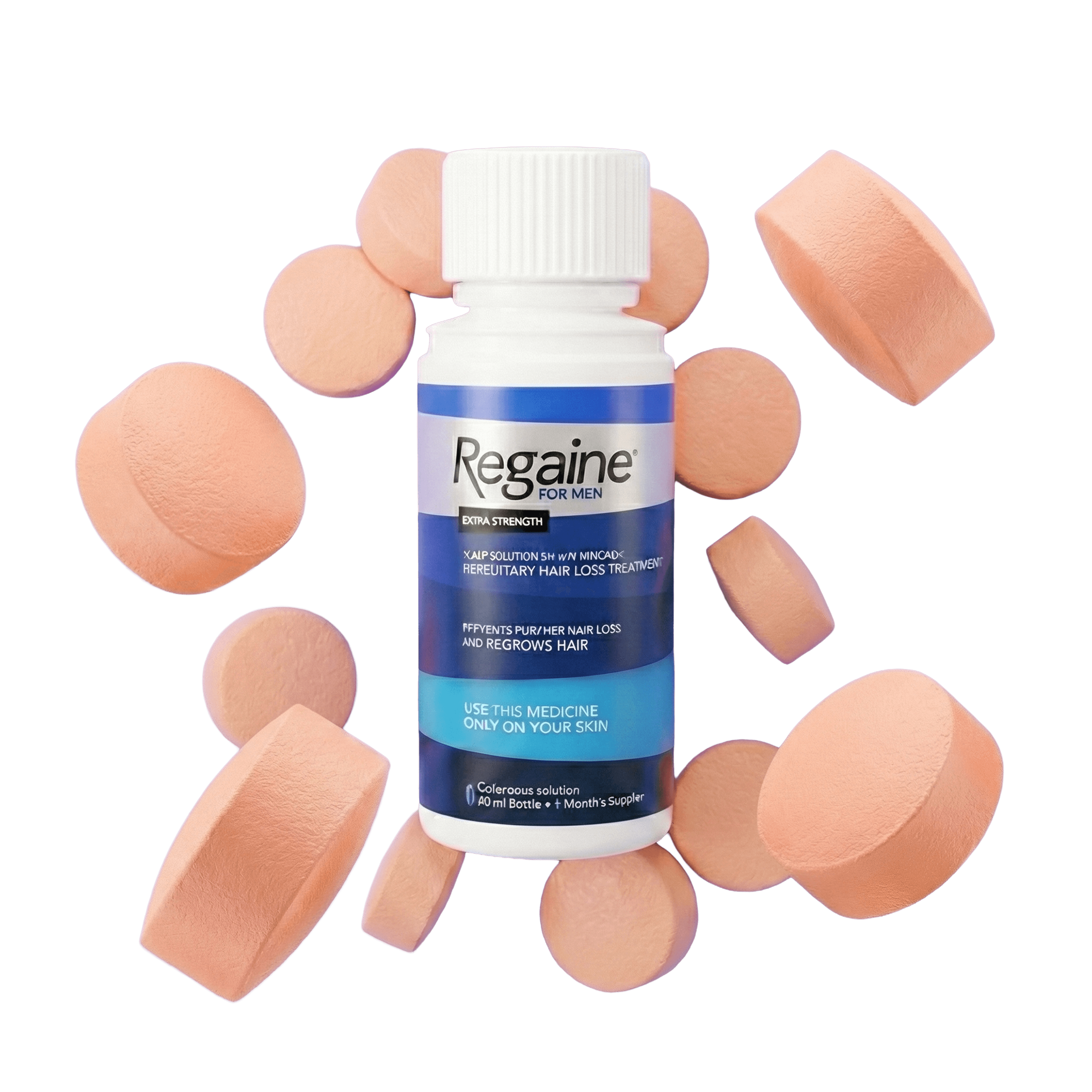
Minoxidil (topical) improves blood flow and nutrient delivery to hair follicles and prolongs the anagen (growth) phase. It's applied directly to the scalp. Regaine is the most widely recognised branded version, available as a liquid solution or foam.
Many men use both together, as they work through different mechanisms and the combination tends to produce better results than either alone.
For women, the treatment landscape is more limited but not without options.
Topical minoxidil is available for women and has good evidence behind it for female pattern hair loss. A 2% solution is the standard starting point, though 5% is also used. It is applied to the scalp daily. Results typically take three to six months to become apparent, and continued use is required to maintain benefit.
Low-dose finasteride is sometimes used off-label for women with androgenetic alopecia, particularly post-menopausal women, but it is not licensed for use in women in the UK and must not be used during pregnancy. This is an option that requires a clinical consultation to assess suitability.
For women experiencing telogen effluvium — including those on GLP-1 medications — addressing the underlying nutritional and physiological triggers is the primary approach. Minoxidil is sometimes used to support regrowth during recovery, but in many cases, the hair will return on its own once the triggering stress has resolved.
Collagen cannot replicate what any of these treatments do. If DHT or a physiological disruption to the hair cycle is driving your hair loss, no amount of collagen supplementation will address the underlying cause.
Totiva offers online consultations for both men and women experiencing hair loss. The consultation is free, and you only pay if a clinician approves treatment. There's no subscription required and no awkward photos needed. You can explore hair loss treatment options at Totiva to see what's available.
For reference, finasteride through Totiva is currently priced at £14.99 for 28 tablets and £41.99 for 84 tablets. Regaine Liquid Solution is available at £33.60 for 60ml or £79.99 for 180ml.
Can You Take Collagen Alongside Hair Loss Treatments?#
Yes, there are no known interactions between collagen supplements and finasteride or minoxidil. They work through entirely different mechanisms. If you choose to take collagen for its potential skin or general health benefits while also using a clinically proven hair loss treatment, that's a reasonable approach. Just don't rely on collagen to do the heavy lifting.
What the NHS Says About Hair Loss#
The NHS recognises that pattern hair loss is the most common cause of hair loss in both men and women, and that it is caused by hormone sensitivity in the follicles. The NHS lists minoxidil as an option available without a prescription and notes that finasteride is available on private prescription for men. Collagen supplements are not mentioned in NHS hair loss guidance, which is consistent with the current evidence base.
If your hair loss is sudden, patchy, or accompanied by other symptoms such as fatigue, changes in weight, or skin changes, it's worth seeing your GP. These patterns can indicate underlying conditions including thyroid disorders, iron deficiency anaemia, or alopecia areata, which require investigation and specific treatment rather than supplementation.
A Word on Collagen and Weight Loss#
Some collagen marketing now extends into weight loss claims. The reasoning goes like this: collagen is a protein, protein supports satiety, therefore collagen helps you feel fuller and eat less. There's also emerging research suggesting collagen peptides, when paired with resistance exercise, may help maintain lean muscle mass during calorie restriction.
These are plausible mechanisms, but it's important to be realistic. Collagen is not a weight loss treatment. If you're looking for meaningful, evidence-based support for weight management, Totiva's weight loss service offers access to GLP-1 treatments such as Wegovy and Mounjaro through pharmacist-led consultations, which have a substantially stronger evidence base behind them.
The Bottom Line#
Collagen supplements are unlikely to regrow hair or meaningfully slow hair loss on their own — whether you're a man with androgenetic alopecia, a woman experiencing hormonal hair thinning, or someone whose hair has changed after starting a GLP-1 medication. The theoretical mechanisms are real but modest, and the clinical evidence is limited, underpowered, and often industry-funded. No UK regulatory body has approved collagen as a hair loss treatment.
The collagen industry is particularly active in targeting women and GLP-1 patients — two groups who are genuinely experiencing hair changes and are understandably looking for solutions. It's worth knowing that the evidence simply does not support collagen as a meaningful remedy for either group.
If you're considering collagen for general health, skin, or joint support, there's little harm in trying it, provided you're not expecting it to rescue thinning hair. For that, minoxidil and (where appropriate) finasteride remain the evidence-based options.
If you'd like to explore clinically approved hair loss treatments, Totiva's pharmacist-led online consultation can help you work out what's appropriate for you. It's free to start and there's no obligation if treatment isn't suitable. Begin your hair loss consultation here.
Medical Information: This article is for informational purposes only and does not constitute medical advice. Always consult a qualified healthcare professional before starting, stopping, or changing any treatment.