Hair Masks, Vitamins, and Scalp Conditions: What Actually Helps with Hair Loss
From hair masks to biotin supplements and scalp psoriasis, we break down what the evidence says and when clinical treatment is worth considering.
Written and medically reviewed by:

Key Takeaways
Hair masks reduce breakage but cannot treat medical hair loss. Vitamins help only if you are deficient. For male pattern hair loss, finasteride and minoxidil are the evidence-based options worth considering.
Can a Hair Mask Actually Help with Hair Loss?#
The honest answer is: not in the way most people hope. Hair masks are conditioning treatments that work on the hair shaft, the visible, non-living part of the hair. They can reduce breakage, improve moisture retention, and make thinning hair look and feel more manageable. What they cannot do is stimulate follicles, reverse miniaturisation, or treat any medical cause of hair loss.
That is an important distinction. If your hair is shedding due to androgenetic alopecia, iron deficiency, or a scalp condition, no amount of conditioner will address the root cause. Hair masks belong in the category of supportive cosmetic care, not treatment.
That said, breakage is often mistaken for hair loss. If your hair is snapping mid-shaft due to heat damage, bleaching, or over-styling, a good conditioning treatment can reduce the mechanical damage you are seeing, which might make shedding appear to slow down. So they are not useless. They just have a specific, limited role.
Ingredients Worth Looking For in Hair Masks#
Not all hair masks are created equal, and some ingredients have a better evidence base than others when it comes to fragile or thinning hair.
Keratin is the structural protein that makes up the hair shaft. Hydrolysed keratin in masks can temporarily fill gaps in the cuticle and reduce porosity, which helps hair retain moisture and resist breakage.
Argan oil and jojoba oil are lightweight oils that coat the cuticle without significant buildup. Both are well-tolerated and reduce frizz and brittleness without weighing fine hair down.
Panthenol (provitamin B5) has good evidence for improving hair elasticity and reducing breakage. It is water-soluble and penetrates into the cortex of the hair fibre, not just the surface.
Biotin is frequently added to hair masks and shampoos, but it is worth being clear: topical biotin does not affect follicle function. The hair follicle is inside the scalp, not on the surface. Any biotin you apply to your hair is sitting on a structure that is already dead. If biotin is going to help at all, it needs to be taken orally, and only if you are actually deficient.
One ingredient to be cautious about: certain preservatives, particularly methylisothiazolinone and related isothiazolinones found in some rinse-off hair products, have been linked to increasing rates of contact sensitisation in Europe. If you notice scalp irritation after using a new hair mask, the preservative system is often the culprit. Always patch test new products.
Vitamins for Hair Loss: The Evidence Is More Nuanced Than Supplement Brands Suggest#
The supplement aisle is full of products promising thicker hair in weeks. The reality is more complicated. Vitamins and minerals play a genuine role in hair follicle biology, but that does not mean supplementing indiscriminately will help.
The key principle is this: supplementation for hair loss only works reliably if you are actually deficient in the nutrient in question. If your levels are normal, adding more will not accelerate growth.
Iron#
Iron deficiency is the most common nutritional deficiency in the UK, particularly in women who menstruate. Low ferritin (stored iron) has been strongly linked to telogen effluvium, a condition where more hairs than normal enter the resting phase simultaneously, causing diffuse shedding across the scalp. A systematic review published in Skin Appendage Disorders found a significant association between iron deficiency and non-scarring alopecia in women.
If you suspect iron as a cause, ask your GP for a ferritin test rather than a standard haemoglobin check. Ferritin levels can be low even when haemoglobin looks normal. NHS blood tests for ferritin, vitamin D, and thyroid function are all available on the NHS, and it is entirely reasonable to request these if you are experiencing unexplained hair shedding. A GP will usually be happy to check them.
Vitamin D#
Vitamin D receptors are present in hair follicles, and low levels have been associated with alopecia areata and other forms of hair loss. Most people in the UK are vitamin D insufficient for much of the year. The NHS recommends everyone consider a 10 microgram supplement during autumn and winter months. If your hair is shedding alongside fatigue and low mood, a vitamin D test is worth requesting.
Biotin (Vitamin B7)#
Biotin deficiency is genuinely rare in people eating a varied diet. Despite this, biotin is the most heavily marketed ingredient in hair supplements. If you are not deficient, taking extra biotin will not make your hair grow faster. It is also worth knowing that high-dose biotin supplements can interfere with some blood tests, including thyroid function tests, which can cause misleading results. If you are taking biotin supplements and your GP requests a blood test, tell them.
Zinc#
Zinc plays a role in hair follicle cycling and protein synthesis. Deficiency has been observed in people with alopecia areata and telogen effluvium. Zinc can be depleted by certain medications, high alcohol intake, and some gut conditions. If zinc is low, supplementation can help. If it is not, excess zinc can actually inhibit hair growth, so more is not better.
Vitamin B12 and Folic Acid#
Both are involved in cell division and DNA synthesis, processes central to hair follicle activity. Deficiency can cause hair shedding alongside other symptoms including fatigue and neurological changes. B12 deficiency is more common in people following a vegan diet or those taking long-term metformin or proton pump inhibitors.
What the Evidence Does Not Support#
Vitamins A, C, E, and selenium are all involved in antioxidant pathways that support skin and follicle health, but the evidence linking supplementation with meaningful hair regrowth is weak. Excess vitamin A can actually cause telogen effluvium, which is worth remembering when choosing a high-potency supplement.
The British Dietetic Association is clear that most people eating a reasonably varied diet will not benefit from broad multivitamin supplements. If you do take a hair supplement, check the MHRA does not regulate what health claims UK supplements can make in the same way it regulates medicines. Products can be sold with vague claims like "contributes to normal hair" without proving they work. That phrase, incidentally, is only technically valid for a handful of nutrients with established deficiency links.
Scalp Psoriasis and Hair Loss#
Scalp psoriasis affects a significant proportion of the roughly 2% of the UK population living with psoriasis. It causes the immune system to accelerate skin cell turnover, producing thickened, scaly plaques on the scalp that are typically silver-white in colour. The plaques can extend to the hairline, forehead, back of the neck, and behind the ears.
Scalp psoriasis does not directly damage hair follicles in most cases. Hair loss associated with it tends to be secondary, caused by inflammation, vigorous scratching, or the removal of scale pulling hairs out. In most people, hair regrows after the psoriasis is controlled. Severe, prolonged inflammation can occasionally lead to more significant shedding.
Symptoms to recognise include:
- Thick, silvery-white scale on the scalp
- Itching, burning, or stinging
- Dry, cracked skin that may bleed if scratched
- Scale flaking onto clothing, similar in appearance to dandruff but with a coarser texture
It is worth distinguishing scalp psoriasis from seborrhoeic dermatitis, as both are common causes of flaky scalps and are sometimes confused. Seborrhoeic dermatitis tends to produce oilier, yellowish flakes and is driven by an overgrowth of Malassezia yeast rather than an autoimmune process. Lichen planopilaris, a rarer inflammatory scarring condition, can also affect the scalp and cause permanent follicle damage, which is why scalp symptoms with significant hair loss should always be assessed by a clinician rather than managed entirely with OTC products.
Treatment Options for Scalp Psoriasis#
Mild scalp psoriasis can often be managed with medicated shampoos containing coal tar or salicylic acid, both available without prescription in UK pharmacies. Coal tar reduces skin cell proliferation, while salicylic acid helps soften and remove scale.
For more persistent or moderate disease, a GP can prescribe topical corticosteroids, vitamin D analogues such as calcipotriol, or combination preparations. The BNF outlines scalp corticosteroids as first-line for most people with active scalp psoriasis. If topical treatments are insufficient, a dermatology referral is appropriate. Phototherapy and systemic treatments, including biologics, are options for severe or widespread psoriasis managed by secondary care.
Avoid picking or aggressively scratching scale, as this can worsen inflammation and increase shedding.
When OTC Products Are Not Enough#
There are certain situations where self-treating with hair masks, supplements, or medicated shampoos is the wrong approach.
See your GP promptly if you notice:
- Sudden, significant shedding over a period of weeks
- Patchy hair loss, particularly circular or oval patches (which may indicate alopecia areata)
- Scalp scarring, persistent redness, or pustules
- Hair loss accompanied by systemic symptoms such as fatigue, weight changes, or irregular periods
- Shedding that begins 2 to 3 months after a major stressor, illness, surgery, or pregnancy (this pattern suggests telogen effluvium)
Gradual, progressive thinning at the temples or crown in men is very commonly androgenetic alopecia, also called male pattern hair loss. This is a hormonal condition driven by DHT (dihydrotestosterone) causing follicle miniaturisation over time. Hair masks and vitamins will not address this.
Clinical Treatments That Work#
For male pattern hair loss specifically, two treatments have a substantial evidence base.
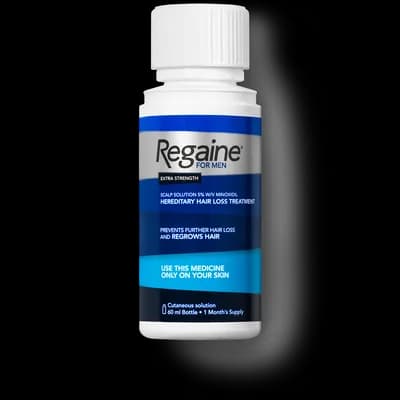
Minoxidil is a topical treatment applied directly to the scalp. It was reclassified by the MHRA in 2023 to Pharmacy (P) medicine status for the 5% strength, meaning it is now available without prescription from UK pharmacies. It works by prolonging the growth phase of the hair cycle and increasing blood flow to follicles. It is most effective for early to moderate hair loss and requires consistent, ongoing use. Totiva's hair loss service offers Regaine liquid solution, available in 60ml (£33.60) and 180ml (£79.99) formats.
Finasteride is a once-daily prescription tablet that reduces DHT levels by around 70%, slowing follicle miniaturisation and in many men supporting some regrowth. Clinical studies consistently show it is more effective than minoxidil for androgenetic alopecia at the scalp vertex. It requires a prescription from a UK clinician. The MHRA has issued guidance reminding prescribers and patients to remain vigilant for potential psychiatric and sexual side effects, which, though uncommon, can in rare cases persist after stopping the medication. This is worth discussing openly with whoever prescribes it. Finasteride 1mg tablets are available through Totiva at £14.99 for 28 tablets or £41.99 for 84 tablets.
Some men benefit from using both together, and a combined approach is an option worth discussing during a consultation.
Please note: Totiva's hair loss service is currently available for men only. Women experiencing hair loss should speak to their GP in the first instance, as assessment and treatment pathways differ significantly.
If you are a man experiencing thinning and want to understand whether finasteride, minoxidil, or a combined approach is appropriate for you, starting a consultation with Totiva is free. You only pay if a clinician approves treatment.
Got questions? Speak to a pharmacist on WhatsApp now
Prefer to browse first? View treatments
FAQs#
Medical Information: This article is for informational purposes only and does not constitute medical advice. Always consult a qualified healthcare professional before starting, stopping, or changing any treatment.