Zinc and Hair Loss: Does a Deficiency Really Cause Shedding?
Zinc plays a real role in hair follicle health, but does taking supplements actually help? A UK pharmacist breaks down the evidence honestly.
Written by:

Medically reviewed by Callum Armstrong, MPharm, Independent Prescriber (IP)
Key Takeaways
Zinc deficiency can cause hair shedding, but it's an uncommon cause in the UK. Get a blood test before supplementing, as too much zinc causes harm. For pattern hair loss, proven prescription treatments are more effective than supplements.
Zinc can contribute to hair loss when levels are genuinely low, but this is far less common than supplement marketing would have you believe. If you're shedding more than usual, a zinc deficiency might be one piece of the puzzle, but it's rarely the whole picture. Here's what the evidence actually says.
How Zinc Fits Into Hair Growth#
Zinc is an essential trace mineral involved in over 300 enzymatic processes in the body, many of which directly affect the hair follicle. It supports DNA and RNA synthesis, helps regulate cell division, and plays a role in maintaining the structural proteins that form the hair shaft itself.
Hair follicles are among the most metabolically active tissues in the body. They cycle continuously through growth (anagen), transition (catagen), and resting (telogen) phases. Zinc is particularly important during the anagen phase, when rapid cell division is happening and the follicle has high nutritional demands. When zinc is in short supply, this process can be disrupted.
Several studies have found associations between low serum zinc levels and specific types of hair loss, including telogen effluvium (diffuse shedding), alopecia areata (patchy hair loss), and androgenetic alopecia (male and female pattern loss). A 2021 systematic review and meta-analysis found significantly lower serum zinc levels in people with alopecia areata compared to healthy controls. A separate analysis of trace elements in telogen effluvium also identified zinc as one of the minerals most consistently associated with the condition.
That said, these are associations, not proof that taking zinc supplements will reverse your hair loss. Correlation and causation are very different things in medicine.
What Actually Causes Zinc Deficiency?#
True zinc deficiency is uncommon in the UK, where most people get enough through diet. That said, certain groups are at higher risk:
- Vegetarians and vegans: Plant-based sources of zinc (legumes, wholegrains, seeds, nuts) also contain phytates, which bind zinc and reduce how much the body absorbs. Studies consistently show lower zinc bioavailability from plant-based diets compared to animal-based ones.
- People with gastrointestinal conditions: Crohn's disease, coeliac disease, and other conditions affecting absorption can deplete zinc.
- Older adults: Reduced dietary intake and absorption efficiency both tend to decline with age.
- Heavy alcohol drinkers: Alcohol increases zinc excretion through the kidneys.
- Pregnant and breastfeeding women: Demand increases significantly during these periods.
It's also worth knowing that serum zinc isn't a perfect marker. Inflammation can suppress zinc levels in the blood without reflecting true whole-body zinc status, which makes interpreting results more complicated than a simple above/below-normal reading.
The Problem With Self-Diagnosing and Supplementing#
This is where a lot of people go wrong. Hair loss is distressing, and when you read that zinc deficiency can cause shedding, it's tempting to buy a supplement and see what happens. The problem is threefold.
First, if your hair loss isn't caused by zinc deficiency, supplementing won't help. Androgenetic alopecia (the most common cause of hair loss in both men and women), alopecia areata, telogen effluvium from stress or illness, scalp conditions, and thyroid problems all require very different approaches.
Second, too much zinc causes harm. The NHS recommends an upper safe limit of 25mg per day for adults from supplements. Excessive zinc intake can suppress copper absorption, and copper deficiency has serious consequences including anaemia and neurological problems. There are documented cases of zinc toxicity presenting with symptoms serious enough to mimic blood disorders. Animal studies have also found that excess dietary zinc can itself cause hair loss, which is a particularly uncomfortable irony.
Third, the third complication is timing. Zinc supplements don't produce instant results. Even in people with confirmed deficiency, correcting it takes months, and hair regrowth takes additional time on top of that given the length of the hair growth cycle.
How Much Zinc Do You Actually Need?#
The NHS dietary reference value for zinc is 9.5mg per day for adult men and 7mg per day for adult women. Most people in the UK meet these requirements through food alone.
Good dietary sources include:
- Shellfish, especially oysters (the richest source)
- Red meat and poultry
- Dairy products and eggs
- Pumpkin seeds and hemp seeds
- Chickpeas and lentils (though with lower bioavailability)
- Fortified cereals
For vegetarians and vegans, soaking or fermenting legumes and grains before eating them can reduce phytate content and improve zinc absorption.
If a GP or pharmacist confirms you have low zinc through a blood test, a supplement may be appropriate. Typical therapeutic doses range from 15mg to 25mg daily, staying within safe limits. The BNF (British National Formulary) includes guidance on zinc supplementation for confirmed deficiency. Going above 25mg daily without medical supervision isn't recommended.
Other Vitamins and Minerals That Matter for Hair#
Zinc rarely acts alone. If you're losing hair, it's worth knowing which other nutritional deficiencies are genuinely linked to shedding, because in the UK, some of these are considerably more common than zinc deficiency.
Iron is probably the most clinically relevant nutrient for hair loss in UK adults, particularly women of reproductive age. Iron deficiency, even without full anaemia, can trigger telogen effluvium. Ferritin (stored iron) levels below 30 micrograms per litre have been associated with increased shedding, even when haemoglobin is normal. Ask your GP specifically for a ferritin test rather than just a full blood count if you suspect iron might be a factor.
Vitamin D affects around one in five UK adults according to national surveys, largely because sunlight exposure between October and March isn't sufficient to maintain levels. There's growing evidence linking vitamin D deficiency to hair loss, including alopecia areata. This is particularly relevant as a post-viral cause of hair loss: telogen effluvium following COVID-19 has been widely reported, and vitamin D deficiency is common in people who've had significant illness.
Biotin (vitamin B7) is heavily marketed for hair health, but the evidence is weak unless you have an actual biotin deficiency, which is genuinely rare. Most people get sufficient biotin from eggs, liver, and wholegrains. Biotin supplements do nothing for hair loss caused by hormonal or genetic factors.
Vitamin B12 deficiency is more common in vegans and older adults and can contribute to hair shedding. It's worth checking alongside folate if you're in a higher-risk group.
The point here is that multiple deficiencies often co-exist, particularly in women who menstruate heavily (iron loss), spend little time outdoors (vitamin D), or follow restrictive diets (multiple nutrients). Treating just one without investigating the others is like fixing one leak in a pipe and wondering why the floor is still wet.
Got questions? Speak to a pharmacist on WhatsApp now
Prefer to browse first? View treatments
Should You Get a Blood Test?#
Yes, before spending money on supplements, a blood test makes sense. What you want your GP to check depends on your symptoms and circumstances, but a reasonable starting panel for unexplained hair loss includes:
- Ferritin (not just haemoglobin)
- 25-hydroxyvitamin D
- Thyroid function (TSH at minimum)
- Full blood count
- B12 and folate
- Serum zinc (less commonly requested but worth asking for if you're vegan or have GI issues)
You can request this through your NHS GP. If there's a wait or you want a quicker answer, private testing services such as Medichecks or Thriva offer comprehensive panels that include these markers at a fixed cost, and results typically come back within a few days.
NICE clinical knowledge summaries on alopecia cover the recommended investigative approach for different hair loss types, and your GP should be familiar with these pathways.
When Supplements Aren't the Answer#
If your blood tests come back normal, nutritional supplements are unlikely to make a meaningful difference to your hair. This is uncomfortable to hear after spending money on bottles of biotin and zinc, but it's the honest truth.
The most common cause of hair loss in men is androgenetic alopecia (male pattern baldness), driven by the hormone DHT acting on genetically susceptible follicles. No amount of zinc or biotin changes that process. The treatments that have solid clinical evidence behind them for this condition are minoxidil and finasteride, both of which work through completely different mechanisms.
Minoxidil is applied directly to the scalp and helps prolong the growth phase of follicles, improving density over time. Finasteride works systemically, reducing DHT levels to slow follicle miniaturisation and, in many cases, support regrowth. Both treatments require consistent, long-term use to maintain results.
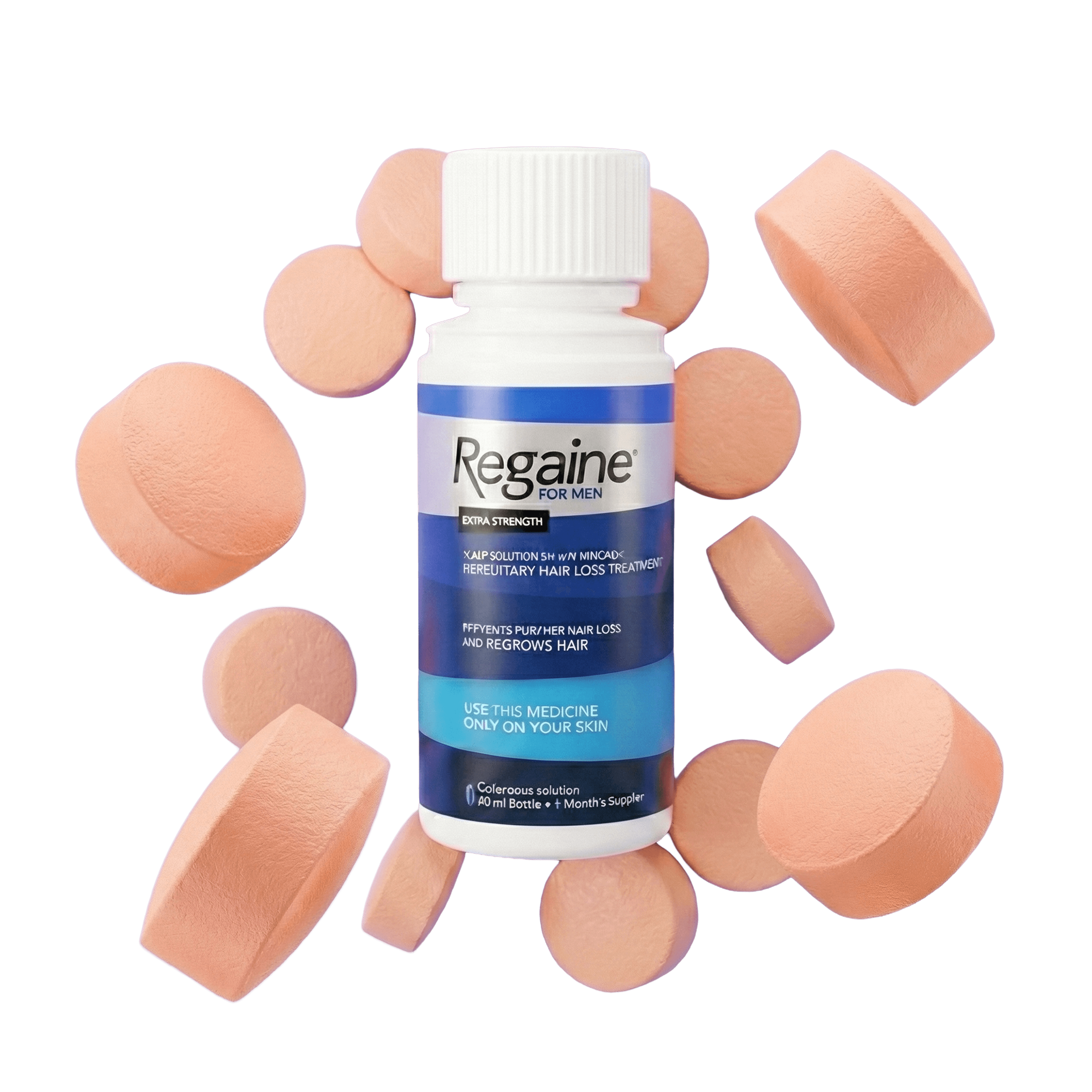
If you're a man concerned about pattern hair loss rather than a nutritional issue, Totiva's hair loss service offers a pharmacist-led online consultation where clinicians can assess whether Finasteride, Minoxidil (including Regaine), or a combined approach makes sense for you. There's no upfront cost for the consultation itself.
What Your GP Appointment Should Cover#
If you're seeing your GP about hair loss, it helps to go prepared. Be ready to describe:
- When the shedding started and whether it was sudden or gradual
- Whether you've had recent illness, significant stress, surgery, or rapid weight change
- Any changes to your diet
- Your menstrual history if relevant
- Family history of hair loss
- Any medications you take (some drugs, including beta-blockers and anticoagulants, can contribute to hair loss)
Your GP may refer you to a dermatologist if the pattern isn't straightforward or if there are signs of an autoimmune or inflammatory cause. Scalp psoriasis, for example, causes scaling and inflammation that can disrupt follicle function and lead to temporary hair loss if left untreated. It's not the same as the permanent follicle damage seen in scarring alopecias, but it does warrant proper treatment.
The Bottom Line#
Zinc plays a genuine role in hair follicle function, and deficiency can contribute to shedding. But for most people in the UK with access to a varied diet, zinc deficiency isn't the underlying cause of their hair loss. Before reaching for supplements, it's worth getting a blood test to find out what, if anything, is actually low.
If tests reveal a deficiency, correcting it through diet or supervised supplementation is a reasonable step, though it takes time. If tests are normal, the focus should shift to identifying whether the cause is hormonal, genetic, or related to a scalp condition.
For men dealing with pattern hair loss specifically, evidence-based prescription treatments exist and are more likely to make a real difference than any supplement. If you'd like to explore those options, Totiva's pharmacist-led online consultations are a straightforward place to start. You can begin a free hair loss consultation and only pay if treatment is approved and appropriate for you.
Medical Information: This article is for informational purposes only and does not constitute medical advice. Always consult a qualified healthcare professional before starting, stopping, or changing any treatment.