Does B12 Deficiency Cause Hair Loss? What the Evidence Says
B12 and iron deficiency can both contribute to hair shedding. Here's what the evidence shows, how to get tested on the NHS, and when it's reversible.
Written by:

Medically reviewed by Callum Armstrong, MPharm, Independent Prescriber (IP)
Key Takeaways
B12 deficiency can contribute to hair shedding by impairing follicle cell division and reducing oxygen delivery, but it's rarely the sole cause. Iron deficiency is often a bigger factor. Both are reversible with treatment, though regrowth takes 6-12 months.
B12 deficiency can contribute to hair loss, but it's rarely the whole story. The relationship is indirect rather than a simple cause-and-effect, and understanding exactly how it works can help you figure out whether your hair shedding has a nutritional explanation and what to do about it.
This article covers the biological mechanisms, how B12 and iron deficiency interact, how to interpret your blood test results, and how long you can expect to wait before you see hair regrowth after treatment.
How B12 Deficiency Affects Your Hair#
Hair follicles are among the most metabolically active cells in your body. They divide rapidly and have a high demand for nutrients, which makes them particularly vulnerable when something is in short supply.
Vitamin B12 is essential for DNA synthesis and the production of healthy red blood cells. When B12 levels fall, two things can happen that are relevant to hair. First, follicle cell replication may be disrupted, potentially causing hair to exit the growth (anagen) phase early and enter the resting (telogen) phase prematurely. Second, low B12 can cause a type of anaemia that reduces the oxygen-carrying capacity of your blood, meaning hair follicles receive less oxygen and fewer nutrients.
The result can be a condition called telogen effluvium, where a larger proportion of hairs than normal are in the resting phase simultaneously, leading to diffuse shedding across the scalp rather than a receding hairline or bald patches.
It's worth being clear that the clinical evidence linking B12 deficiency directly to hair loss is associative rather than proven causal. No large randomised controlled trials have confirmed a direct mechanism. That said, the indirect route through anaemia and impaired cell division is biologically plausible and supported by the broader evidence on nutrient deficiencies and hair cycling.
Iron Deficiency and Hair Loss: Often a Bigger Factor#
For many people experiencing unexplained hair shedding, iron deficiency is actually a more significant driver than B12. Iron is needed to produce haemoglobin, the protein in red blood cells that carries oxygen around the body. When iron stores fall, oxygen delivery to follicles is impaired and hair growth suffers in a similar way to B12-related anaemia.
A 2013 Korean study found that iron deficiency can cause hair loss that closely resembles male pattern hair loss, and may even follow similar shedding phases. This is clinically important because it means iron-related hair loss can sometimes be mistaken for genetic hair loss, which has a very different prognosis and treatment pathway.
Iron deficiency hair loss is far more common in premenopausal women, particularly those with heavy periods, than in men. If you're a woman experiencing diffuse thinning, low ferritin (the iron storage protein) is one of the first things worth investigating.
Ferritin vs Serum Iron: Which Test Matters?#
This is a commonly misunderstood distinction. Serum iron measures how much iron is currently circulating in your blood, but this fluctuates throughout the day and can appear normal even when your body's iron stores are depleted. Ferritin is a much more reliable marker because it reflects stored iron. You can have a normal serum iron but critically low ferritin, and your hair follicles will still be suffering.
When asking your GP about iron and hair loss, specifically request a ferritin level test. NHS reference ranges vary slightly between laboratories, but a ferritin below 30 micrograms per litre is generally considered low enough to impair hair growth, even if it falls within the technical lower limit of the lab's normal range. Some trichologists suggest ferritin above 70 micrograms per litre is optimal for healthy hair cycling.
Understanding Your B12 Blood Test Results#
The NHS typically measures serum B12, and most laboratories flag results below 180 nanomoles per litre as deficient, with 180-300 nmol/L considered borderline. However, serum B12 has limitations: it measures total B12 in the blood, including inactive forms that your body cannot actually use.
A more informative test is active B12 (holotranscobalamin), which measures only the biologically available fraction. Private testing services such as Medichecks and Thriva offer active B12 testing if you'd prefer not to wait for an NHS appointment, which can be useful given current GP waiting times in many parts of the UK.
If your B12 comes back borderline, your GP may also test for methylmalonic acid (MMA) or homocysteine, which rise when B12 is functionally insufficient even if serum levels look acceptable.
Who Is Most at Risk?#
Certain groups are significantly more likely to develop B12 deficiency:
- Vegans and vegetarians. B12 is found almost exclusively in animal products. Without supplementation or fortified foods (Marmite, fortified plant milks, nutritional yeast), dietary intake can be dangerously low. This is particularly important given the rise in plant-based eating across the UK.
- People with pernicious anaemia. This is an autoimmune condition where the body attacks intrinsic factor, a protein produced in the stomach that's needed to absorb B12. People with pernicious anaemia cannot absorb dietary B12 and need hydroxocobalamin injections rather than oral supplements. This is an important distinction: if you have pernicious anaemia, over-the-counter supplements simply won't work.
- People taking metformin. The MHRA has issued specific guidance on metformin reducing B12 absorption over time. If you've been on metformin for type 2 diabetes for more than four years, or at higher doses, your GP should be monitoring your B12 levels.
- People taking proton pump inhibitors (PPIs). Medications like omeprazole and lansoprazole reduce stomach acid, which is needed to free B12 from food. Long-term PPI use is associated with lower B12 levels.
- People with gastrointestinal conditions. Coeliac disease, Crohn's disease, and anyone who has had bariatric surgery (particularly gastric bypass) may have impaired B12 and iron absorption.
- Older adults. Stomach acid production naturally declines with age, reducing the ability to absorb B12 from food.
- South Asian and Black British communities. UK Biobank data suggests higher rates of dietary B12 insufficiency in these populations, partly reflecting dietary patterns, though this is a complex and underresearched area.
Getting Tested on the NHS#
You can ask your GP for a B12 blood test without a specialist referral. If you have symptoms consistent with deficiency (fatigue, tingling in the hands or feet, brain fog, mouth ulcers, pale or jaundiced skin alongside hair shedding) your GP should be willing to test.
Request a full blood count alongside B12, folate, ferritin, vitamin D, and thyroid function. This combined panel covers the most common nutritional and hormonal causes of hair loss and gives a much clearer picture than testing B12 in isolation.
If you're experiencing long NHS wait times, private finger-prick tests from services like Medichecks or Thriva can return results within a few days and are a reasonable option for people who want answers quickly.
Got questions? Speak to a pharmacist on WhatsApp now
Prefer to browse first? View treatments
Treatment Options and What to Expect#
If your B12 is low due to dietary insufficiency, your GP will typically recommend oral cyanocobalamin or methylcobalamin supplements. These are available over the counter. However, if the deficiency is related to pernicious anaemia or significant malabsorption, the NHS prescribes hydroxocobalamin injections (usually every three months as ongoing treatment, or more frequently in the initial loading phase).
For iron deficiency, ferrous sulfate tablets are the standard NHS treatment. These can cause digestive side effects; if that's an issue, ferrous gluconate or ferric maltol are gentler alternatives your GP can prescribe.
How Long Until Hair Grows Back?#
This is one of the most common questions, and the honest answer is: it takes longer than most people expect. Hair follicles don't respond overnight to corrected deficiency.
In practice, the typical timeline looks something like this:
- Months 1-2: Shedding may actually increase initially as follicles that were stuck in a resting state begin to cycle again and push out old hairs.
- Months 3-4: Shedding should begin to slow and new fine hairs may become visible.
- Months 6-12: More noticeable regrowth, though density may not fully return for up to a year after levels normalise.
Patience is genuinely required here. If you correct your B12 or iron levels and expect dramatic results within six weeks, you'll likely be disappointed. Stick with treatment and retest levels at around three months to confirm they're improving.
When B12 Isn't the Whole Answer#
Nutritional deficiencies rarely cause hair loss in isolation. It's common to see B12 deficiency alongside low vitamin D, low ferritin, and borderline folate, all of which can collectively worsen hair shedding. Thyroid dysfunction (both hypothyroidism and hyperthyroidism) can cause diffuse hair loss that looks identical to telogen effluvium, which is why testing thyroid-stimulating hormone (TSH) at the same time makes sense.
For men, it's also worth considering whether genetic hair loss (androgenetic alopecia, or male pattern baldness) is a concurrent factor. Male pattern hair loss follows a predictable pattern, typically starting at the temples or crown, and is driven by the hormone DHT acting on genetically susceptible follicles. This is a different mechanism entirely from nutritional deficiency and won't be reversed by correcting B12 or iron levels.
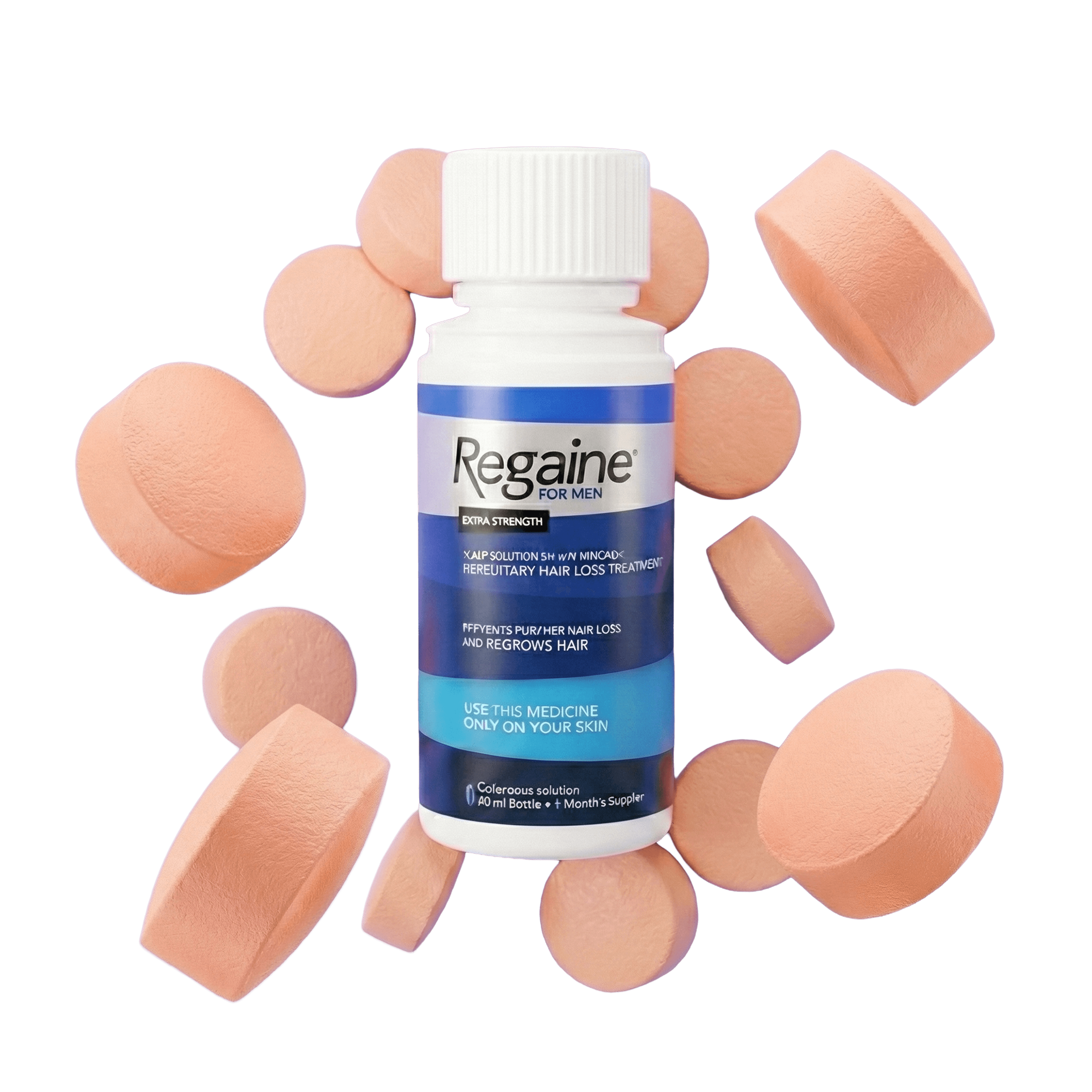
If you're a man whose hair loss seems to be progressing in a pattern rather than diffuse shedding, it may be worth exploring evidence-based treatments for male pattern hair loss. Finasteride (from £14.99 for 28 tablets) and Minoxidil (Regaine liquid solution from £33.60) are the two treatments with the strongest clinical evidence, and Totiva's online hair loss service offers a free consultation with UK clinicians who can help assess which approach makes sense for you. You can browse the options at /services/hair-loss.
It's important to note that Totiva's hair loss treatments are currently available for men only. Women experiencing hair loss should speak to their GP, who can assess for hormonal and nutritional causes and refer to a dermatologist or trichologist if needed.
Combination Deficiencies: The Bigger Picture#
One thing neither competitor article addresses well is the reality that multiple deficiencies often co-exist. A vegan who isn't supplementing properly might have low B12, low iron, low vitamin D, and low zinc simultaneously. Each of these independently stresses the hair cycle, and together they can cause quite significant shedding.
If you've corrected one deficiency but hair loss continues, it's worth having a broader nutritional panel done rather than assuming the treatment has failed. Zinc, selenium, biotin, and vitamin D are all worth checking, particularly in people with restricted diets or gastrointestinal conditions.
A Note on Supplements Without Testing#
It's tempting to just buy a B12 supplement from the chemist and see if it helps. For most people, this is low-risk: B12 is water-soluble and excess is excreted rather than stored. But self-supplementing without testing has two downsides. You might miss a more significant underlying cause (pernicious anaemia, thyroid disease, coeliac disease) that needs proper treatment. And if your B12 is actually fine, you'll be no closer to understanding why your hair is shedding.
For iron, self-supplementing without confirmed deficiency carries more risk. Too much iron can be harmful, particularly in men and postmenopausal women, and iron overload is a genuine concern. Please get tested before starting iron supplements.
When to See a GP#
Get a GP appointment if you're experiencing:
- Noticeable hair shedding that's been going on for more than three months
- Fatigue, brain fog, tingling hands or feet, or mouth ulcers alongside hair loss
- You're vegan or vegetarian and haven't been tested recently
- You're on long-term metformin or PPIs
- You have a known gastrointestinal condition affecting absorption
- Hair loss that's patchy rather than diffuse (which could suggest alopecia areata)
For men who've ruled out nutritional causes and are concerned their hair loss is pattern-related, Totiva offers free online consultations with UK-registered clinicians. There's no subscription and you only pay for treatment if it's appropriate for you. You can start a consultation at /start/hair-loss.
Medical Information: This article is for informational purposes only and does not constitute medical advice. Always consult a qualified healthcare professional before starting, stopping, or changing any treatment.