Does Mounjaro Cause Hair Loss or Acid Reflux?
Mounjaro can trigger both hair shedding and reflux-like symptoms in some people. Here's what the clinical evidence says and how to manage both.
Written and medically reviewed by:

Key Takeaways
Hair loss on Mounjaro is usually caused by rapid weight loss, not the drug itself, and typically reverses once weight stabilises. Reflux symptoms are linked to slowed gastric emptying. Both are manageable with the right approach.
Two side effects come up more than almost any others in conversations about Mounjaro: hair loss and acid reflux. If you've noticed more hair on your pillow, or found yourself reaching for antacids after meals, you're not imagining things. Both are real experiences for some people taking tirzepatide. The good news is that neither is usually permanent, and both can be managed.
This article covers what the evidence actually says about each, why they happen, and what you can do about them.
Hair Loss on Mounjaro: What's Really Going On#
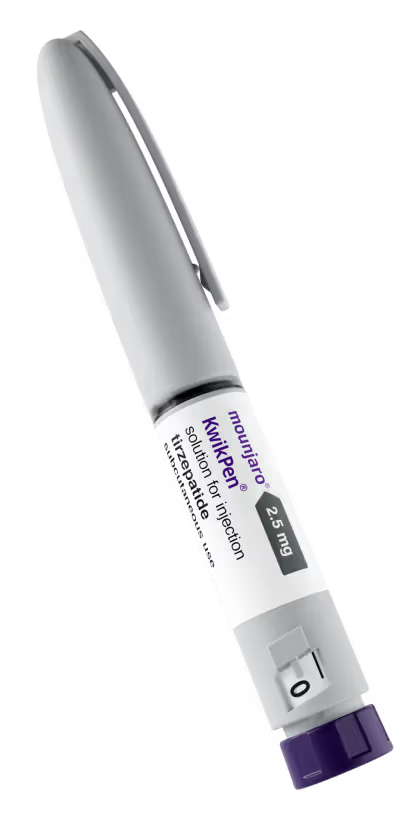
Hair shedding is not listed as an official side effect in Mounjaro's Summary of Product Characteristics (SmPC). Despite that, clinical trial data tells a different story. In the large SURMOUNT-1 trial published in the New England Journal of Medicine, alopecia occurred in 4.9% to 5.7% of participants taking doses between 5mg and 15mg, compared with just 0.9% in the placebo group. That gap is meaningful.
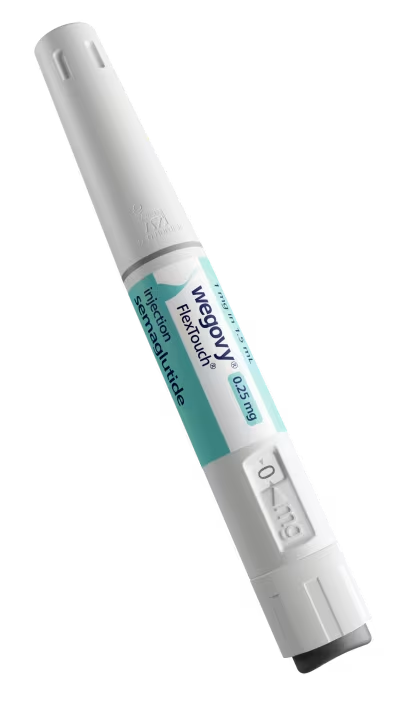
For context, Wegovy (semaglutide) showed hair loss in around 3% of trial participants versus 1% on placebo. So Mounjaro does appear to carry a slightly higher signal, but it's worth understanding why before drawing conclusions.
Is It the Drug or the Weight Loss?#
This is the question most people don't realise they should be asking. The most likely explanation for hair loss on Mounjaro isn't a direct toxic effect on hair follicles. It's a condition called telogen effluvium.
Under normal circumstances, around 85-90% of your hair follicles are in an active growth phase (anagen) at any given time. The rest are in a resting phase (telogen), after which the hair naturally falls out. Significant physical stress, including rapid weight loss, calorie restriction, nutritional deficiency, or illness, can push a larger proportion of follicles into the telogen phase prematurely. You don't notice it immediately because there's a lag of around 2-3 months between the trigger and the visible shedding.
This is why people who lose weight quickly through bariatric surgery, very low calorie diets, or GLP-1 medications like Mounjaro often report increased hair shedding around 3-6 months into their treatment. The Mounjaro itself may not be the direct cause. The rapid reduction in calorie intake that it produces almost certainly plays a role.
Does the Dose Matter?#
The trial data suggests it might. Hair loss rates appear to be somewhat higher at the top end of the dosing range (10mg and 15mg), which aligns with the pattern of greater weight loss at higher doses. Patients who lose weight most rapidly, and who are potentially eating least, face the highest nutritional stress on the body. This is one reason the standard titration schedule, starting at 2.5mg and increasing slowly over months, exists: it gives your body time to adapt.
Who Is at Higher Risk?#
Certain factors make telogen effluvium more likely. Women are more susceptible than men, partly due to hormonal factors and partly because iron deficiency is more common in women, particularly those who are premenopausal. Low ferritin (stored iron) is strongly associated with hair loss even in the absence of anaemia. Vitamin D deficiency, which is extremely common in the UK, has also been linked to disrupted hair cycling. Zinc and B vitamins, particularly biotin and B12, are important for hair follicle health.
If you're losing weight quickly and eating significantly less than before, it's entirely possible to become deficient in these nutrients even without realising it.
How to Reduce Hair Loss Risk on Mounjaro#
The practical steps here focus largely on nutrition:
- Protein intake: Aim for at least 1.2-1.6g of protein per kg of body weight daily. Hair is made of keratin, a protein, and low intake directly impairs growth. This can be challenging when appetite is suppressed, so planning protein-rich meals ahead matters.
- Iron: If you're female and premenopausal, ask your GP to check ferritin, not just haemoglobin. Ferritin below 30 micrograms per litre is associated with hair loss even when you're not technically anaemic.
- Vitamin D: Supplement with 10 micrograms (400 IU) daily as a minimum, which is standard NHS guidance for everyone in the UK through autumn and winter. Many people benefit from 25 micrograms (1000 IU).
- Zinc and B vitamins: A good quality multivitamin that covers these bases is a sensible precaution during active weight loss.
- Avoid crash dieting: Mounjaro's appetite suppression can be powerful. Some people unintentionally eat far too little, particularly in the early weeks. Eating 1200-1400kcal or more of nutrient-dense food daily helps protect against the nutritional triggers of telogen effluvium.
Will the Hair Grow Back?#
For most people, yes. Telogen effluvium is self-limiting. Once the underlying trigger is addressed (usually once weight stabilises and nutrition improves), the follicles re-enter the growth phase. Most people see improvement within 3-6 months of the shedding stopping, though full recovery can take up to a year.
If hair loss is severe, patchy, or continues beyond 6 months despite optimising nutrition, it's worth speaking to your GP. This could indicate underlying androgenetic alopecia that was unmasked by the weight loss period, or a separate nutritional or hormonal issue that needs investigating.
Acid Reflux and GORD on Mounjaro#
Gastro-oesophageal reflux disease (GORD) is not listed as a recognised adverse reaction in Mounjaro's SmPC. That said, it would be surprising if tirzepatide had no effect on reflux symptoms, given one of its core mechanisms of action.
Mounjaro slows gastric emptying. Food stays in your stomach longer, which is partly why it suppresses appetite so effectively. But a stomach that empties slowly is also a stomach under more pressure, and that pressure can push acidic contents upward into the oesophagus. This is a mechanical process, not a direct drug-induced one.
In the clinical trials, gastrointestinal symptoms including nausea, vomiting, dyspepsia (indigestion), and abdominal pain were among the most commonly reported adverse effects, particularly during dose escalation. Dyspepsia and abdominal discomfort can overlap significantly with reflux symptoms, so some of what people describe as heartburn or acid reflux during Mounjaro treatment may be categorised differently in trial data.
Who Is More Likely to Experience Reflux?#
If you already have GORD before starting Mounjaro, the delayed gastric emptying effect may worsen your symptoms, at least initially. People who are overweight also tend to have higher rates of reflux due to increased intra-abdominal pressure, so this is a common background condition in the Mounjaro-eligible population.
Symptoms are typically most prominent during the first 4-8 weeks at each new dose, when the gastric emptying effect is most noticeable and the body is still adapting.
Managing Reflux Symptoms on Mounjaro#
Practical measures make a meaningful difference for most people:
- Eat smaller meals: A slower-emptying stomach that's also very full is a recipe for reflux. Smaller, more frequent meals reduce this risk.
- Avoid eating close to bedtime: Lying down with a full stomach increases reflux. Allow 2-3 hours after eating before lying down.
- Elevate the head of your bed: Even a modest 15-20 cm elevation reduces nocturnal reflux.
- Reduce trigger foods: Caffeine, alcohol, fatty meals, citrus, and chocolate are common reflux triggers. Mounjaro's appetite suppression often naturally reduces overeating, which can actually improve reflux over time for some people.
- Antacids and alginate preparations: Over-the-counter options like Gaviscon or simple antacids can help with immediate symptom relief and are safe to use alongside Mounjaro.
- Proton pump inhibitors (PPIs): If symptoms are persistent, your GP may prescribe a PPI such as omeprazole or lansoprazole. These reduce acid production and are generally effective for reflux. There are no significant drug interactions between PPIs and Mounjaro that would preclude combined use, though your prescriber should be aware of all medications you're taking.
An Important Note on Oral Contraceptives#
Because Mounjaro slows gastric emptying, it can affect the absorption of oral medicines taken at the same time, including the combined oral contraceptive pill. The MHRA advises that an additional barrier method of contraception be used for the first four weeks of Mounjaro treatment and for four weeks after any dose increase. This applies to oral medications generally, but the contraceptive pill is the most clinically significant example for many patients.
When to Get Medical Advice#
Most reflux symptoms on Mounjaro are mild and manageable. You should speak to a GP or pharmacist promptly if you experience:
- Severe or worsening chest pain (always rule out cardiac causes first)
- Difficulty swallowing
- Vomiting blood or passing black tarry stools
- Reflux symptoms that aren't improving with standard over-the-counter measures after 2-3 weeks
- Significant nausea or vomiting that prevents you from eating or drinking adequately
NHS 111 is available 24 hours a day if you're unsure whether a symptom needs urgent attention.
Mounjaro in the UK: Getting the Right Support#
Mounjaro is MHRA-approved in the UK for type 2 diabetes, and tirzepatide for weight management is available under the brand name Zepbound following NICE guidance (TA1026) covering NHS eligibility criteria. Accessing it through a regulated prescriber, whether NHS or private, means you should have access to proper monitoring and support for side effects like those described above.
If you're taking Mounjaro and struggling with hair loss, reflux, or other side effects, it's worth talking to whoever prescribes your medication. Side effects that feel disruptive don't have to be tolerated in silence, and dosing adjustments or supportive measures can often make a significant difference.
At Totiva, our pharmacist-led consultations are designed around exactly this kind of practical, ongoing support. You can explore our weight loss service to understand what treatments we offer and how our approach works, or read more about the medications available. If you'd like a personalised consultation with one of our UK-registered pharmacists, you can start a weight loss consultation at any time.
The aim with any weight loss medication is to get the benefits with as little disruption to your day-to-day life as possible. Understanding why these side effects happen, and what to do about them, makes that much more achievable.
Medical Information: This article is for informational purposes only and does not constitute medical advice. Always consult a qualified healthcare professional before starting, stopping, or changing any treatment.