Mysimba Weight Loss Tablets: How They Work, Who Can Take Them and What to Expect
Mysimba combines naltrexone and bupropion to reduce appetite. Here's how it works, who can take it, the side effects, and how it compares to GLP-1 treatments.
Written and medically reviewed by:

Key Takeaways
Mysimba is a prescription tablet combining naltrexone and bupropion to reduce appetite. It produces 3.7% to 5.7% average weight loss in trials. It is not available on the NHS and has important contraindications, including seizure disorders, opioid use, and pregnancy.
What is Mysimba?#
Mysimba is a prescription-only weight loss tablet licensed in the UK for adults aged 18 to 74. Each tablet contains two active ingredients: naltrexone (8mg) and bupropion (90mg). At the full maintenance dose, you take four tablets daily, giving 32mg of naltrexone and 360mg of bupropion. It is prescribed alongside a reduced-calorie diet and increased physical activity, not as a standalone treatment.
You may have seen it called Contrave in the US. Same combination, different brand name. Bupropion is not licensed as an antidepressant in the UK (unlike the US), which sometimes confuses people who read American content about it.
How it works in the brain#
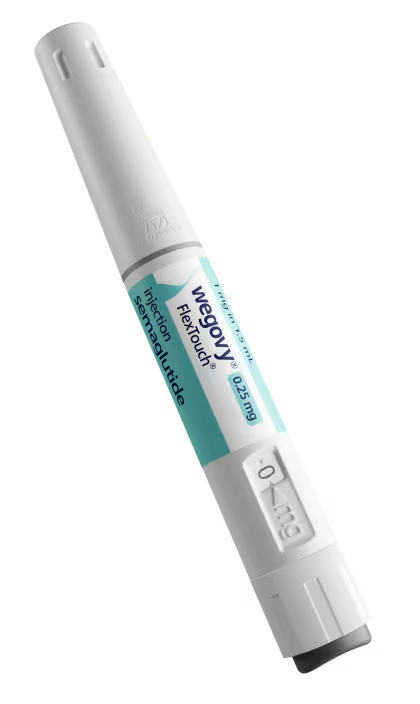
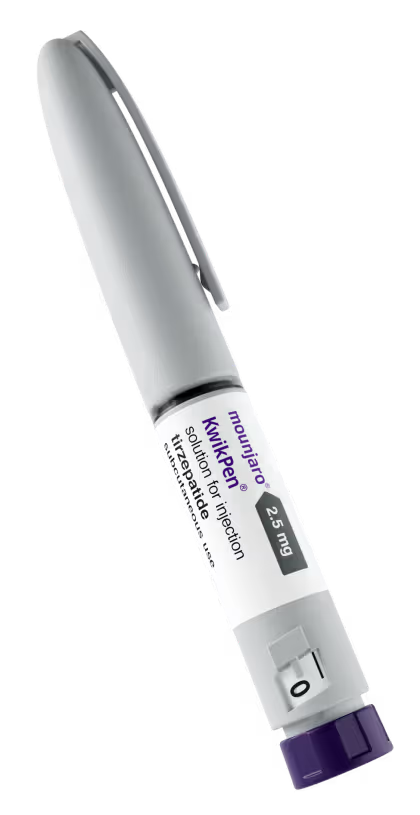
Mysimba does not work like GLP-1 injectables such as Wegovy or Mounjaro. Instead of mimicking a gut hormone, it targets two pathways in the brain.
Bupropion activates pro-opiomelanocortin (POMC) neurons in the hypothalamus. These neurons send signals that reduce hunger. Normally, the body's own opioid system partially blocks this effect as a feedback brake. Naltrexone prevents that brake from engaging, so the appetite-reducing signal stays active for longer.
At the same time, the combination dampens the brain's reward response to food, reducing cravings for high-calorie foods specifically. This is not a mood effect. The dose used in Mysimba is lower than antidepressant doses of bupropion, and the mechanism is appetite suppression rather than mood regulation.
How much weight can you realistically lose?#
Three large clinical trials showed average weight loss of 3.7% to 5.7% of starting body weight with Mysimba, compared to 1.3% to 1.9% on placebo. Between 13% and 22% of people taking Mysimba lost 10% or more of their starting weight, versus 5% to 6% on placebo.
This is meaningful, but it is less than the average losses seen in GLP-1 trials. Wegovy produces around 20.7% average body weight loss in trials, and Mounjaro around 22.5%. Mysimba's advantage is that it is an oral tablet, it does not require injections, and it may suit people who cannot or do not want to use injectables.
Who cannot take Mysimba#
Mysimba has a significant contraindication list. You cannot take it if you:
- Have a seizure disorder or history of seizures. Bupropion lowers the seizure threshold.
- Have or have had an eating disorder such as bulimia or anorexia nervosa.
- Are currently using opioids or opioid-containing medicines (including tramadol or codeine). Naltrexone blocks opioid receptors and can trigger acute withdrawal.
- Are taking or have taken MAOIs in the last 14 days. This includes some antidepressants.
- Are pregnant or breastfeeding. Mysimba must not be used in pregnancy.
- Have uncontrolled high blood pressure.
- Have severe liver or kidney impairment.
- Are under 18 or over 74.
Bupropion also interacts with other drugs that lower the seizure threshold. These include antipsychotics, some antidepressants, and certain antimalarials. Your prescriber must review your full medicines list before prescribing.
Taking Mysimba alongside antidepressants#
This is one of the most common questions, and it requires a careful answer.
If you take an SSRI or SNRI, combining it with Mysimba is not automatically ruled out, but it needs a thorough clinical review. Bupropion acts on dopamine and noradrenaline pathways. Combined with SSRIs or SNRIs, there is an increased risk of seizures and, separately, a low but recognised theoretical risk of serotonin syndrome (a potentially serious condition causing agitation, tremor, and rapid heart rate).
Bupropion also carries a neuropsychiatric warning in its prescribing information. It can, in some people, cause changes in mood, behaviour, or thinking, including suicidal thoughts. This risk needs to be weighed up before prescribing in anyone with a history of depression or mental health conditions, even though the dose in Mysimba is sub-antidepressant.
Alcohol is another consideration. Both naltrexone and bupropion interact with alcohol. Drinking during Mysimba treatment increases seizure risk and can worsen side effects. The SmPC recommends minimising alcohol intake or stopping it completely.
Side effects#
The most common side effects in trials were:
- Nausea and vomiting (very common, particularly in the first few weeks)
- Headache and dizziness
- Insomnia and sleep disturbance
- Dry mouth
- Constipation
- Elevated blood pressure and heart rate (blood pressure should be checked before and during treatment)
Seizures are a rare but serious risk. Because of this, Mysimba should be used with great caution in anyone with any factor that increases seizure risk.
The titration schedule (see below) exists partly to reduce nausea and other early side effects by starting low and increasing slowly.
Got questions? Speak to a pharmacist on WhatsApp now
Prefer to browse first? View treatments
The 4-week titration schedule#
| Week | Morning dose | Evening dose | Daily total |
|---|---|---|---|
| 1 | 1 tablet | None | 1 tablet |
| 2 | 1 tablet | 1 tablet | 2 tablets |
| 3 | 2 tablets | 1 tablet | 3 tablets |
| 4 onwards | 2 tablets | 2 tablets | 4 tablets |
If you miss a dose during titration, skip it and take the next one at the usual time. Do not double up. Taking two doses close together raises seizure risk.
Why Mysimba is not available on the NHS#
In 2017, NICE completed a technology appraisal of naltrexone-bupropion (TA494) and did not recommend it for routine NHS commissioning. The decision came down to cost-effectiveness. At the price submitted by the manufacturer, NICE concluded the cost per quality-adjusted life year (QALY) was too high to meet NHS thresholds. This means Mysimba is available in the UK only through private prescription.
Private prescription costs vary between pharmacies. For current pricing information, please check with the dispensing pharmacy or visit Totiva's weight loss service page.
Mysimba versus other oral options#
For patients who want a tablet rather than an injection, there are now several options. Orlistat works differently (it blocks fat absorption in the gut) and is available on the NHS. There are also licensed oral semaglutide options — Wegovy Tablets and Foundayo — which are distinct licensed products with different dose schedules, both available as daily tablets.
Mysimba tends to suit people who are needle-averse, whose BMI puts them in the lower qualifying range, or who have a contraindication to GLP-1 medicines. GLP-1 injectables such as Wegovy and Mounjaro consistently produce larger average weight losses in clinical trials and have more long-term outcome data behind them. For people who can use either approach, it is worth discussing both with a clinician.
If you want to explore GLP-1 and other evidence-based options, Totiva's weight loss service page sets out the treatments currently available.
Ready to see if treatment could work for you?
The 16-week review rule#
The SmPC for Mysimba includes a formal stopping criterion. Your prescriber must review your progress at 16 weeks. If you have not lost at least 5% of your initial body weight by that point, treatment should be discontinued. This is not advisory: it is the clinical threshold built into the prescribing guidance. If Mysimba is going to work for you, a meaningful response should be visible within four months.
Weight typically returns after stopping Mysimba, as with most weight-loss medicines. Long-term use is intended for people who respond and tolerate it well, alongside sustained lifestyle changes.
Medical Information: This article is for informational purposes only and does not constitute medical advice. Always consult a qualified healthcare professional before starting, stopping, or changing any treatment.