Does Wegovy Come as a Pill in the UK?
Wegovy is only available as an injection in the UK, not a pill. Here's what that means for your options, NHS eligibility, and what oral alternatives exist.
Written and medically reviewed by:

Key Takeaways
Wegovy is only available as an injection in the UK, not a pill. An oral semaglutide (Rybelsus) exists but is only licensed for type 2 diabetes, not weight loss. NHS access requires a BMI of 35-plus and a specialist referral.
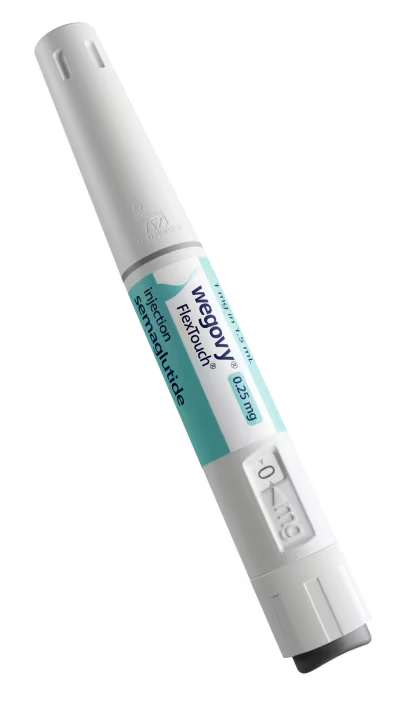
Searches for a "Wegovy pill" have been rising steadily in the UK, and it's easy to see why. Media coverage of oral semaglutide trials has created a reasonable impression that a pill version might already be available. It isn't, at least not for weight loss. Wegovy (semaglutide 2.4 mg) is licensed in the UK exclusively as a once-weekly subcutaneous injection. No oral version of Wegovy has received MHRA or EMA approval for weight management.
That's the short answer. But there's quite a bit more worth knowing, particularly if you're needle-averse, waiting on the NHS, or trying to work out what your options actually are in 2025.
Why Wegovy Isn't a Pill#
Semaglutide is a peptide-based molecule. When you swallow a peptide, your digestive enzymes break it down before it can reach the bloodstream in meaningful amounts. This is the fundamental challenge with oral GLP-1 receptor agonists: the gut is very good at destroying exactly what needs to get through.
An oral form of semaglutide does exist, branded as Rybelsus, but it uses a special absorption enhancer called SNAC (sodium N-(8-[2-hydroxybenzoyl] amino) caprylate) to allow limited absorption through the stomach lining. Rybelsus is licensed at doses of 3 mg, 7 mg, and 14 mg, but only for the management of type 2 diabetes, not for weight management. It is not interchangeable with Wegovy and has not been approved by the MHRA for obesity treatment.
The dose matters here. The weight loss effect seen with semaglutide requires substantially higher doses than those used in diabetes management. Clinical trials have explored oral semaglutide at 50 mg for weight loss (the OASIS-1 trial), and early data have been promising. However, these formulations are still investigational. No oral weight loss version of semaglutide is currently approved for use in the UK.
If you come across anything marketed as a "Wegovy pill" online, treat it with serious caution. No such licensed product exists, and unregulated alternatives could contain unknown ingredients at unsafe doses.
NHS Eligibility for Wegovy#
Access to Wegovy on the NHS is governed by NICE guidance TA875, published in March 2023. To be eligible, you need to meet all of the following criteria:
- A BMI of 35 kg/m² or above (with lower thresholds for people from Black, Asian, and other minority ethnic backgrounds, where the same metabolic risk occurs at a lower BMI, typically around 2.5 kg/m² lower)
- At least one weight-related health condition, such as type 2 diabetes, high blood pressure, obstructive sleep apnoea, or cardiovascular disease
- Enrolment in a specialist NHS weight management service, usually tier 3 or tier 4, which provides multidisciplinary support including dietary, physical activity, and behavioural interventions
NICE also recommends that Wegovy is used for a maximum of two years within the NHS pathway, reflecting the current evidence base. Treatment should be reviewed at six months: if you haven't lost at least 5% of your starting weight on the maintenance dose, it's unlikely to be the right treatment for you.
The NHS Supply Reality in 2025#
Even if you meet the eligibility criteria, access isn't always straightforward. The NHS rollout of Wegovy has been phased and supply constraints have affected availability across England. Waiting times for tier 3 weight management services can be significant in many areas.
Scotland, Wales, and Northern Ireland have their own approval processes. The Scottish Medicines Consortium (SMC) and the All Wales Medicines Strategy Group (AWMSG) each assess treatments separately from NICE TA875, so availability differs across the four nations.
If you're waiting on the NHS pathway or don't meet the eligibility criteria, private prescriptions are an option. Private prescribers must be registered with the GMC, and the medication should be dispensed by a GPhC-registered pharmacy. It's worth verifying both before proceeding.
How Wegovy Works and What to Expect#
Wegovy is injected once weekly using a pre-filled pen, into the abdomen, thigh, or upper arm. The dose is gradually increased over 16 to 20 weeks to give your body time to adjust and to reduce gastrointestinal side effects:
- Weeks 1 to 4: 0.25 mg
- Weeks 5 to 8: 0.5 mg
- Weeks 9 to 12: 1.0 mg
- Weeks 13 to 16: 1.7 mg
- Week 17 onwards: 2.4 mg (maintenance dose)
The injection can be given at any time of day, with or without food. Rotate injection sites to reduce localised skin reactions.
In the STEP 1 trial, published in the New England Journal of Medicine, participants using Wegovy alongside lifestyle changes lost an average of around 15% of their body weight over 68 weeks, compared to roughly 2.4% with placebo. That's a meaningful difference, but it's worth noting that weight loss tends to slow after the initial phase, and most of the benefit requires continuing the medication long-term.
If you miss a dose and your next scheduled injection is more than 48 hours away, take the missed dose when you remember. If it's less than 48 hours until your next dose, skip it and carry on as normal. If you miss two or more consecutive doses, contact your prescriber before restarting, as dropping back to a lower dose temporarily is often sensible.
What Happens After Wegovy#
This is a question that doesn't get discussed enough. Clinical evidence shows that most people regain a significant proportion of the weight they lost after stopping semaglutide, often within a year. This isn't a personal failing. It reflects the ongoing nature of obesity as a condition and the fact that GLP-1 receptor agonists are working continuously to regulate appetite and satiety. When you stop, those effects stop too.
For anyone approaching the end of a two-year NHS course, or considering stopping for any reason, it's worth having a conversation with your prescriber about a long-term maintenance strategy. This might involve transitioning to a different treatment, intensifying lifestyle support, or exploring whether continued private prescription is appropriate.
Side Effects and Safety#
The most common side effects are gastrointestinal and tend to be worst during dose escalation. These include nausea (reported in up to 44% of users in clinical trials), diarrhoea, constipation, abdominal discomfort, and acid reflux. Eating smaller portions, avoiding high-fat or spicy food, and staying well hydrated all help.
More serious risks, though less common, include:
- Pancreatitis: Seek urgent medical attention for severe, persistent abdominal pain that radiates to the back.
- Gallbladder problems: Gallstones and gallbladder inflammation have been reported, particularly with rapid weight loss. Report new upper abdominal pain or jaundice promptly.
- Dehydration and kidney injury: Prolonged vomiting or diarrhoea can lead to dehydration and, in some cases, acute kidney injury. Maintain fluid intake and seek advice if you notice reduced urine output or dizziness.
- Diabetic retinopathy: In people with type 2 diabetes, rapid improvements in blood glucose can temporarily worsen retinopathy. Close monitoring is important if you have this history.
- Hypoglycaemia: If you're taking insulin or a sulfonylurea alongside Wegovy, your prescriber may need to adjust those doses.
- Resting heart rate: A small increase has been observed and should be monitored.
Any suspected adverse reactions can be reported to the MHRA via the Yellow Card scheme at yellowcard.mhra.gov.uk.
For signs of a severe allergic reaction (difficulty breathing, facial swelling, collapse), call 999. For persistent vomiting, signs of dehydration, or other concerning symptoms, contact your GP or call 111.
Wegovy must not be used during pregnancy. Women of childbearing potential should use effective contraception during treatment and stop at least two months before trying to conceive, as the medicine can remain in the body for some time after the last dose.
Oral Alternatives for Weight Management in the UK#
If injections aren't suitable or appealing, there are licensed oral options, though none currently match the weight loss efficacy seen with Wegovy in clinical trials.
Orlistat works differently from GLP-1 receptor agonists. It blocks roughly a third of dietary fat from being absorbed in the gut. It's available on the NHS, and a lower-dose version (Alli, 60 mg) can be bought without a prescription. The prescription strength is 120 mg taken three times daily with meals. Average weight loss in trials is around 5% over a year, less than half what's typically seen with Wegovy. Gastrointestinal side effects, including oily stools and urgency, are common, particularly with high-fat meals.
Mysimba (naltrexone/bupropion) acts on appetite-regulating centres in the brain. It's a prescription-only medicine and is not suitable for everyone, particularly those with a history of seizures, uncontrolled hypertension, or eating disorders. Typical weight loss in trials is around 5 to 8% over a year.
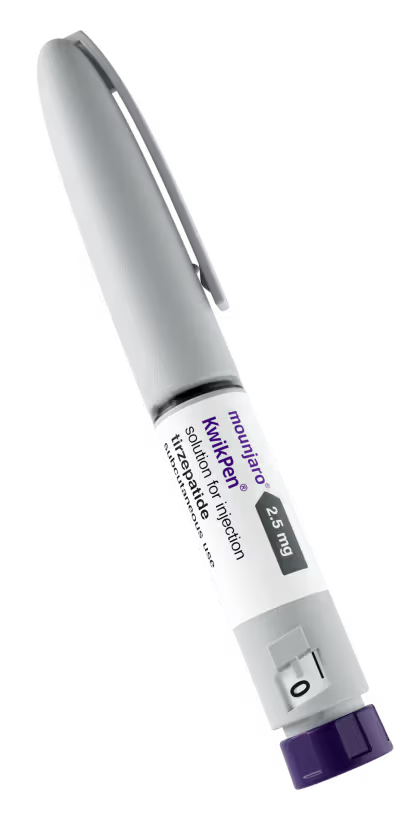
Mounjaro (tirzepatide) deserves a mention here, though it's an injection rather than a pill. It works on both GLP-1 and GIP receptors, and trial data suggest it may produce even greater weight loss than Wegovy for some people. It received MHRA approval for weight management and is available privately in the UK. If your hesitation about Wegovy is about its specific side effect profile or efficacy rather than the injectable route itself, Mounjaro is worth discussing with a prescriber.
You can find more detail on all these options, including how they compare on efficacy and NHS availability, on Totiva's weight loss treatments page.
Got questions? Speak to a pharmacist on WhatsApp now
Prefer to browse first? View treatments
Private Versus NHS: A Realistic Cost Comparison#
NHS access to Wegovy is free at the point of use if you meet the criteria and are enrolled in a qualifying weight management service. The challenge is the waiting time and geographic variation in service availability.
Privately, Wegovy typically costs between £170 and £250 per month depending on the dose and provider. Mounjaro private prescriptions tend to range similarly. These costs are ongoing, and given that treatment is often long-term, it's a significant consideration.
When accessing treatment privately, always check that your prescriber is GMC-registered and that dispensing is through a GPhC-registered pharmacy. The GPhC has a public register you can search online. Be wary of providers that don't offer any clinical consultation before prescribing, don't ask about your medical history, or aren't transparent about their regulatory status.
Getting Started#
If you're considering weight loss medication and want a straightforward clinical assessment without a lengthy wait, Totiva's pharmacist-led consultations can help you work out what's appropriate for your situation. The process involves a proper review of your medical history, current medications, and weight management goals, with prescriptions only where clinically suitable.
For most people, the first practical step is a GP conversation to discuss NHS referral eligibility. If the NHS pathway isn't accessible or is taking too long, a regulated private consultation is a reasonable alternative, provided you use a properly registered service.
Weight management medication works best alongside genuine lifestyle changes. That's not a caveat, it's what the clinical evidence consistently shows. The most effective outcomes in every major trial have come from combining medication with dietary and behavioural support.
Medical Information: This article is for informational purposes only and does not constitute medical advice. Always consult a qualified healthcare professional before starting, stopping, or changing any treatment.