Air Bubbles in GLP-1 Injection Pens: Are They Safe?
Noticed an air bubble in your Wegovy, Mounjaro or Ozempic pen? A UK pharmacist explains what's safe, what to do, and when to call for help.
Written and medically reviewed by:

Key Takeaways
Small air bubbles in Wegovy or Mounjaro pens are not dangerous subcutaneously. Prime the pen before injecting to clear larger ones. Only skip the injection if the solution looks cloudy or the bubble is very large.
Small air bubbles in your GLP-1 injection pen are almost always harmless. Injecting one subcutaneously (under the skin) cannot cause an air embolism. That risk applies to intravenous injections directly into a vein, which is a completely different route. Your Wegovy, Mounjaro or Ozempic pen delivers medicine into fatty tissue beneath the skin, where a small bubble simply disperses without any danger.
That said, larger bubbles are worth removing before you inject. Not for safety reasons, but because a bubble takes up space in the cartridge that should be occupied by medicine. If a significant portion of your dose is displaced by air, you may receive less medication than intended.
Why bubbles appear in the first place#
Air can enter a pen cartridge at several points. During manufacturing and filling, tiny amounts of air sometimes become trapped. Temperature changes are a common culprit too: if your pen warms up after coming out of the fridge, dissolved gases in the solution can form small visible bubbles. This is the same process you see when a cold fizzy drink warms up.
Dropping or shaking the pen can also move air around inside the cartridge and make existing bubbles more visible. If your pen has been shaken or dropped, let it sit upright (needle end pointing up) for a few minutes before use. Do not use the pen if the solution looks cloudy, discoloured, or contains floating particles. Those signs suggest the medicine itself may be compromised, which is different from a clear bubble.
For storage guidance specific to Wegovy, see the Wegovy Storage and Shipping Guide.
How much dose could a bubble actually displace?#
This is what most patients really want to know. A typical Mounjaro or Wegovy dose volume is around 0.5 ml. A small bubble of 0.05 ml or less represents roughly 10% of that volume at most, and in practice the actual displacement is usually much smaller because the pen mechanism is designed to account for small air pockets.
A bubble you can barely see (a millimetre or two across) is unlikely to affect your dose in any meaningful way. A bubble that fills a visible length of the cartridge window, say 5 mm or more, is worth removing through the priming steps below.
Pre-filled auto-injector pens vs vial-and-syringe#
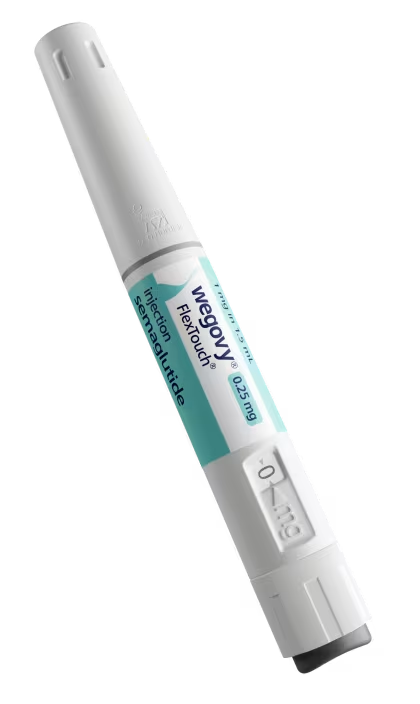
Most UK patients using Wegovy (semaglutide) or Mounjaro (tirzepatide) are using pre-filled auto-injector pens. These are factory-sealed and designed so that a small amount of air is already accounted for in the priming process. You do not routinely need to draw air out of these pens.
Vial-and-syringe preparations are a different matter. Some compounded GLP-1 preparations (not licensed in the UK) require you to draw up the dose yourself. When you do this, air bubbles in the syringe should be removed before injection because the volumes are less controlled and displacement is more significant. Tap the syringe gently and push the plunger slightly to expel air before injecting.
Removing a bubble from a pre-filled pen#
For Wegovy and Mounjaro auto-injector pens, the standard approach is priming, which the pen's instructions for use (IFU) describe step by step.
- Attach a new needle and remove both needle caps.
- Hold the pen with the needle pointing upward.
- Tap the cartridge window gently two or three times to encourage the bubble to rise.
- Press the dose button until a small drop of liquid appears at the needle tip. This is the prime shot and confirms the pen is working correctly.
- If a large bubble remains visible, repeat the tap-and-prime process once more.
If you still see a large bubble after two priming attempts, do not inject. Contact your pharmacist or the manufacturer's patient helpline. For Mounjaro (tirzepatide), Eli Lilly operates a UK patient support line listed in the MHRA-approved patient information leaflet that comes with your pen.
A quick triage guide#
| What you see | What to do |
|---|---|
| Tiny bubble (1-2 mm) | Prime once as normal, then inject |
| Moderate bubble (3-5 mm) | Tap upward, prime twice, then inject |
| Large bubble or cloudy liquid | Do not inject. Contact your pharmacist |
| Pen dropped or frozen | Let it settle upright for 5 minutes, inspect the solution |
Got questions? Speak to a pharmacist on WhatsApp now
Prefer to browse first? View treatments
Mounjaro-specific considerations#
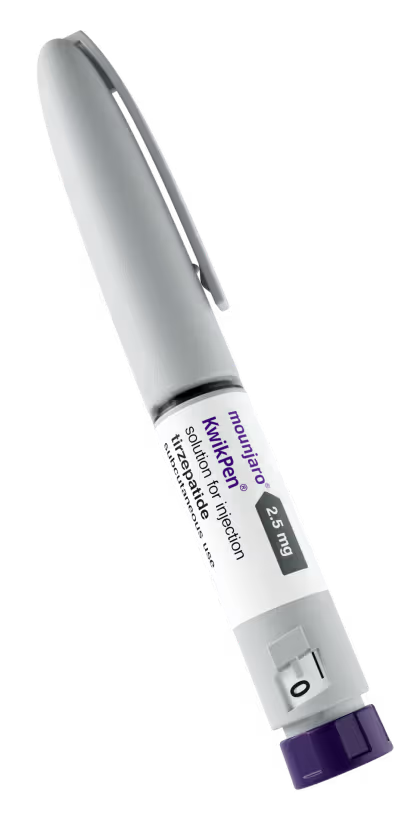
Mounjaro uses a single-use auto-injector. Each pen is pre-filled and designed for one injection only, so you cannot adjust the fill level. The cartridge window lets you see the remaining solution. A small bubble sitting at the top of the cartridge when held needle-up is normal and will not enter the needle during injection because it floats above the liquid. The medication itself is dispensed from below the bubble.
For more detail on how Mounjaro pens work mechanically, the Mounjaro Needle Size Guide covers device anatomy in practical terms.
A note on MHRA reporting#
If your pen repeatedly develops large unexplained bubbles, delivers an incomplete dose, or behaves unusually, this is worth reporting. In the UK you can do this via the MHRA Yellow Card scheme at yellowcard.mhra.gov.uk. You do not need to be a healthcare professional to submit a report, and it helps the regulator track device faults across the patient population.
Self-injection training in the UK#
UK patients prescribed Wegovy via NHS specialist weight management services should be offered injection technique training before starting. Many patients accessing GLP-1 medicines through online pharmacies begin self-injecting without formal training and find questions like this one arise quickly. If you feel uncertain about technique, ask your prescribing clinician or pharmacist for a demonstration. Totiva's clinical team is available to support patients throughout treatment via the weight loss service.
The short answer: a small bubble in your GLP-1 pen is not a safety risk. Prime the pen as instructed, and if a large bubble persists, your pharmacist is the right first call.
Medical Information: This article is for informational purposes only and does not constitute medical advice. Always consult a qualified healthcare professional before starting, stopping, or changing any treatment.