Black Seed Oil for Hair Loss: Does the Evidence Support the Hype?
Black seed oil is popular for hair loss, but the science is thin. Here's an honest look at what the evidence shows, who it might help, and what to watch out for.
Written and medically reviewed by:

Key Takeaways
Black seed oil has some anti-inflammatory properties, but there are no good clinical trials showing it treats hair loss. Evidence is weak and mostly limited to small, unblinded studies. Proven treatments like minoxidil and finasteride have far stronger evidence.
Black seed oil has real biological activity, but the evidence that it prevents or reverses hair loss is weak. The studies that exist are small, poorly controlled, and mostly not conducted in the UK. It is worth understanding what the research does and does not show before spending money on it.
What black seed oil actually contains#
Black seed oil comes from Nigella sativa, a plant native to Western Asia and the Middle East. It is widely known as kalonji in South Asian and Middle Eastern communities, where it has been used for centuries as both a food ingredient and a traditional remedy.
The oil's key active compound is thymoquinone. In laboratory studies, thymoquinone has shown anti-inflammatory and antioxidant effects. Some in vitro work (cell studies, not human trials) suggests it may weakly inhibit DHT, the hormone that drives male pattern hair loss. However, there is no clinical evidence that thymoquinone reaches the hair follicle at meaningful concentrations when applied topically. The DHT-inhibiting effect has not been demonstrated in humans at scalp-application doses.
What the studies actually looked at#
Most of the research involves telogen effluvium, the temporary shedding triggered by stress, illness, or nutritional deficiency. One frequently cited study used a herbal oil formula containing Nigella sativa alongside other oils. It found improved hair thickness in participants. But the sample was small, the formula contained multiple oils, and there was no blinding. Attributing the result to black seed oil alone is not possible.
A separate study examined black seed oil for hair loss caused by chemotherapy. Chemotherapy-induced alopecia works through a completely different biological mechanism to androgenetic alopecia or telogen effluvium, so those findings do not transfer to everyday hair thinning.
For androgenetic alopecia (male pattern baldness), the most common cause of hair loss in men, there is no good quality clinical trial supporting black seed oil. The honest answer is that the evidence is insufficient to recommend it as a treatment.
How it compares to better-studied options#
Rosemary oil has one small randomised controlled trial comparing it to minoxidil 2%, showing similar results at six months. That is a single study and has not been replicated, so the evidence is still limited. But it is further ahead than black seed oil. You can read more in our guide on pumpkin seed oil and hair loss, which faces a similar evidence gap.
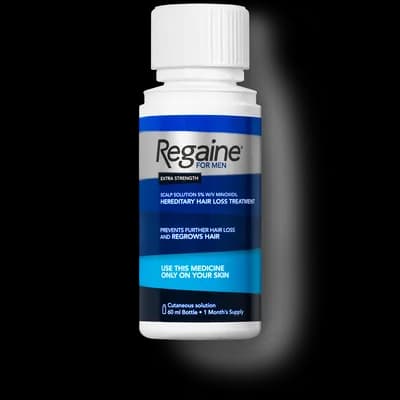
Minoxidil has the strongest evidence base for hair loss. In the UK, Regaine for Men Regular Strength 2% solution is a pharmacy (P) medicine, meaning it must be purchased from a pharmacy. Regaine for Men Extra Strength 5% foam is a general sale (GSL) product available without pharmacist supervision. Finasteride is prescription-only. Both minoxidil and finasteride are NICE-recognised treatments for male pattern hair loss with large randomised trial data behind them.
For men considering those options, Totiva's hair loss treatment hub covers what is available. The service is for men only.
Got questions? Speak to a pharmacist on WhatsApp now
Prefer to browse first? View treatments
Applying it safely#
If you want to try black seed oil on your scalp, patch test first. Apply a small amount to the inside of your wrist and wait 24 hours. Nigella sativa can cause contact dermatitis in some people.
For scalp use, mix a few drops of cold-pressed Nigella sativa oil with a carrier oil such as coconut or jojoba. No clinical dosing standard exists; as a general starting point, many sources suggest diluting with a higher proportion of carrier oil (for example, a small amount of black seed oil in a larger volume of carrier), but you should use your own judgement and discontinue if irritation occurs. Massage into the scalp and leave for at least 30 minutes before washing out.
If you take black seed oil supplements and are on any regular medication — including anticoagulants (such as warfarin, apixaban, rivaroxaban, or edoxaban), antiplatelet drugs, antihypertensives, or diabetes medication — speak to your pharmacist or GP before starting or stopping. Nigella sativa may influence the metabolism of some medicines and can have additive effects on blood pressure, clotting, and blood glucose. Do not make changes to your prescribed medication without professional advice. If you are pregnant or breastfeeding, there is insufficient evidence on safety. Avoid it unless a doctor or midwife has advised otherwise.
For UK buyers, look for cold-pressed, food-grade oil labelled clearly as Nigella sativa. UK Trading Standards has previously investigated adulterated herbal oils sold online, so buying from a reputable UK retailer with clear labelling matters. Black seed oil is not a licensed medicine under MHRA regulation. It is sold as a food supplement, which means efficacy claims are not independently verified.
Which type of hair loss might it suit#
Black seed oil is most plausible for telogen effluvium, where inflammation and oxidative stress on the scalp are contributing factors. For male pattern baldness, there is no meaningful evidence it helps. For alopecia areata or traction alopecia, the evidence base is essentially absent. It is a conditioner and scalp-soother more than a hair loss treatment.
If your hair loss is progressing or has been going on for more than three months, a proper assessment is worth more than any oil.
Medical Information: This article is for informational purposes only and does not constitute medical advice. Always consult a qualified healthcare professional before starting, stopping, or changing any treatment.