Keratin vs Biotin for Hair Loss: Which One Actually Helps?
Biotin and keratin are both linked to hair health, but they work differently. Find out which one, if either, is worth your money for hair loss.
Written and medically reviewed by:

Key Takeaways
Biotin is a vitamin that helps your body make keratin, the protein hair is built from. Neither has strong evidence for treating male pattern baldness. If hair loss follows the classic thinning pattern, finasteride and minoxidil are the MHRA-approved options.
Biotin and keratin are both associated with healthy hair, but they are fundamentally different things doing different jobs. Biotin is a B vitamin your body uses to produce keratin. Keratin is the structural protein that hair is actually made of. Neither one is a treatment for hair loss in the clinical sense, and understanding why that matters could save you a lot of money.
What each one is#
Biotin (vitamin B7) is a water-soluble vitamin involved in the production of fatty acids and amino acids. One of its roles is supporting the synthesis of keratin. Your body cannot make biotin on its own, but you get it from food: eggs, meat, nuts, seeds, and wholegrains all contain it. The EFSA reference intake for adults is 40mcg per day, and most people in the UK get this from a normal diet. Deficiency is genuinely rare.
Keratin is the fibrous structural protein that makes up the majority of the hair shaft — commonly cited figures range from around 65% to 95% depending on hair type and measurement method. It is also found in nails and the outer layer of skin. Your body builds keratin from amino acids, and the process requires biotin among other nutrients. When you see keratin sold as a product, it usually refers to one of two things: a salon smoothing treatment applied to the hair surface, or a dietary supplement claiming to support hair strength from within.
How they differ in practice#
| Biotin | Keratin | |
|---|---|---|
| What it is | Vitamin B7 | Structural protein |
| Role in hair | Supports keratin synthesis | Forms the hair shaft itself |
| How you get it | Diet, supplements | Diet (amino acids), salon treatments, supplements |
| Evidence for hair loss | Only in confirmed deficiency | Weak for supplements; salon treatments affect texture not growth |
| Available as | Capsules, tablets | Salon treatment, oral supplements |
| UK regulation | Food supplement (no licensed hair loss claim) | Food supplement / cosmetic product |
| Typical supplement dose | 1,000–10,000mcg (far above daily needs) | Varies; often 500mg hydrolysed keratin |
| Safety | Generally safe; important lab test interaction | Generally safe; salon versions may contain formaldehyde |
The evidence question#
Here is the honest answer: neither biotin nor keratin supplements have strong clinical evidence for treating hair loss in people without a confirmed nutritional deficiency.
A review published in Dermatology and Therapy found that biotin supplementation improved hair and nail outcomes only in people with documented biotin deficiency or specific genetic conditions affecting biotin metabolism. For the general population, there is no reliable evidence that taking extra biotin grows more hair or slows hair loss.
Keratin supplements face a similar problem. Keratin is a protein, and when you swallow it, your digestive system breaks it down into amino acids before it is absorbed. There is no guarantee those amino acids end up in your hair follicles rather than elsewhere. The small studies on hydrolysed keratin supplements show some improvement in hair texture and tensile strength, but the evidence for reducing hair loss is not there.
Salon keratin treatments are a different product entirely. They coat the hair shaft with a keratin-based film to smooth frizz and reduce breakage. They do not affect the follicle, do not stimulate growth, and have no impact on hair loss. Some salon formulations also contain formaldehyde or formaldehyde-releasing chemicals, which can be a concern at higher concentrations under cosmetics safety regulations.
Why most male hair loss is not a vitamin problem#
Male pattern baldness, the medical name for which is androgenetic alopecia, affects around 50% of men by the age of 50. It is driven by dihydrotestosterone (DHT), a hormone derived from testosterone that gradually miniaturises hair follicles in genetically susceptible men. You can read more about how DHT causes hair loss in our guide to DHT and hair loss.
Biotin and keratin do not block DHT. They do not slow follicle miniaturisation. Taking them will not reverse or meaningfully slow androgenetic alopecia in men who are not deficient in these nutrients.
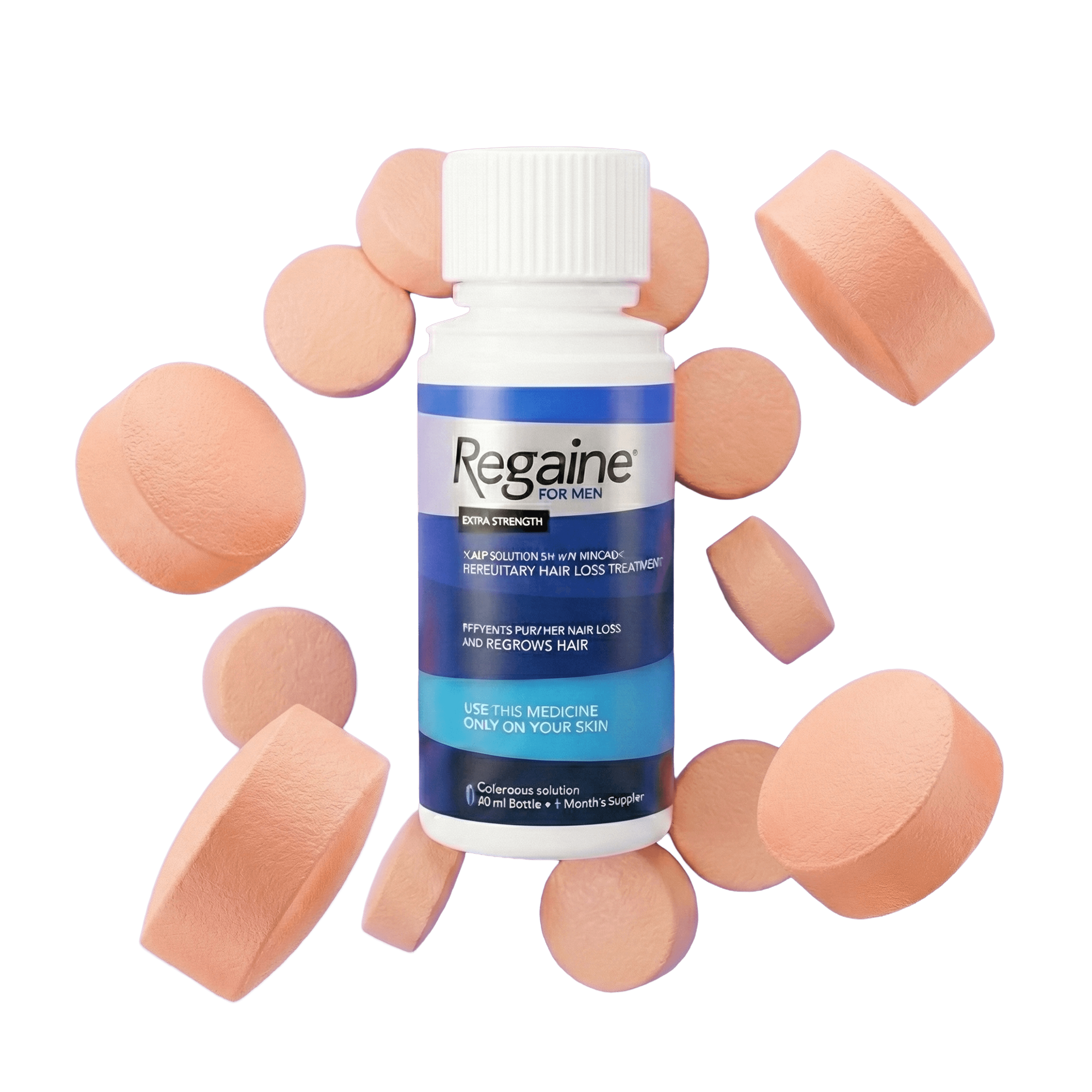
The only treatments with strong evidence for androgenetic alopecia in the UK are finasteride, which blocks DHT production, and minoxidil, which prolongs the hair growth phase and improves follicle blood flow. Both are MHRA-approved for this use. Biotin and keratin supplements carry no such approval and no licensed hair loss indication.
A safety point many people miss#
If you are taking high-dose biotin supplements (the kind commonly sold at 5,000–10,000mcg per tablet), there is a clinically important interaction you should know about. Biotin at high doses can interfere with immunoassay-based blood tests, including thyroid function tests (TSH) and troponin assays used to detect heart attacks. The interference can produce falsely reassuring or falsely abnormal results.
If you are having NHS blood tests, tell your GP or the phlebotomist if you are taking biotin supplements. You may be advised to stop taking them before a blood draw; the exact interval can vary between laboratories and the assay being used, so follow the guidance of your GP or the requesting clinician. This is not a reason to avoid biotin entirely, but it is a reason to be cautious about supplementing at doses far beyond your daily requirement.
Got questions? Speak to a pharmacist on WhatsApp now
Prefer to browse first? View treatments
Who might benefit from biotin or keratin#
There are situations where these nutrients genuinely help:
Biotin supplementation is reasonable if:
- A blood test has confirmed a biotin deficiency (rare in the UK but possible)
- You follow a very restrictive diet that limits biotin-rich foods
- You eat large amounts of raw egg whites, which contain avidin, a protein that blocks biotin absorption
- You have biotinidase deficiency, a rare genetic condition affecting biotin recycling
Keratin support (dietary) may help if:
- Hair loss or breakage appears linked to protein deficiency, for example in people with very low protein intake
- You are recovering from telogen effluvium, where hair enters a resting phase after physical stress, illness, or crash dieting
Salon keratin treatments may help if:
- Your main concern is frizz, breakage, or hair texture rather than thinning or shedding
- You have chemically damaged hair that is snapping at the shaft
Neither is likely to help if:
- Your hair loss follows the classic receding hairline or crown-thinning pattern of androgenetic alopecia
- Your diet is already balanced and you have no confirmed deficiency
Natural food sources#
If you want to support biotin and keratin production through diet rather than supplements, the foods below are useful:
For biotin: eggs (cooked), salmon, pork, beef liver, sunflower seeds, almonds, sweet potato, and wholegrains.
For keratin building blocks (amino acids): chicken, turkey, eggs, dairy, fish, legumes, and soya products. Keratin itself is not found in food in a usable form, but eating adequate protein gives your body the raw materials to produce it.
Most UK adults eating a varied diet will already be consuming enough of both.
Choosing between them#
The question is less about biotin versus keratin and more about what is actually causing your hair loss.
If blood tests confirm a nutritional deficiency, correcting it (through diet first, supplements if needed) is sensible. If your hair loss is androgenetic alopecia, the evidence points firmly toward finasteride and/or minoxidil rather than supplements. If your concern is hair breakage or texture, a salon keratin treatment may help cosmetically, though it will not affect the follicle.
For men noticing gradual thinning or a receding hairline, the Totiva hair loss service is designed for men and offers clinically proven prescription options including finasteride from £14.99 for 28 tablets. You can compare the two main evidence-based treatments in our finasteride vs minoxidil guide.
If you think your hair loss may be driven by DHT and want to explore prescription treatment, you can start a free consultation and a UK-registered clinician will assess whether treatment is suitable for you.
Medical Information: This article is for informational purposes only and does not constitute medical advice. Always consult a qualified healthcare professional before starting, stopping, or changing any treatment.