High Strength Minoxidil: Does a Higher Percentage Actually Work Better?
Minoxidil 10% and 15% exist, but the evidence does not support them over standard 5%. Here is what UK men should know before going stronger.
Written and medically reviewed by:

Key Takeaways
5% minoxidil is the strongest MHRA-licensed topical concentration and outperforms 2%. Going higher to 10% or 15% offers no proven extra benefit and raises side effect risk. Combination with finasteride is a better escalation step.
Stronger is not always better with minoxidil. The evidence suggests that 5% topical minoxidil is the most effective concentration for most men with male pattern baldness, and going higher offers little extra benefit while increasing the risk of side effects.
How minoxidil works at the scalp#
Minoxidil is a vasodilator. It widens blood vessels, increases blood flow to hair follicles, shortens the resting phase of the hair cycle, and extends the active growth phase. The result is thicker, longer hair over time.
For a topical solution to have any effect, the drug first has to cross the skin and reach the follicle. The scalp has a limited capacity to absorb minoxidil. Once that absorption ceiling is reached, applying a stronger solution does not push significantly more drug into the follicle. You get more sitting on the skin surface, not more reaching the target. This is why doubling the concentration does not double the result.
What the standard concentrations show#
A well-cited randomised trial by Olsen et al. (2002) comparing 5% and 2% topical minoxidil in men found that 5% produced about 45% more hair regrowth than 2% after 48 weeks. That is a meaningful difference between 2% and 5%.
The jump from 5% upward is less convincing. A 2021 study by Ghonemy et al. compared 10% minoxidil to 5% minoxidil in men with androgenetic alopecia. Both groups improved, but the 10% group did not show a statistically significant advantage over 5%. A 2022 review by Singh et al. concluded there is insufficient evidence to recommend concentrations above 5% in routine clinical practice.
UK regulatory status: what you can and cannot buy#
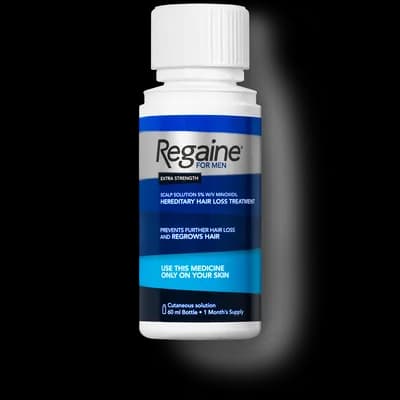
Only 2% and 5% topical minoxidil hold a UK marketing authorisation from the MHRA. These are the concentrations you can buy over the counter at pharmacies and online. Concentrations above 5% do not have a licensed product in the UK.
Higher-strength formulations (10%, 15%) are sometimes produced by specialist UK specials manufacturers. Under the Human Medicines Regulations 2012, a Special can only be prescribed when a licensed product is unavailable or clinically unsuitable for a specific patient. This means a UK prescriber cannot simply choose 10% minoxidil as a first-line option. It requires a clinical justification. Specials sit outside standard licensing and are not subject to the same quality evidence requirements as licensed medicines.
To access these products legally, you need a private prescription from a UK-registered clinician and must obtain them from a pharmacy authorised to supply specials. They are not available over the counter.
Side effects at higher concentrations#
Side effects become more common as concentration rises, because more drug is absorbed systemically.
At any concentration, possible side effects include:
- Unwanted facial or body hair growth (hypertrichosis), which is the most common complaint
- Scalp irritation and contact dermatitis, particularly with propylene glycol-based solutions
- Fluid retention and a rapid heartbeat (tachycardia), though clinically significant cardiovascular effects are very rare at standard licensed concentrations of 2% and 5%
- Dizziness and low blood pressure
At 5%, these effects are uncommon. At higher concentrations, systemic absorption increases, so the cardiovascular effects become more relevant.
Results are also not permanent. If you stop using minoxidil, any regrowth gained will typically reverse within three to six months.
Shedding: what to expect#
Shedding in the first few weeks is normal and often intensifies as you increase concentration. This is because minoxidil pushes resting follicles into a new growth cycle, which sheds old hairs first. At 5%, this phase typically lasts six to twelve weeks. Higher concentrations may produce a heavier initial shed. Stopping treatment at this point is a common mistake. Give the treatment at least six months before judging whether it is working.
Got questions? Speak to a pharmacist on WhatsApp now
Prefer to browse first? View treatments
Oral minoxidil: a practical alternative to chasing higher topical doses#
Low-dose oral minoxidil is sometimes used off-label for hair loss. In clinical practice for hair loss, treatment is commonly initiated at doses as low as 0.625mg to 1.25mg daily to minimise cardiovascular risk, and may be titrated upward under clinical supervision. It is a licensed medicine in the UK (licensed for hypertension) used here outside that licensed indication. Because it is swallowed rather than applied to the scalp, it delivers consistent systemic drug exposure. This can be effective for men whose scalp absorbs topical minoxidil poorly.
However, oral minoxidil is not suitable for everyone. It must not be used by people with heart failure, severe heart disease, recent heart attack, or known low blood pressure. It should also be used with caution in those with renal impairment, and there is a risk of pericardial effusion at higher doses. It requires individual assessment by a clinician. Like topical minoxidil, its effects are not permanent and reverse after stopping.
Oral minoxidil requires a private prescription in the UK and is not routinely available on the NHS for hair loss.
The concentration comparison at a glance#
| Concentration | MHRA status | Prescription needed? | Evidence quality | Notes |
|---|---|---|---|---|
| 2% topical | Licensed | No (OTC) | Good (Olsen 2002) | Less effective than 5% in men |
| 5% topical | Licensed | No (OTC) | Strong | First-line for male pattern baldness |
| 10% topical | Unlicensed Special | Yes (private) | Limited, no superiority over 5% | Higher side effect risk |
| 15% topical | Unlicensed Special | Yes (private) | Very limited | Not supported by clinical evidence |
| Oral (low dose) | Off-label licensed medicine | Yes (private) | Growing evidence | Cardiovascular risks; needs individual assessment |
If standard minoxidil is not giving you enough#
Before considering a higher concentration, look at two things: consistency and combination.
Minoxidil only works if you use it every day. Missing applications is the most common reason results disappoint. Give 5% a full six to twelve months of consistent use before concluding it has failed.
If you have used it correctly and seen limited response, the better evidence-based step is combination therapy. Evidence suggests that combining finasteride with minoxidil can produce greater hair density improvements than either treatment alone. Finasteride reduces DHT, the hormone that drives follicle miniaturisation. Minoxidil supports regrowth. They target different mechanisms, which is why they complement each other well. Please note that finasteride is not suitable for women, including women of childbearing potential; Totiva's hair loss service is for men only.
You can read more about how they work together in the Finasteride and Minoxidil Together guide, or compare the two treatments in Finasteride vs Minoxidil for Hair Loss.
For men looking at their options, Totiva's hair loss service offers consultations with UK-registered clinicians who can advise on the right approach for your situation, including combination treatment.
Medical Information: This article is for informational purposes only and does not constitute medical advice. Always consult a qualified healthcare professional before starting, stopping, or changing any treatment.