Pumpkin Seed Oil for Hair Loss: Does It Actually Work?
One small trial showed promising results, but the evidence has real limits. Here's an honest look at what pumpkin seed oil can and cannot do for hair loss.
Written and medically reviewed by:

Key Takeaways
One small trial in 76 men found pumpkin seed oil (400mg/day) increased hair count by 40% over 24 weeks. The evidence is promising but limited. It is not a replacement for finasteride or minoxidil, but it appears low-risk as an adjunct.
Pumpkin seed oil has genuine biological plausibility as a hair loss supplement, and one clinical trial does support its use in men with male pattern hair loss. But a single, small study is a long way from strong evidence. Here is what the research actually shows, how it compares to licensed treatments, and what to look for if you decide to try it.
Why pumpkin seeds might affect hair growth#
Pumpkin seeds (Cucurbita pepo) contain phytosterols, plant-based compounds that can inhibit an enzyme called 5-alpha reductase. That enzyme converts testosterone into dihydrotestosterone (DHT), the hormone that gradually miniaturises hair follicles in male pattern hair loss (also called androgenetic alopecia). By reducing DHT activity, phytosterols may slow that process.
Pumpkin seeds also provide zinc, iron, and magnesium. All three play a role in normal hair follicle function, and deficiencies in zinc or iron are a known cause of hair shedding (telogen effluvium). Eating a varied diet rich in these minerals matters, but if your hair loss is genetic rather than nutritional, topping up micronutrients alone will not reverse it.
The one clinical trial worth knowing about#
In 2014, Cho et al. published a randomised, double-blind, placebo-controlled trial in 76 men with mild to moderate androgenetic alopecia. Half took 400mg of pumpkin seed oil (PSO) daily for 24 weeks; the other half took a placebo. At the end of the trial, the PSO group showed a mean 40% increase in hair count, versus 10% in the placebo group.
That sounds impressive. But the trial has serious limitations that most articles gloss over:
- Sample size: 76 men is very small. Results from small trials often do not replicate in larger populations.
- Population: All participants were Korean men. It is not certain the findings translate to other ethnicities.
- Duration: 24 weeks is the only time point reported. There is no long-term follow-up data.
- Funding: The funding context is not clearly disclosed in the paper.
- No replication: As of 2025, no independent team has repeated this trial.
The 40% increase in hair count also needs context. This refers to individual hairs counted in a small scalp area using phototrichography, not a dramatic visible transformation. The placebo group also improved by 10%, which is typical in hair loss trials and reflects measurement variability and the placebo effect.
This is promising early data. It is not proof of a reliable treatment.
How it compares to finasteride and minoxidil#
Finasteride 1mg is a prescription-only, selective 5-alpha reductase inhibitor. It reduces scalp DHT by around 60-70% based on published clinical data, with trials involving thousands of patients over two years. Minoxidil works differently, prolonging the hair follicle's active growth phase rather than blocking DHT.
Pumpkin seed oil's 5-alpha reductase inhibition is real but pharmacologically weak. A daily dose of 400mg PSO produces a modest, non-selective reduction in DHT activity. Compare this to 1mg finasteride, which produces a targeted, potent effect at a fraction of the dose. They are not equivalent interventions.
The table below puts the main natural and licensed options side by side:
| Treatment | Mechanism | Evidence level | Typical monthly cost (UK) | Side effect profile |
|---|---|---|---|---|
| Finasteride 1mg | Potent DHT blocker | Multiple large RCTs | From £14.99 per 28 tablets (84-tablet pack £41.99) | Sexual side effects in a minority; psychiatric effects including depression and suicidal ideation have been reported (rare; report any mood changes to your prescriber promptly) |
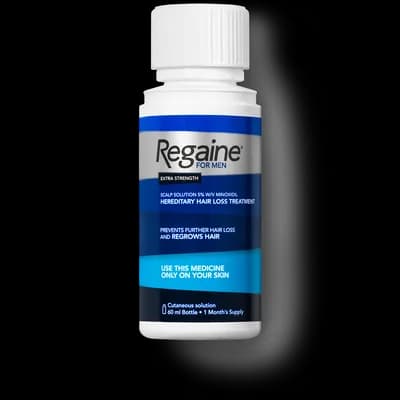
| Minoxidil (Regaine) | Extends hair growth phase | Multiple large RCTs | From £33.60 per 60ml | Scalp irritation; initial shedding |
| Pumpkin seed oil | Weak DHT inhibition | 1 small RCT (n=76) | £10-25 (unregulated supplement) | Minimal reported; not studied long-term |
| Rosemary oil (topical) | Possible scalp circulation effect | 1 RCT (Panahi et al., 2015, n=100) | £5-15 | Scalp tingling |
| Saw palmetto | Weak DHT inhibition | Very limited RCT data | £10-20 | Minimal reported |
Finasteride is prescription-only in the UK. Online prescribing services offering it must be registered with the Care Quality Commission (CQC) and GPhC. If you are considering finasteride, start with a consultation through a regulated provider.
Who the evidence applies to (and who it does not)#
The Cho et al. trial included men only. There is no equivalent RCT in women. A randomised trial (Ibrahim et al., Journal of Cosmetic Dermatology) compared topical pumpkin seed oil to 5% minoxidil foam in women with female pattern hair loss, but it used topical application rather than oral supplementation and had significant methodological limitations, so its results cannot be applied reliably to oral PSO.
Oral pumpkin seed oil has no meaningful evidence base for:
- Female pattern hair loss
- Telogen effluvium (stress or illness-related shedding)
- Alopecia areata (patchy, autoimmune hair loss)
- Post-partum hair loss
For these causes, the root problem needs addressing directly. Telogen effluvium often resolves on its own once the trigger is removed. A GP can investigate underlying causes with blood tests.
Taking PSO alongside prescription treatment#
Pumpkin seed oil and finasteride or minoxidil work through distinct mechanisms, and no interactions are currently known. However, this combination has not been formally studied, and different mechanisms alone do not rule out the possibility of pharmacokinetic interactions. It is therefore reasonable to mention any supplements to the clinician prescribing your treatment.
Pumpkin seed oil supplements have not been assessed for safety in pregnancy or during breastfeeding. People in these groups should speak to a GP before taking PSO. As a precautionary note, those taking immunosuppressant medicines should also seek GP advice before starting any new supplement, including PSO, as supplement use alongside such medicines has not been studied.
Got questions? Speak to a pharmacist on WhatsApp now
Prefer to browse first? View treatments
What to look for on a UK supplement label#
Pumpkin seed oil supplements are food supplements in the UK, not medicines. The MHRA does not assess them for efficacy before they go on sale, and UK law prohibits supplement labels from making medicinal claims. This means a product can be marketed as supporting hair health without any evidence standard being met.
When choosing a supplement, check for:
- Pumpkin seed oil listed as the active ingredient (not powder or whole seed extract)
- A disclosed PSO content per serving, ideally around 400mg to match the trial dose
- A UK or EU supplier with visible third-party testing, such as Informed Sport certification
- No dramatic claims about regrowing hair or reversing baldness
Eating whole pumpkin seeds gives you zinc, iron, and magnesium. But the phytosterol concentration is much lower than in a standardised oil supplement, so seeds and capsules are not interchangeable for this purpose.
What to expect if you try it#
Based on the one available trial:
- No visible change is likely in the first 12 weeks
- Modest possible improvement may be visible by 24 weeks
- There is no data on what happens beyond six months
Pumpkin seed oil is low-risk and may be a reasonable adjunct if you want to try a natural approach alongside lifestyle measures. It is not a substitute for prescription treatment if your hair loss is progressing. Totiva offers a free online consultation for men with male pattern hair loss, where a UK clinician can assess whether finasteride, minoxidil, or a combination is appropriate. See Totiva's hair loss service for more detail. Note that Totiva's hair loss treatments are available to men only; women experiencing hair loss should speak to their GP for a referral to a trichologist or dermatologist.
For a broader look at DHT and how different treatments tackle it, the guide on DHT and hair loss covers the underlying biology in more depth.
Medical Information: This article is for informational purposes only and does not constitute medical advice. Always consult a qualified healthcare professional before starting, stopping, or changing any treatment.