Finasteride side effects: what the evidence actually shows
Worried about finasteride side effects? A UK pharmacist breaks down what's common, what's rare, and what the research really says.
Written by:

Medically reviewed by Chris Armstrong, MPharm
Key Takeaways
Most men tolerate finasteride well. Sexual side effects occur in roughly 1-2% of users and usually resolve on stopping. Persistent effects are rare, and finasteride does not cause prostate cancer.
Finasteride is one of the most clinically proven treatments for male pattern hair loss, yet it also generates more anxiety than almost any other prescription medicine. Online forums are full of alarming stories, which can make it genuinely difficult to tell what is a common experience, what is rare, and what has been misattributed to the drug.
This article works through what the research and UK guidance actually show, covering how frequent different side effects are, which are serious, and whether topical finasteride is a safer option for men who are concerned.
How common are finasteride side effects?#
The majority of men who take finasteride do not experience significant side effects. The drug has been in clinical use since the early 1990s and its safety profile is well-documented.
That said, side effects do occur in a minority of users. Based on the prescribing information and NHS guidance, the following are considered common (affecting more than 1 in 100 people):
- Reduced sex drive (decreased libido)
- Difficulty getting or maintaining an erection
- Ejaculatory problems (reduced volume or difficulty ejaculating)
- Breast tenderness or enlargement (gynaecomastia)
- Skin rash
Importantly, these effects are generally mild and tend to improve either with continued use or once the medication is stopped. For most men, they are not a reason to avoid treatment, but they are worth knowing about before you start.
Serious side effects#
Serious side effects from finasteride are rare, but they deserve honest discussion rather than dismissal.
Mental health effects#
Less than 1 in 1,000 people taking finasteride (around 0.1%) are estimated to experience depression or significant mood changes. A smaller number have reported suicidal thoughts. If you notice any change in your mental health after starting finasteride, stop taking it and contact your GP or prescriber promptly.
The evidence here is not as robust as for sexual side effects, and it is difficult to establish clear causation given that hair loss itself can affect mood and self-esteem. However, the MHRA has issued safety guidance reminding prescribers of this risk, and a patient alert card is recommended for anyone starting treatment.
Sexual side effects#
This is the area that generates the most concern. Sexual side effects, including reduced libido, erectile difficulties, and changes to ejaculation, are listed as common (affecting 1-2% of users in clinical trials). Most resolve during continued use or after stopping.
The more contentious question is whether these effects can persist long-term. This is sometimes referred to as Post-Finasteride Syndrome, a term describing sexual, neurological, and psychological symptoms that continue after the drug is discontinued. The UK's MHRA received 426 reports of persistent sexual dysfunction following finasteride use between November 1992 and April 2024 - roughly 13 to 14 reports per year. Given that millions of men have taken finasteride over this period, this represents a very low reporting rate. However, under-reporting is a genuine limitation of pharmacovigilance data, so the true incidence remains uncertain.
This is not a reason to avoid finasteride if it is appropriate for you, but it is a reason to make an informed decision with a registered clinician rather than purchasing the medication without proper consultation.
Does finasteride cause prostate cancer?#
This concern has circulated widely, largely because of early research that appeared to show a link between finasteride and high-grade prostate cancer. The short answer is no, finasteride does not cause prostate cancer.
The early signal was subsequently explained by a detection effect. Because finasteride shrinks the prostate gland, any cancer present becomes proportionally easier to biopsy and detect. Long-term follow-up data from the Prostate Cancer Prevention Trial, published in the New England Journal of Medicine, confirmed that there was no genuine increase in high-grade cancer risk. In fact, finasteride reduces the overall incidence of prostate cancer diagnoses.
If you have a personal or family history of prostate issues, it is worth discussing this with your prescriber, but prostate cancer is not a realistic risk of taking finasteride for hair loss.
Are finasteride side effects permanent?#
For the vast majority of men, side effects resolve either during treatment (as the body adjusts) or after stopping the medication. This is consistent with finasteride's mechanism: it works by reducing levels of dihydrotestosterone (DHT), and this process reverses when the drug is discontinued.
The concern around persistent effects relates to a small subset of reports where sexual and psychological symptoms continued after stopping. As discussed above, the MHRA data suggests this is rare, though it is not possible to put a precise figure on it.
What this means practically: if you start finasteride and notice side effects that bother you, stopping the medication is a reasonable first step. Most men who do this find symptoms resolve. If they do not, a conversation with your GP is the right next move.
Topical finasteride vs oral finasteride#
Topical finasteride, applied directly to the scalp, has gained significant interest as an alternative for men concerned about systemic side effects. The rationale is straightforward: by delivering the drug locally rather than as a tablet, you reduce the amount that enters the bloodstream, which should theoretically reduce whole-body side effects.
The evidence suggests this logic holds up. Studies comparing topical and oral finasteride show that topical application achieves similar efficacy for hair retention while producing lower serum DHT suppression. One study found topical formulations can be as effective as oral finasteride for hair loss while reducing systemic DHT suppression by a smaller amount.
Reported side effects specific to topical finasteride include local reactions such as scalp irritation, contact dermatitis, and occasional redness. Systemic sexual side effects appear to be less frequently reported than with the oral tablet, though direct head-to-head trial data is still limited.
If you are interested in topical finasteride specifically because you are concerned about side effects, that is a reasonable conversation to have with a prescriber. At Totiva, our clinicians can help you weigh up both options based on your medical history and preferences, without you needing to navigate a GP waiting list. You can find out more about the hair loss treatments available at Totiva.
Got questions? Speak to a pharmacist on WhatsApp now
Prefer to browse first? View treatments
Combining finasteride with minoxidil#
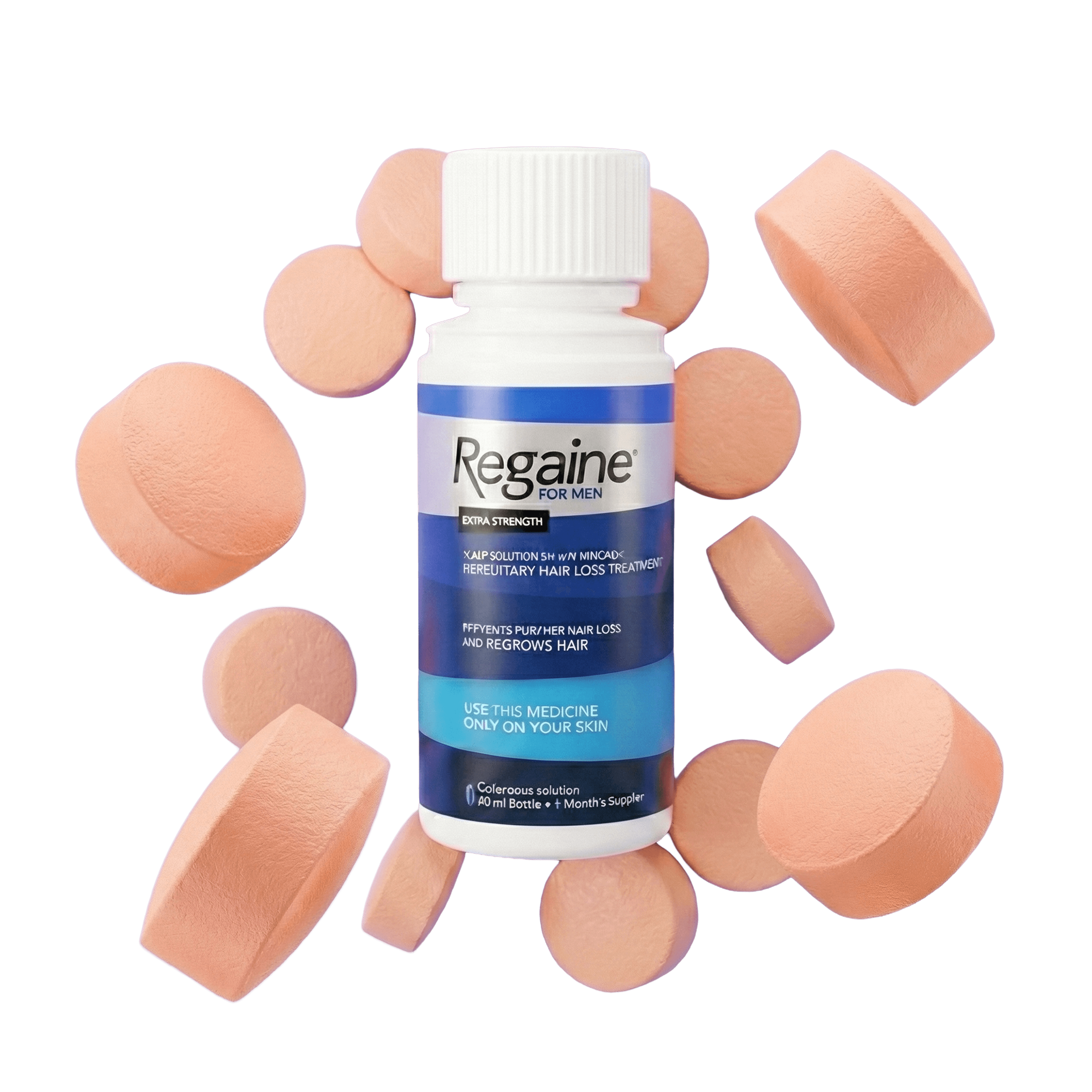
Many men taking finasteride also use minoxidil, either as a topical solution or foam. Regaine (the branded minoxidil product) is one of the most widely used topical hair loss treatments in the UK.
This combination approach targets hair loss from two different angles: finasteride reduces DHT-driven follicle shrinkage, while minoxidil stimulates blood flow to the scalp to support regrowth. Most clinicians consider the combination safe and well-tolerated.
The side effects to be aware of when using both are largely the same as for each drug individually. Minoxidil can cause initial shedding in the first few weeks (this is normal and temporary), scalp irritation, and occasionally unwanted facial hair growth if the solution spreads. There is no significant pharmacological interaction between the two drugs.
Totiva offers a combined finasteride and minoxidil approach for men looking for a more comprehensive treatment strategy.
How to reduce the risk of side effects#
There is no guaranteed way to prevent side effects entirely, but a few practical steps can reduce your risk and help you respond quickly if problems arise.
Start with proper medical oversight. Getting finasteride through a registered prescriber, rather than buying it from an unregulated source, means your health history is assessed before you start. This matters because certain conditions (including liver problems and some medication interactions) can affect how finasteride behaves.
Monitor how you feel in the first few months. The first three months are when side effects, if they occur, are most likely to appear. Keep a mental note of any changes to your mood, sexual function, or general wellbeing.
Report concerns promptly. If you experience symptoms that worry you, contact your prescriber rather than just stopping the medication without guidance. If you experience something unexpected and unexpected, you can report it directly to the MHRA via the Yellow Card scheme at yellowcard.mhra.gov.uk. This is the UK's official system for reporting suspected medication side effects, and it genuinely helps build the evidence base for patient safety.
Do not buy finasteride without a prescription. Unregulated online sources carry obvious risks around product quality, but there is also a clinical risk: without an assessment, nobody is checking whether finasteride is appropriate for you specifically.
What finasteride is not prescribed for on the NHS#
It is worth clarifying one piece of UK-specific context that often surprises people: finasteride is not funded by the NHS for male pattern hair loss. NICE does not recommend it for androgenic alopecia on the basis that hair loss is not considered a medical condition warranting NHS treatment resources. This means the vast majority of men using finasteride for hair loss are doing so via private prescription.
This is not a reflection of the drug's safety or effectiveness. It is simply a funding decision. Finasteride is, however, available on NHS prescription for an enlarged prostate (benign prostatic hyperplasia), where it is used at a higher dose (5mg rather than 1mg).
For hair loss, private online prescribing services like Totiva offer a straightforward route to access. A free consultation takes a few minutes, and you only pay for treatment if a clinician approves it. Finasteride 1mg tablets start from £14.99 for 28 tablets at Totiva.
Is finasteride right for you?#
Finasteride works best when started early, while there is still active hair to preserve. It is most effective for hair loss at the crown and mid-scalp, and it requires consistent daily use to maintain results. If you stop taking it, the hair loss that had been suppressed will typically resume within 6 to 12 months.
The side effect profile is manageable for most men. Sexual side effects occur in a small minority, are usually temporary, and resolve on stopping. Persistent effects are rare by any measure, though real. Mental health effects are rarer still but warrant attention.
If you are sitting on the fence because of what you have read online, the most useful thing you can do is have a proper conversation with a clinician who can look at your individual situation. Forum posts, however well-intentioned, cannot do that.
If you would like to explore your options, Totiva's pharmacist-led hair loss consultation is free to complete and takes just a few minutes. You will only be charged if a treatment is recommended and you choose to go ahead.
Medical Information: This article is for informational purposes only and does not constitute medical advice. Always consult a qualified healthcare professional before starting, stopping, or changing any treatment.