Ozempic Side Effects: Common, Rare and When They Settle
A clear breakdown of Ozempic's side effects by frequency and timeline, plus how the safety profile compares with Wegovy and Mounjaro.
Written and medically reviewed by:

Key Takeaways
Ozempic commonly causes nausea, diarrhoea and constipation, usually settling within weeks. Rare but serious risks include pancreatitis and gallbladder problems. Side effects are broadly similar across semaglutide and tirzepatide medicines.
Ozempic (semaglutide) commonly causes gastrointestinal side effects such as nausea, diarrhoea, constipation and reduced appetite, particularly during the first few weeks of treatment and after each dose increase. Less commonly it can cause gallbladder problems, and rarely, pancreatitis or diabetic ketoacidosis in people with type 1 diabetes. Most mild side effects settle within a few weeks as the body adjusts.
Ozempic is licensed in the UK for type 2 diabetes, not for weight loss on its own. If you've been prescribed it, or you're comparing it with Wegovy or Mounjaro, it helps to understand which side effects are genuinely common, which are rarer but need attention, and roughly when to expect them. That's what this article sets out to do, with a look at how the three main GLP-1 medicines compare.
How semaglutide affects the body#
Semaglutide belongs to a class of medicines called GLP-1 receptor agonists. It mimics a gut hormone that slows down stomach emptying, increases insulin release when blood sugar is high, and reduces appetite signals in the brain. This is exactly why the gut tends to bear the brunt of the side effects: you're essentially asking the digestive system to work more slowly than usual.
Mounjaro (tirzepatide) works on two receptors instead of one (GLP-1 and GIP), which is part of why it tends to produce slightly greater average weight loss, but also why the side effect profile overlaps closely with semaglutide rather than being completely different.
The side effect hierarchy: common, less common, rare#
It's useful to think of Ozempic's side effects in three tiers rather than one long list.
Very common (affecting more than 1 in 10 people)#
- Nausea, especially in the first month
- Diarrhoea
- Constipation
- Reduced appetite
These are the side effects clinical trials flag as occurring in over 10% of people on semaglutide, and they're almost always dose-related, meaning they're more noticeable straight after a dose increase.
Common (affecting up to 1 in 10 people)#
- Vomiting
- Abdominal pain and bloating
- Burping, wind and reflux
- Fatigue
- Dizziness
- Headache, often linked to mild dehydration from reduced fluid intake
Most people find these ease off within the first 8 to 12 weeks as the body gets used to the medication, though some notice a mild flare again each time the dose goes up.
Uncommon or rare, but important#
- Gallstones and gallbladder inflammation (cholelithiasis, cholecystitis)
- Acute pancreatitis, which presents as severe, persistent abdominal pain, sometimes spreading to the back, with nausea and vomiting
- Injection site reactions (redness, itching, small lumps)
- Changes in vision in people with existing diabetic retinopathy, thought to relate to how quickly blood sugar improves rather than a direct drug effect
- Acute kidney injury, usually secondary to dehydration from severe vomiting or diarrhoea
- Diabetic ketoacidosis in people with type 1 diabetes who reduce or stop insulin too quickly alongside semaglutide
The MHRA has strengthened warnings twice in recent years, once on pancreatitis (including rare necrotising and fatal cases) and once on ketoacidosis risk when insulin is cut back too fast alongside a GLP-1 medicine. Anyone who develops severe, unrelenting stomach pain while on Ozempic should stop and seek urgent medical advice rather than waiting it out.
When do side effects typically appear, and when do they settle?#
This is where a lot of the anxiety around Ozempic comes from: not knowing whether what you're feeling is "normal adjustment" or something to flag.
Week 1 to 4 (starting dose, usually 0.25mg): Mild nausea and appetite changes are the most reported symptoms. Many people notice very little at this dose, as it's designed as a low starting point rather than a treatment dose.
Week 4 to 8 (first dose increase, typically to 0.5mg): This is often when gastrointestinal symptoms peak. Nausea, bloating and altered bowel habits are most likely here, coinciding with the point where the medicine starts having a meaningful effect on appetite and gastric emptying.
Week 8 to 16 (further increases if needed, up to 1mg or 2mg for diabetes control): Side effects generally become milder with each increase compared with the first, as the body has already partly adapted. Fatigue and dizziness, if they occur, often show up here rather than at the start.
Beyond 16 weeks: For most people, gastrointestinal side effects have either resolved completely or reduced to occasional mild discomfort. Symptoms that persist unchanged or worsen after several months are worth discussing with a prescriber, as this isn't the typical pattern.
Gallbladder-related side effects and pancreatitis don't follow this settling pattern. They can occur at any point during treatment, including after months of otherwise uneventful use, which is part of why ongoing clinical monitoring matters rather than a one-off check at the start.
Ozempic vs Wegovy vs Mounjaro: how the side effects compare#
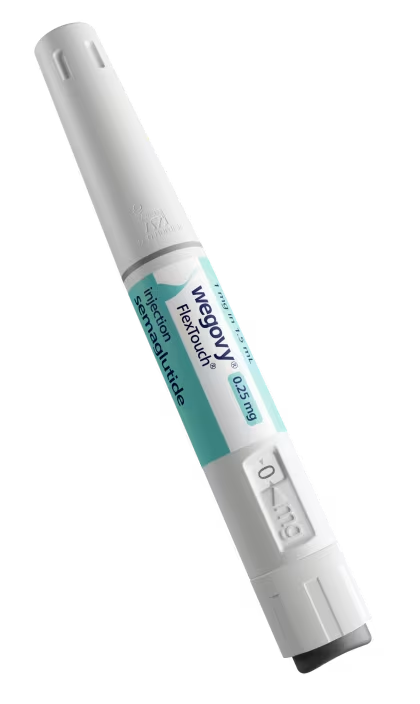
Ozempic and Wegovy both contain semaglutide, just at different maximum doses and for different licensed uses (Ozempic for type 2 diabetes, Wegovy for weight management under NICE TA875). Because the active ingredient is the same, the side effect profile is very similar between the two, with the gastrointestinal symptoms being marginally more noticeable on Wegovy simply because its maintenance doses (up to 2.4mg) are higher than the diabetes doses typically used for Ozempic.
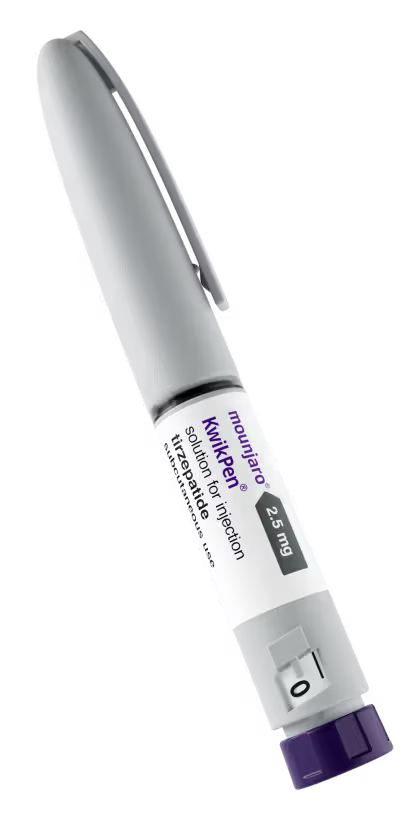
Mounjaro (tirzepatide) acts on GLP-1 and GIP receptors together. Trial data suggests a broadly comparable rate of nausea and diarrhoea to semaglutide, with some studies suggesting slightly lower rates of nausea at equivalent points in dose titration, though direct comparative data is still limited. Gallbladder and pancreatitis warnings apply across the whole GLP-1 and dual-agonist class, not just to one brand.
In practical terms:
| Ozempic (semaglutide) | Wegovy (semaglutide) | Mounjaro (tirzepatide) | |
|---|---|---|---|
| UK licence | Type 2 diabetes | Weight management | Type 2 diabetes and weight management |
| Common GI side effects | Yes, dose-related | Yes, dose-related, often at higher end | Yes, dose-related |
| Serious risks (pancreatitis, gallbladder) | Applies | Applies | Applies |
| Dosing frequency | Once weekly | Once weekly | Once weekly |
None of this means one medicine is "safer" or "better" in general terms. Suitability depends entirely on the individual: their diabetes control, weight, other health conditions and how their body responds, which is why a clinician's assessment matters more than the brand name.
Who needs to be particularly careful#
Certain groups are advised against semaglutide or tirzepatide, or need closer monitoring:
- People with a personal or family history of medullary thyroid carcinoma or Multiple Endocrine Neoplasia type 2, based on thyroid C-cell tumours seen in rodent studies (the relevance to humans remains unclear, but it's treated as a precaution)
- People with type 1 diabetes, as these medicines aren't licensed for this and ketoacidosis risk is higher
- Anyone with a history of pancreatitis
- Pregnant women or those planning pregnancy, since safety data in pregnancy is lacking and it's advised to stop at least two months before trying to conceive
- People with severe gastrointestinal disease, including gastroparesis
If you take other medicines, particularly insulin, sulfonylureas or warfarin, tell your prescriber, as dose adjustments elsewhere are sometimes needed to avoid low blood sugar or altered anticoagulant control.
Got questions? Speak to a pharmacist on WhatsApp now
Prefer to browse first? View treatments
Managing the common side effects day to day#
A few practical adjustments make a genuine difference for most people:
- Eat smaller, more frequent meals rather than large ones, and stop eating before you feel completely full
- Reduce fatty, greasy or very rich foods, which tend to sit heavily and worsen nausea
- Sip water regularly through the day rather than large amounts at once, which helps with both headaches and constipation
- Avoid lying down immediately after eating if you're prone to reflux
- If constipated, gentle movement and adequate fibre and fluid intake usually help before reaching for laxatives
- Rising slowly from sitting or lying down can reduce dizziness, especially if you're also eating less than usual
If nausea or diarrhoea becomes severe, persistent, or is accompanied by signs of dehydration (dark urine, dizziness, reduced urination), contact your prescriber. And if you experience side effects you think may be linked to the medicine, you or your pharmacist can report it directly to the MHRA through the Yellow Card scheme, which helps build the wider safety picture for these medicines in real-world use.
Getting the full picture before starting treatment#
Ozempic isn't licensed for weight loss on its own in the UK, and it shouldn't be sourced or used outside proper medical supervision. If weight management is the goal, licensed options such as Wegovy or Mounjaro are prescribed following an individual clinical assessment, taking into account your health history, other medications and personal risk factors. You can read more about how weight loss treatment is assessed on Totiva's weight loss service page.
Whichever GLP-1 medicine is being considered, the side effect picture is broadly similar and the serious risks, while uncommon, are worth taking seriously rather than dismissing as "just part of the adjustment." If anything feels wrong, particularly severe abdominal pain, persistent vomiting or visual changes, it's always worth speaking to a pharmacist, prescriber or your GP rather than waiting to see if it passes on its own.
Medical Information: This article is for informational purposes only and does not constitute medical advice. Always consult a qualified healthcare professional before starting, stopping, or changing any treatment.