Food Noise: What It Is and Why It Happens
Food noise is the persistent mental chatter about eating that goes beyond normal hunger. Here's what causes it, who gets it worst, and how to quiet it.
Written by:

Medically reviewed by Chris Armstrong, MPharm
Key Takeaways
Food noise is persistent mental chatter about food that occurs even when you are not physically hungry. It is driven by hormones, brain reward pathways, and environmental cues. GLP-1 medicines like Mounjaro and Wegovy can quiet it significantly, usually within the first few weeks.
Food noise is the persistent, intrusive mental chatter about food that happens even when you are not physically hungry. It is the voice telling you the biscuits are in the cupboard after a full meal, or the constant background hum of thinking about what to eat next. Most people experience some version of this, but for many it is relentless enough to interfere with concentration, mood, and the ability to make consistent choices about eating.
The term is not yet a formal diagnosis in UK clinical practice. Your GP will not find it in a coding system the way they would find anxiety or binge eating disorder. But it describes a real neurobiological experience, and understanding it can help you decide what, if anything, to do about it.
Food noise versus normal hunger#
Hunger is a physical signal. It builds gradually over several hours after eating, driven by falling blood glucose and rising levels of ghrelin, a hormone produced in the stomach that tells your brain energy is needed. You feel it in your body: a growling stomach, lightheadedness, or mild irritability.
Food noise is different. It is triggered not by energy need but by cues: a food advertisement, the smell from a bakery, stress, boredom, habit, or simply seeing something appetising on your phone. Research on food cue reactivity shows that some people's brains respond to these cues with a surge of dopamine-driven desire that closely mimics the pull of physical hunger, even when the body has plenty of fuel available.
The practical test is straightforward. If you are genuinely hungry, almost any food will appeal. If only specific foods feel compelling, that is likely food noise rather than hunger.
Why some people experience it more intensely#
Several factors make food noise louder for certain people.
Dieting history. Calorie restriction raises ghrelin and lowers leptin, the hormone that signals fullness. The brain interprets a deficit as a threat and increases food-seeking thoughts to compensate. This is why food noise often peaks when you are actively trying to cut calories, and why repeated cycles of restriction and overeating can embed the pattern over time.
Biology and weight. People living with obesity tend to have altered leptin signalling, meaning the "I am full" message does not land as clearly in the brain. This is not a character flaw. It is a measurable hormonal difference that makes food noise physiologically louder.
Emotional associations. Food is frequently used as comfort, reward, or distraction. When stress, low mood, or anxiety are present, the brain reaches for learned coping strategies, and for many people that includes eating even without hunger.
ADHD. There is growing clinical and community discussion about the overlap between ADHD and intense food noise. Impulsivity, difficulty regulating reward-seeking behaviour, and sensitivity to dopamine fluctuations can all amplify food cue reactivity. If you have ADHD and find food noise particularly hard to manage, that connection is worth raising with your GP or psychiatrist.
Time of day. Evenings are a common peak. Circadian rhythms shift appetite hormones in the evening, willpower is depleted after a long day, and the drop in structured activity removes distraction. The result is that food noise becomes harder to ignore after about 7pm for many people.
Does food noise overlap with eating disorders or mental health conditions?#
It can. Obsessive thoughts about food are a recognised feature of anorexia nervosa, bulimia nervosa, and binge eating disorder. Anxiety and OCD can also manifest partly as food-related rumination. If your food thoughts cause significant distress, take up a large part of your waking hours, or are tied to guilt, shame, or secretive eating, it is worth speaking to your GP rather than attempting to manage it entirely alone. NHS talking therapies, including cognitive behavioural therapy (CBT), are available free of charge and have evidence behind them for this kind of pattern.
For most people, though, food noise sits below clinical threshold. It is disruptive rather than disordered.
Got questions? Speak to a pharmacist on WhatsApp now
Prefer to browse first? View treatments
How GLP-1 medications reduce food noise#
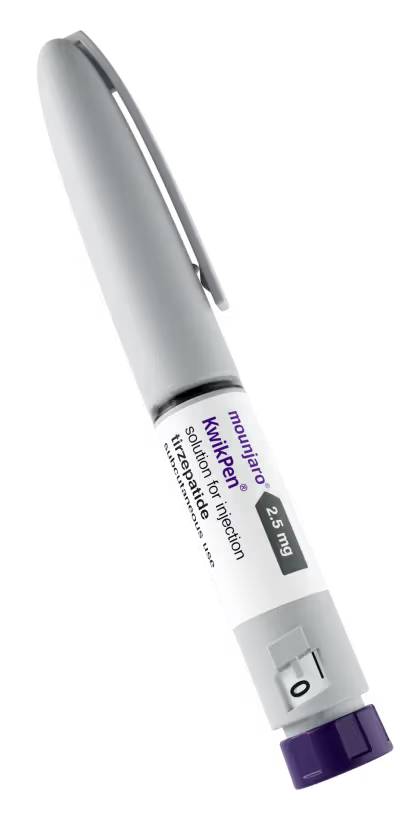
GLP-1 receptor agonists, the class of medicines that includes semaglutide and tirzepatide (Mounjaro), were developed as weight loss treatments. But a consistent and striking side effect emerged in clinical trials and patient reports: the food noise went quiet.
The mechanism involves the brain, not just the gut. GLP-1 receptors are found in appetite and reward centres including the hypothalamus and the nucleus accumbens. When these receptors are activated, dopamine-driven food cue responses are dampened. Patients in the SURMOUNT-1 trial with tirzepatide and the STEP-1 trial with semaglutide frequently described food simply becoming less interesting, rather than requiring willpower to resist.
Semaglutide is available in two licensed forms: as a weekly injection (Wegovy) and as a daily oral tablet (Wegovy Tablets). Both deliver the same active ingredient and work through the same mechanism — the choice between them depends on individual preference and clinical suitability.
In terms of timing, most people taking these medicines notice a reduction in food cue reactivity within the first 2 to 4 weeks, often before significant weight loss has occurred. The effect tends to strengthen as the dose increases over the escalation period.
One question that barely gets answered elsewhere: does food noise return when you stop the medication? For many people, yes. GLP-1 medications work while you take them. Without sustained behavioural strategies built during treatment, the hormonal environment that produced food noise often reasserts itself after stopping. This is one reason UK clinical guidance recommends ongoing support alongside medication rather than medication alone.
NHS access to these medicines in England is governed by NICE technology appraisals TA875 (semaglutide) and TA1026 (tirzepatide). Broadly, you need a BMI of 35 or above with a weight-related health condition, and access is through specialist weight management services. Waiting lists are long in most areas. Private prescribing is available for people who meet eligibility criteria but cannot wait, typically requiring a BMI of 30 or above, or 27 with a relevant health condition. Totiva's weight loss service covers Mounjaro, Wegovy, and Wegovy Tablets for eligible adults.
Managing food noise without medication#
For people who do not qualify for GLP-1 medicines, or who prefer not to take them, evidence-based options include:
- Structured eating patterns. Regular meals reduce ghrelin fluctuations and remove the decision fatigue that amplifies food noise between meals.
- Protein at each meal. Higher protein intake increases satiety hormones and blunts the ghrelin response more effectively than carbohydrate-heavy meals. See the Totiva guide to high-protein, low-calorie foods for practical ideas.
- Mindful eating. A 2022 review in the Nutrition Bulletin found that mindfulness-based eating practices reduce impulsive food responses, though the evidence is moderate rather than strong.
- Reducing exposure to food cues. Moving snacks out of sight, unsubscribing from food content, and changing walking routes are small environmental changes with real impact.
- CBT via NHS talking therapies. If emotional eating or anxiety is driving the food noise, a referral to IAPT (now NHS Talking Therapies) is free, and CBT has a reasonable evidence base for changing food-related thought patterns.
Stress management is also relevant. Cortisol, the stress hormone, drives preference for high-fat, high-sugar foods and makes food noise louder. Sleep deprivation has a similar effect by raising ghrelin and lowering appetite-regulating peptides overnight.
Food noise is not about weakness or lack of discipline. It is a neurobiological signal shaped by hormones, brain chemistry, environment, and history. Understanding that tends to be the first useful step.
Medical Information: This article is for informational purposes only and does not constitute medical advice. Always consult a qualified healthcare professional before starting, stopping, or changing any treatment.