Mounjaro Injection Site Reactions: Rash, Itching and How to Get Relief
Redness, itching or swelling after a Mounjaro injection? Here's what's normal, what helps, and when to speak to a doctor.
Written and medically reviewed by:

Key Takeaways
Mounjaro injection site reactions like redness, itching and swelling are common and almost always mild, resolving within a few days. Rotating your injection sites and letting the pen warm up before use reduces them significantly.
Injection site reactions are one of the most commonly reported side effects of Mounjaro (tirzepatide), and if you've noticed redness, itching or a small lump after your weekly injection, you're far from alone. The good news is that these reactions are almost always mild, self-limiting, and manageable with a few simple adjustments. This article explains what's happening, what you can do about it, and the specific signs that do warrant a call to your GP.
Why Mounjaro Causes Skin Reactions#
Mounjaro is administered as a once-weekly subcutaneous injection, meaning the solution is deposited into the fatty tissue just beneath the skin. This is the same route used by insulin and other GLP-1 medications, so injection site reactions aren't unique to tirzepatide, though they are worth understanding.
When the needle pierces the skin and the solution enters the tissue, the body mounts a localised immune response. The skin detects a foreign substance and reacts accordingly: blood flow increases, immune cells migrate to the area, and inflammatory mediators are released. This is entirely normal. Add in the physical micro-trauma of the needle itself and the slight acidity of the injected solution, and some redness or tenderness becomes almost inevitable, at least occasionally.
Individual skin sensitivity also plays a role. People with atopic skin conditions such as eczema or psoriasis may notice more pronounced reactions, and those injecting into areas with less subcutaneous fat can find the medication sits closer to the dermis, triggering a stronger local response.
What a Typical Reaction Looks Like#
According to the Mounjaro Summary of Product Characteristics (SmPC), injection site reactions are classified as common, affecting roughly 1 in 10 to 1 in 100 patients. The most frequently reported ones include:
- Erythema (redness): A localised flush or pink patch around the injection site, usually appearing within minutes to a few hours
- Pruritus (itching): Can range from mildly annoying to moderately bothersome, but rarely severe
- Swelling or induration: Mild puffiness or a firm feeling beneath the skin, typically lasting 24-48 hours
- Tenderness or pain: Usually described as a dull ache or sensitivity to touch at the site
- Bruising (ecchymosis): Small patches of discolouration from minor bleeding under the skin during injection
- Nodules or lumps: Small palpable bumps beneath the skin, particularly common when the same site is used repeatedly without rotation
Most reactions appear within a few hours of injection and resolve within 24-72 hours. They do not affect how well the medication works, and experiencing them does not mean the treatment is failing or that you're having an allergic reaction.
Do Reactions Get Worse at Higher Doses?#
Many patients notice that reactions vary as they move through the Mounjaro dose titration schedule (2.5 mg, 5 mg, 7.5 mg, 10 mg, 12.5 mg, 15 mg). There is no strong clinical evidence that higher doses cause more severe local reactions, but anecdotally, some people do report slightly more noticeable effects when increasing. This often settles after a few weeks at the new dose as the body adjusts. If your reactions seem to worsen consistently with each dose increase, it's worth mentioning to your prescribing clinician.
How Mounjaro Compares to Other Weight Loss Injections#
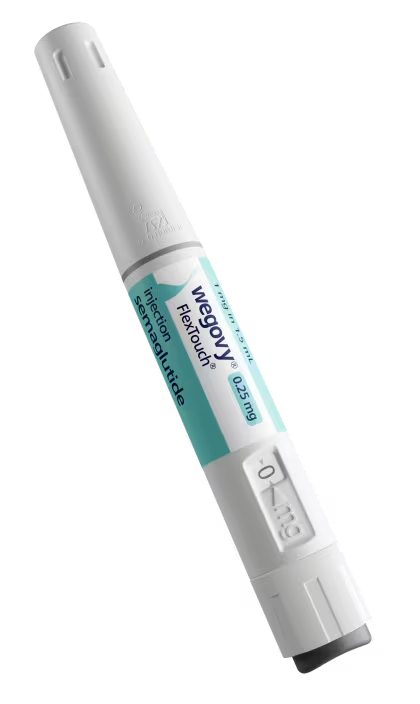
If you've previously used semaglutide-based medications such as Ozempic or Wegovy, you may already be familiar with injection site reactions. The profile is broadly similar across GLP-1 receptor agonists, as the subcutaneous delivery mechanism is the same. Some clinical trial data suggests that tirzepatide (Mounjaro) has a comparable or slightly lower rate of injection site reactions compared to semaglutide, though individual experience varies considerably. The key management principles are the same regardless of which medication you're using.
If you're considering starting a GLP-1 or dual GIP/GLP-1 medication, Totiva's weight loss service offers pharmacist-led consultations to help you understand your options, including Mounjaro, Wegovy and other licensed treatments.
Managing Injection Site Reactions#
For most people, simple self-care is all that's needed. Here are the strategies that make a genuine difference.
Before You Inject#
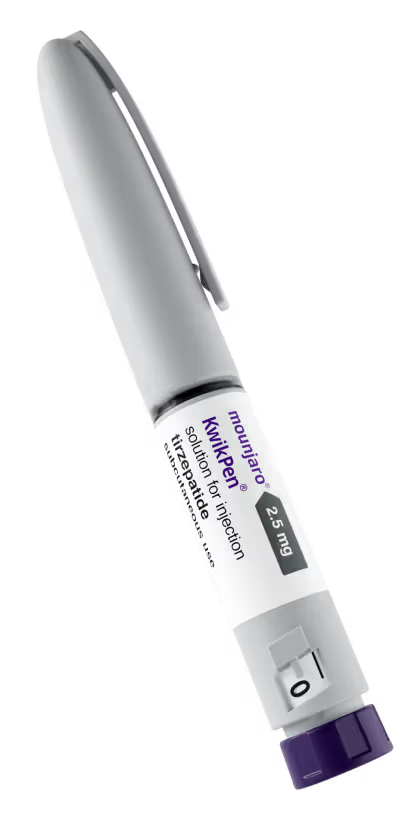
Let the pen warm up. Injecting cold medication straight from the fridge is one of the most common causes of increased discomfort and skin reactions. Remove the Mounjaro pen from the refrigerator at least 30 minutes before use and allow it to reach room temperature naturally. Don't use a microwave or hot water to warm it.
Check the solution. Always inspect the pen before use. The solution should be clear and colourless to slightly yellow. If it appears cloudy, discoloured, or contains particles, do not use it and contact your pharmacy.
Clean and dry the skin. Use an alcohol wipe on the injection site and allow it to dry completely before injecting. Injecting through wet skin can cause stinging and may increase the risk of local irritation.
Rotate your sites systematically. This is arguably the single most important step. The abdomen, outer thighs, and upper arms (with assistance) are the recommended sites. Use a different location each week and keep a written or digital log if it helps. Injecting repeatedly into the same spot doesn't just cause reactions; over time it can lead to lipohypertrophy, a build-up of scar-like fatty tissue beneath the skin that affects how the medication is absorbed.
During and After Injection#
Hold the pen at a 90-degree angle against the skin and press firmly. Keep it in place until the injection is complete and you hear the second click, then hold for the full 10 seconds before removing. Removing too quickly can cause the solution to leak back towards the skin surface, increasing local irritation.
After the injection, avoid rubbing or massaging the area. This can spread the medication unevenly and increase inflammation. If you experience swelling or discomfort, a cold compress applied for 10-15 minutes works well.
Treating the Itch and Redness#
If the itching is bothering you, an over-the-counter non-drowsy antihistamine such as cetirizine (10 mg) or loratadine (10 mg) can help. These are widely available from UK pharmacies without a prescription. Check with your pharmacist or GP before starting them regularly if you have other conditions or take other medications.
Topical hydrocortisone 1% cream, applied sparingly to the affected area, can reduce redness and itching for up to seven days. Avoid applying it to broken skin, and don't use it as a preventive measure before every injection.
For pain, standard paracetamol at the recommended dose is appropriate. NSAIDs like ibuprofen are also effective, but check with a pharmacist if you have any reason to avoid them.
Lipohypertrophy: The Hidden Risk of Poor Rotation#
Lipohypertrophy deserves a mention because it's often overlooked in general patient guidance. When the same small area of skin is injected repeatedly over weeks or months, the subcutaneous fat can become permanently altered. You may feel a rubbery or thickened patch under the skin. It doesn't always look unusual from the outside, which means patients sometimes keep using the area precisely because it hurts less (desensitised tissue tends to cause fewer acute reactions).
The problem is that medication absorbed from lipohypertrophic tissue is unpredictable, it may be absorbed faster or slower than normal, making it harder to manage your treatment effectively. This is a well-documented issue with insulin and the same principle applies to Mounjaro. Good rotation prevents it. If you already have an area that feels thickened or lumpy, avoid it and let it recover.
Sharps Disposal in the UK#
Once used, Mounjaro pens are clinical waste and must be disposed of safely. Do not put them in household recycling or general waste. Most UK pharmacies provide sharps bins free of charge, and your GP practice may also have one. Some local authorities offer a sharps collection service for home patients. The NHS has guidance on safe sharps disposal which your pharmacist can direct you to.
If you receive Mounjaro by post from an online pharmacy, ensure the pens have been stored and transported correctly. They should arrive cold (2-8°C), typically in an insulated box with a cool pack. If a pen arrives at room temperature or the packaging appears damaged, contact your pharmacy before using it.
Got questions? Speak to a pharmacist on WhatsApp now
Prefer to browse first? View treatments
Reporting Reactions via the MHRA Yellow Card Scheme#
If you experience a side effect that seems unusual, severe, or isn't listed in the patient information leaflet, you can report it directly to the MHRA through the Yellow Card scheme at yellowcard.mhra.gov.uk. You don't need a healthcare professional to do this on your behalf. Reporting helps the MHRA monitor the safety profile of medications in real-world UK use, and it's a valuable contribution to ongoing pharmacovigilance for newer medicines like Mounjaro.
When to Seek Medical Help#
Mild reactions don't need a GP appointment. But there are specific circumstances where you should seek advice promptly.
Contact your GP or prescriber if you notice:
- Redness, warmth or swelling that spreads beyond the immediate injection site and continues to worsen after 24 hours
- Any sign of infection: increasing heat, pus, or a fever alongside a sore injection site
- Nodules or lumps that haven't resolved after two to three weeks
- Reactions that occur consistently at every injection despite good technique and proper rotation
- Skin changes that concern you, even if they don't fit the patterns above
Call 999 or go to A&E immediately if you develop signs of anaphylaxis:
- Difficulty breathing or swallowing
- Swelling of the face, lips, tongue or throat
- Widespread hives or a rapidly spreading rash
- Dizziness, collapse or a racing heartbeat
Anaphylaxis to tirzepatide is rare but documented in the prescribing information. If it happens, it requires emergency treatment without delay.
Call 111 or seek urgent care if you develop:
- Severe, persistent abdominal pain, especially if it radiates to your back. This could indicate pancreatitis, a serious but uncommon complication associated with GLP-1 receptor agonists.
Continuing Treatment#
Mild injection site reactions are not a reason to stop Mounjaro. They don't indicate that the treatment is causing harm, and they don't reduce how well tirzepatide works. Most people find reactions become less noticeable after the first few weeks as their technique improves and the body acclimatises.
If reactions are causing you significant distress or affecting your willingness to continue, speak to your prescribing clinician or pharmacist. A diabetes specialist nurse can observe your technique directly and suggest adjustments. In persistent cases, switching injection sites (for example, favouring the thigh over the abdomen) sometimes makes a meaningful difference.
If you're not yet on Mounjaro but are considering it for weight management, starting with a pharmacist-led consultation at Totiva is a straightforward way to understand whether it's suitable for you, get a prescription if appropriate, and have ongoing clinical support as you progress through the titration schedule.
This article is for informational purposes only and does not replace professional medical advice. Always consult a qualified healthcare professional for guidance specific to your circumstances.
Medical Information: This article is for informational purposes only and does not constitute medical advice. Always consult a qualified healthcare professional before starting, stopping, or changing any treatment.