How to Lose Face Fat: What Actually Changes and What You Can Control
You can't spot-reduce facial fat, but overall weight loss does change your face. Here's what works, what doesn't, and how long it takes.
Written and medically reviewed by:

Key Takeaways
You can't target face fat directly. Losing weight overall is typically enough to produce visible facial changes. Puffiness from salt, alcohol, or poor sleep can be reduced faster with straightforward lifestyle adjustments.
You cannot target fat loss in your face specifically. Fat comes off the body in a pattern determined by genetics, sex hormones, and overall body composition, not by where you focus your efforts. That said, losing weight overall does change how your face looks. And some practical steps can reduce puffiness that makes the face appear fuller than it actually is.
Why your face may not be changing as fast as the rest of you#
Research suggests people can detect facial weight changes with a loss of around 3.5 to 4 kg. So if you've lost less than that, visible facial change may simply not have happened yet.
Beyond that, the face holds three distinct types of fat that respond differently to weight loss:
- Subcutaneous fat sits just under the skin across the cheeks, jowls, and chin. This reduces with overall fat loss.
- Buccal fat pads are deeper structures that give the mid-face its roundness. These are largely fixed in size by genetics and do not respond much to diet or exercise.
- Fluid retention causes temporary puffiness that has nothing to do with actual fat tissue.
Understanding which type you're dealing with matters. If your face looks puffy rather than genuinely fuller, the fix is different from simply losing weight.
What causes a puffy or bloated-looking face#
Several common habits cause fluid to build up in facial tissues:
- Salt intake. The NHS recommends no more than 6g of salt (sodium chloride) per day. Eating more than this causes the body to retain fluid, which shows up quickly in the face. Check UK food labels for sodium content: 2.4g of sodium equals roughly 6g of salt.
- Alcohol. Drinking suppresses a hormone called ADH (antidiuretic hormone), which allows the kidneys to excrete more fluid. The body then compensates by retaining water in tissues, including the face. This is why people often wake up looking puffy after a heavy evening. The NHS recommends keeping alcohol to no more than 14 units per week.
- Poor sleep. Short or disrupted sleep raises cortisol, which promotes fluid retention and can contribute to fat accumulation over time.
- Dehydration. Some people find that increasing fluid intake helps reduce facial puffiness, possibly by helping the body flush excess sodium, though the evidence for a direct effect in healthy adults is limited.
- Certain medications. Some medicines can cause fluid retention as a side effect, which may affect the face — this is a separate issue from angioedema. ACE inhibitors (such as ramipril and lisinopril), commonly prescribed on the NHS for blood pressure, can in rare cases cause angioedema. This is a rapid, potentially dangerous swelling of the face, lips, or throat that is entirely distinct from ordinary medication-related fluid retention. It is a medical emergency requiring immediate presentation to A&E, not a cosmetic nuisance. If you notice sudden facial swelling while taking an ACE inhibitor, call 999 or go straight to A&E. ARBs (such as losartan) carry a lower but not zero risk of angioedema. Do not stop either medication without speaking to your GP first. For concerns about routine fluid retention from any medication, speak to your GP or pharmacist.
Losing weight to slim your face#
For most people, consistent overall weight loss is the only reliable way to reduce actual facial fat. A calorie deficit achieved through a combination of reduced intake and increased activity remains the evidence-based approach.
Practical steps that work:
- Follow the NHS Eatwell Guide as a framework: plenty of vegetables, wholegrains, lean protein, and limited processed foods.
- Cut back on refined carbohydrates (white bread, white rice, pastries). Research suggests a link between high refined carb intake and obesity risk, and these foods can also cause short-term facial bloating.
- Increase dietary fibre. High-fibre foods (oats, pulses, vegetables) promote satiety and support a calorie deficit without hunger.
- Aim for at least 150 minutes of moderate-intensity aerobic exercise per week, in line with NHS physical activity guidelines. Cardio reduces overall body fat, which includes the face over time.
- Include resistance training at least twice a week. Muscle tissue burns more calories at rest than fat, supporting long-term fat loss.
For a structured approach to eating for weight loss, the UK Weight Loss Diet Plan on the Totiva blog covers evidence-based meal planning in practical detail.
How long does it take to see changes in your face?#
At a safe rate of 0.5 to 1 kg per week, most people can expect to see some facial change after several weeks of consistent effort, once enough overall weight has been lost. Results vary based on starting weight, fat distribution, and adherence.
GLP-1 medications and facial appearance#
GLP-1 and dual GIP/GLP-1 receptor agonists (including semaglutide and tirzepatide) are highly effective for overall weight loss, and because they drive significant body weight reduction, facial changes do occur. Many people using these medicines report noticeable facial slimming within 8 to 12 weeks, though the timeline varies by medication and individual titration schedules.
However, rapid or large-scale weight loss raises a separate concern sometimes called "Ozempic face": a gaunt or aged appearance caused by loss of facial volume and reduced skin elasticity. The health benefits of weight loss are real and substantial, but losing weight steadily rather than rapidly reduces this risk. Maintaining protein intake and doing resistance exercise throughout also helps preserve facial structure.
For people with kidney disease, increasing protein should be discussed with a GP or dietitian first before making changes.
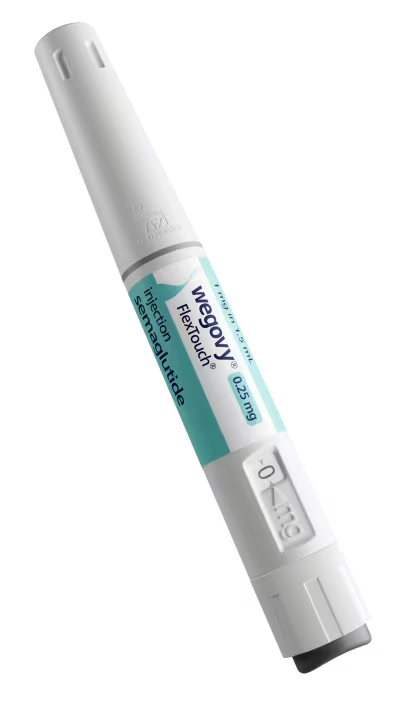
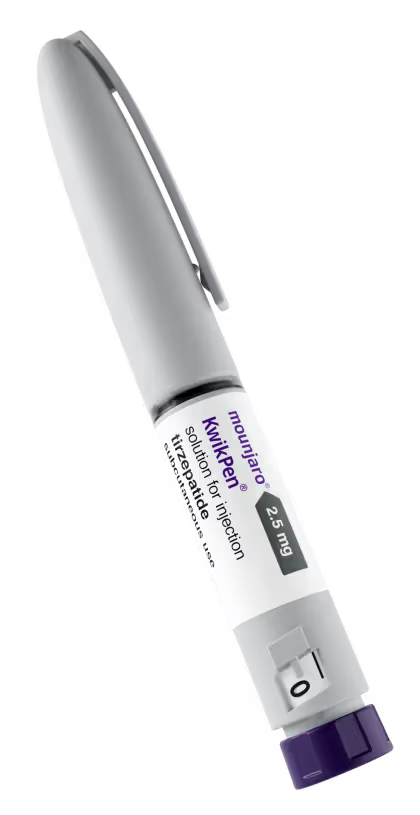
If you're considering a GLP-1 treatment, Totiva's weight loss service covers the options available, including Wegovy (semaglutide injection and oral tablets), Mounjaro (tirzepatide), and Foundayo.
Got questions? Speak to a pharmacist on WhatsApp now
Prefer to browse first? View treatments
Do facial exercises work?#
The evidence is limited. A small JAMA Dermatology study (27 participants, so too few to generalise) found a 20-week facial exercise programme improved mid-face and lower-face fullness in middle-aged women. Neither that nor other available research has shown a meaningful reduction in facial fat. Facial exercises may tone the underlying muscle and improve skin appearance slightly with age, but they will not shift fat.
What about buccal fat removal?#
Buccal fat removal is a surgical procedure that removes the deep fat pads from the mid-face to create a more sculpted look. It is not available on the NHS and is offered privately in the UK, typically costing between £2,000 and £5,000. If you're considering this, look for surgeons accredited by BAAPS (British Association of Aesthetic Plastic Surgeons) or BAPRAS. The procedure is permanent and increasingly controversial, as facial volume tends to decrease naturally with age anyway.
Hormonal causes worth knowing about#
Persistent facial fullness that does not respond to weight loss or lifestyle changes may have a hormonal cause. Elevated cortisol (from chronic stress or conditions like Cushing's syndrome), an underactive thyroid, and hormonal shifts during menopause can all contribute to fluid retention or altered fat distribution in the face. If you suspect this, speak to your GP rather than assuming it is lifestyle-related.
Ready to see if treatment could work for you?
FAQs#
Why is my face still full even though I'm losing weight elsewhere?#
Fat loss follows a genetically determined pattern. Your body may be drawing on fat stores in the torso, thighs, or arms before it reaches the face. Continuing to lose overall body weight is the most reliable way to eventually see facial change. Fluid retention from salt, alcohol, or poor sleep can also make the face look fuller than it actually is, independent of fat loss.
Will losing weight make my face look older?#
It can, particularly with rapid or large-scale weight loss. Fat provides volume and structure under the skin. As it reduces, some people notice looser skin or a more hollowed appearance. Losing weight gradually (0.5 to 1 kg per week), eating adequate protein, and doing resistance training all help maintain facial structure during weight loss.
Do I need surgery to reduce buccal fat?#
Only if buccal fat pads are the specific cause of facial roundness, which a surgeon can assess. For most people, overall fat loss and reduced fluid retention are sufficient to see meaningful facial change without surgery.
Medical Information: This article is for informational purposes only and does not constitute medical advice. Always consult a qualified healthcare professional before starting, stopping, or changing any treatment.