Can You Eat Pasta and Lose Weight? Here's the Honest Answer
Pasta gets cut from most diets, but the science tells a different story. Here's what the research actually says about pasta and weight loss.
Written by:

Medically reviewed by Callum Armstrong, MPharm, Independent Prescriber (IP)
Key Takeaways
Pasta won't derail your diet. Eaten in sensible portions with a low-calorie sauce and plenty of vegetables, it's a filling, moderate-GI carbohydrate that research links to weight loss, not weight gain. Wholegrain varieties are the best choice.
Pasta is one of the first foods people cut when they decide to lose weight. It gets lumped in with "bad carbs", banished from the weekly shop, and replaced with spiralised courgette. But here's the thing: the evidence doesn't really support giving it up entirely. In the right quantities, eaten the right way, pasta can absolutely be part of a diet that helps you lose weight.
That's not wishful thinking. It's what the research consistently shows.
Why Pasta Gets a Bad Reputation#
The assumption is simple: pasta is high in carbs, carbs raise blood sugar, raised blood sugar leads to fat storage. Cut pasta, cut the problem.
The reality is more nuanced. Yes, pasta is a carbohydrate-rich food. A 75g dry serving (roughly what you'd cook at home for one person) gives you around 220 calories once cooked, with about 38g of carbohydrates, 7g of protein, and less than 2g of fat. On its own, that's not a huge calorie load.
The trouble usually comes from what goes on top. A creamy carbonara or a rich bolognese with extra cheese can take a modest bowl of pasta to 700-1,000 calories quickly. So it's often the sauce and portion size that cause problems, not the pasta itself.
What Happens to Your Blood Sugar#
Carbohydrates do cause a rise in blood glucose, which triggers the release of insulin. Insulin moves glucose into cells to be used as energy, but if there's more glucose than the body needs at that moment, the surplus gets stored as fat.
For people who are insulin resistant (which is common in conditions like type 2 diabetes, PCOS, and metabolic syndrome), this process is less efficient. Insulin doesn't work as well, so blood sugar stays elevated for longer and more fat gets stored. This is one reason why carbohydrate quality and quantity genuinely matters for some people.
However, pasta has a lower glycaemic index (GI) than many other starchy foods. White pasta sits around 45-50 on the GI scale, compared to white rice at around 70-75, and white bread at 75 or higher. This means pasta causes a slower, more gradual rise in blood sugar rather than a sharp spike, which helps with satiety and reduces the insulin surge.
Wholegrain pasta has an even lower GI, typically around 37-40, and contains more fibre, which slows digestion further.
What the Research Actually Says#
A systematic review and meta-analysis published in BMJ Open examined 30 randomised controlled trials involving around 2,500 participants who ate pasta as part of a low-GI diet. The conclusion? Pasta did not cause weight gain. In fact, participants saw a small but meaningful reduction in body weight over 12 weeks.
A separate study looking at more than 23,000 people found that those who included pasta in a Mediterranean-style diet had lower BMIs on average and were less likely to be obese. This fits with what we know more broadly: the Mediterranean diet, which includes pasta regularly, is consistently associated with better weight outcomes and cardiovascular health.
The key point in both studies is context. Pasta eaten as part of a balanced, varied diet (with vegetables, lean proteins, and healthy fats) behaves very differently from pasta drowned in cream sauce eaten in front of the television at 10pm.
The Best Types of Pasta for Weight Loss#
Not all pasta is created equal. Here's a practical breakdown:
Wholegrain pasta is the best everyday choice. It has more fibre (around 6g per cooked serving versus 2.5g for white pasta), a lower GI, and more micronutrients including magnesium, iron, zinc, and B vitamins. The fibre helps you feel fuller for longer, which is useful when you're trying to eat less overall.
White pasta is not the enemy, but it's the less nutritious option. It's more refined, digests faster, and is lower in fibre. That said, it still has a lower GI than most people assume, and eaten in sensible portions with protein and vegetables, it won't derail a weight loss effort.
Legume-based pasta (made from chickpea, red lentil, or black bean flour) has become much more widely available in UK supermarkets. These typically have more protein (around 13-20g per serving) and more fibre than wheat pasta, with a lower GI. They're worth trying if you want to increase your protein intake without adding meat.
Konjac or low-carb pasta (also sold as shirataki noodles) is made from a Japanese plant root and contains almost no calories or digestible carbohydrates. It has a distinct texture that takes some getting used to, but it works well in stir-fries and Asian-inspired dishes.
For most people, wholegrain wheat pasta is the most practical starting point.
Pasta vs Rice vs Potatoes vs Bread#
A quick comparison of common carbohydrate staples, all at a similar cooked serving size (around 150g cooked):
- Pasta (wholegrain, cooked): approximately 175 kcal, 6g fibre, GI around 40
- White rice (cooked): approximately 195 kcal, 0.5g fibre, GI around 72
- Brown rice (cooked): approximately 180 kcal, 1.8g fibre, GI around 55
- White bread (2 slices): approximately 160 kcal, 1.5g fibre, GI around 75
- Boiled potatoes: approximately 135 kcal, 1.2g fibre, GI around 78
On this comparison, wholegrain pasta comes out favourably. It provides more fibre and a lower blood sugar response than most of these alternatives. The main advantage of potatoes is their calorie density (they're actually quite filling for the calories when boiled rather than roasted), but their GI is significantly higher.
Got questions? Speak to a pharmacist on WhatsApp now
Prefer to browse first? View treatments
Getting Portions Right#
Portion size is where most people go wrong with pasta. UK guidance (and what most pasta brands suggest) is around 75g dry weight per person, which gives you roughly 220 calories of plain cooked pasta. Restaurant servings are often double or triple this.
If you're unsure of your portion, a simple practical tip: a single serving of uncooked pasta is roughly the amount that fits in a circle made by your index finger and thumb. Or weigh it once or twice until you get a feel for it, then you won't need to every time.
The other thing worth doing is building your plate properly. Think of pasta as one component, not the whole meal. Half the plate as vegetables, a quarter as pasta, and a quarter as a protein source (chicken, fish, pulses, or a small amount of cheese) gives you a far more balanced and filling meal.
How to Include Pasta in a Weight Loss Diet#
Some practical guidance:
Choose your sauce carefully. Tomato-based sauces are generally much lower in calories than cream-based ones. A simple pomodoro or arrabiata sauce adds around 80-100 calories. A carbonara or alfredo sauce can add 400-600 calories. Check the label on jarred sauces too: some contain surprising amounts of added sugar and salt. The NHS Eatwell Guide recommends using the traffic light labelling system on packaged foods to compare options in the supermarket.
Add vegetables generously. Courgette, spinach, cherry tomatoes, mushrooms, peppers: these bulk up the meal significantly for very few extra calories and substantially increase the fibre and micronutrient content.
Add protein. Protein slows digestion, helps maintain muscle mass during weight loss, and keeps you full. Stirring through some cooked prawns, grilled chicken, canned tuna, or even a tin of cannellini beans works well.
Eat it earlier in the day. There's reasonable evidence that eating carbohydrate-rich foods earlier rather than last thing at night works better for blood sugar control and is less likely to result in calorie surplus before bed.
Don't fear leftovers. Interestingly, pasta that has been cooked and cooled forms resistant starch, which behaves more like fibre in the body and has a lower GI than freshly cooked pasta. So yesterday's pasta, eaten cold in a salad or reheated gently, is actually slightly better for blood sugar than freshly cooked. A small but genuine benefit.
What About Pasta on GLP-1 Medications?#
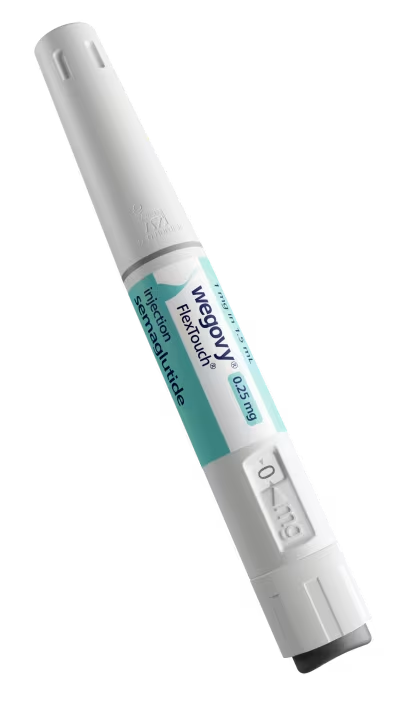
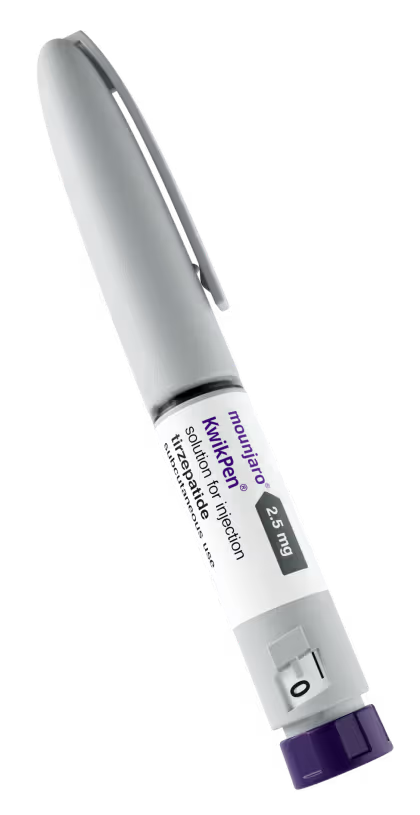
This is increasingly relevant. If you're using a GLP-1 medication such as Wegovy (semaglutide) or Mounjaro (tirzepatide), you'll probably notice your appetite drops significantly, especially in the early weeks. You may genuinely struggle to finish a normal portion of pasta, which naturally resolves the overeating problem.
However, with reduced appetite it becomes more important to make what you do eat count nutritionally. Choosing wholegrain pasta over white, loading the meal with vegetables, and including a protein source becomes even more important when you're eating less overall.
High-GI, low-fibre carbohydrates can also contribute to nausea in some people using GLP-1 medications, since gastric emptying is already slowed by the medication. Wholegrain options with more fibre tend to be better tolerated.
If you're considering whether a medically supervised weight loss programme might suit you, Totiva offers pharmacist-led consultations for treatments including Wegovy and Mounjaro. Wegovy injections start from £92.88, and Mounjaro from £136.88. You only pay after your consultation is reviewed and a clinician confirms you're suitable. You can find out more at Totiva's weight loss service page.
Ready to see if treatment could work for you?
The Take-Home#
Pasta doesn't deserve its reputation as a diet enemy. Plain cooked pasta is moderate in calories, has a lower glycaemic index than many common carbohydrates, and the evidence from large-scale studies suggests it doesn't cause weight gain when eaten sensibly.
What matters far more than whether there's pasta on your plate is how much you're eating, what you're eating it with, and how it fits into your overall diet. A generous bowl of wholegrain penne with a tomato-based sauce, plenty of vegetables, and some protein is a genuinely good meal for someone trying to lose weight.
The foods that work for long-term weight loss are usually the ones you can sustain eating without misery. For most people, that includes pasta.
If you're finding that dietary changes alone aren't getting you where you want to be, it may be worth exploring whether clinical support would help. Totiva's free online weight loss consultation is a straightforward way to find out if a clinician-approved treatment could be a useful addition to your approach.
Medical Information: This article is for informational purposes only and does not constitute medical advice. Always consult a qualified healthcare professional before starting, stopping, or changing any treatment.