Is Watermelon Good for Weight Loss?
Watermelon is low in calories, high in water, and surprisingly filling. Here's what the evidence actually says about eating it for weight loss.
Written by:

Medically reviewed by Callum Armstrong, MPharm, Independent Prescriber (IP)
Key Takeaways
Watermelon is low in calories (around 30 kcal per 100g), highly hydrating, and evidence suggests it promotes fullness better than calorie-matched snacks. It supports weight loss as part of a balanced diet, but won't target belly fat or replace a sensible overall approach.
Yes, watermelon can genuinely help with weight loss, though not in the dramatic way some internet diets suggest. It's one of the lowest-calorie fruits you can eat, it keeps you hydrated, and there's decent evidence it helps with satiety. The catch is that no single food is going to shift significant weight on its own. Here's a clear-eyed look at what watermelon actually does, how it fits into a weight loss diet, and what the science says.
The calorie case for watermelon#
One cup of diced watermelon (roughly 150g) contains around 46 calories. For comparison, the same weight of grapes is about 104 calories, and a typical biscuit clocks in at 60-80 calories per biscuit. Watermelon's low energy density comes from its remarkably high water content: the fruit is about 92% water by weight.
This matters for weight loss because energy density (calories per gram of food) has a strong effect on how full you feel. Foods with a low energy density fill your stomach with relatively few calories, which helps you eat less overall without feeling deprived.
A US study put this to the test directly. Researchers compared two daily snacks: fresh watermelon and low-fat cookies. Both snacks were matched at 92 calories. After four weeks, the watermelon group showed lower body weight, greater satiety between meals, and more stable blood sugar levels. The likely reason is volume: two full cups of watermelon provided the same calories as a small portion of cookies, so participants simply felt fuller.
What about watermelon's glycaemic index?#
One concern that often comes up is watermelon's glycaemic index (GI). At around 72, it does sit in the high-GI category, which can make people nervous about blood sugar spikes. However, the glycaemic index only tells part of the story.
The glycaemic load (GL), which accounts for how much carbohydrate is actually in a typical portion, is a more useful measure. A standard 150g serving of watermelon has a glycaemic load of around 5, which is considered low. This is because watermelon is mostly water, so although the carbohydrates it contains are digested quickly, there simply aren't that many of them per serving.
For most people eating reasonable portions as part of a mixed diet, watermelon won't cause problematic blood sugar swings. If you have type 2 diabetes or are managing insulin resistance, it's worth discussing fruit choices with your GP or a dietitian, but watermelon isn't the enemy it's sometimes made out to be.
The nutrients you're getting#
Beyond being low in calories, watermelon has a solid nutritional profile:
- Vitamin C: A 150g serving provides roughly 14mg, contributing towards the 40mg daily reference intake recommended in the UK.
- Vitamin A: Watermelon contains beta-carotene, which your body converts to vitamin A. This supports immune function, skin health, and vision.
- Lycopene: This is the red pigment that gives watermelon its colour. Lycopene is a powerful antioxidant, and watermelon is actually one of the richest dietary sources, containing more lycopene per gram than raw tomatoes.
- Citrulline: An amino acid found almost exclusively in watermelon. Your body converts citrulline to arginine, which plays a role in nitric oxide production, blood flow, and muscle recovery. Some research suggests it may modestly increase metabolic rate, though the evidence here is still early.
- Potassium: Helpful for blood pressure regulation and fluid balance.
The fibre content is modest at around 0.4g per 100g, which is lower than many other fruits. So while watermelon contributes to your overall fruit intake, it's worth eating it alongside higher-fibre foods like apples, pears, or raspberries.
Does it specifically target belly fat?#
Straight answer: no food targets belly fat specifically. This is one of those persistent nutrition myths worth clearing up.
Where your body stores and loses fat is determined largely by genetics, hormones, age, and sex. There is no food, drink, or exercise that can selectively remove fat from one area while leaving the rest untouched. The scientific term for this is spot reduction, and the evidence consistently shows it doesn't work.
What watermelon can do is contribute to an overall calorie deficit, which over time leads to fat loss across the body, including the abdomen. If you're consistently eating fewer calories than you're burning, your body will draw on fat stores for energy. Watermelon helps with this by being a filling, low-calorie option that makes it easier to stay within your calorie targets.
So if someone tells you the watermelon diet will specifically shrink your waistline, that's not supported by evidence. But as part of a sensible calorie-controlled approach, it earns its place.
The watermelon diet: worth trying?#
The so-called "watermelon diet" typically involves eating only or primarily watermelon for a short period, sometimes 3-5 days. It does cause rapid weight loss, but almost entirely from water and glycogen depletion rather than fat loss.
The problems are predictable. It's nutritionally inadequate, providing almost no protein or fat and very little fibre. You'll lose muscle alongside any fat. And the weight typically returns quickly once you resume eating normally, because you haven't changed the underlying habits.
Extreme restriction like this also tends to increase cravings and can make a healthy relationship with food harder to maintain. It's not a route worth taking.
Got questions? Speak to a pharmacist on WhatsApp now
Prefer to browse first? View treatments
A simple comparison: watermelon vs other low-calorie fruits#
| Fruit | Calories per 100g | Water content | Fibre per 100g |
|---|---|---|---|
| Watermelon | 30 kcal | 92% | 0.4g |
| Strawberries | 32 kcal | 91% | 2.0g |
| Cantaloupe melon | 34 kcal | 90% | 0.9g |
| Raspberries | 52 kcal | 86% | 6.5g |
| Grapes | 69 kcal | 81% | 0.9g |
| Banana | 89 kcal | 75% | 2.6g |
Watermelon and strawberries are among the lowest-calorie fruits you can buy. Raspberries pack far more fibre despite being slightly higher in calories. For weight loss, combining watermelon with higher-fibre fruits is a smart approach.
How much watermelon per day?#
There's no rigid limit, but the NHS Eatwell Guide recommends aiming for five portions of fruit and vegetables a day, with one portion of fruit being roughly 80g. Two portions of watermelon (160g) as part of your daily fruit intake is perfectly reasonable and contributes to your five-a-day.
Eating very large quantities (several hundred grams in one sitting) isn't harmful for most people, but given the modest fibre content, you'd get more nutritional benefit from varying your fruit choices. Watermelon is an excellent addition to your diet; it doesn't need to dominate it.
Making it work in practice#
Watermelon is most useful as a replacement for higher-calorie snacks rather than added on top of your usual intake. A few practical ideas:
- As a mid-afternoon snack: A bowl of cubed watermelon instead of crisps or biscuits is a straightforward calorie swap that doesn't feel like a sacrifice.
- In salads: Watermelon pairs well with feta, cucumber, mint, and a squeeze of lime. Adding some feta or seeds gives you protein and fat alongside the fruit, which slows digestion and keeps you fuller for longer.
- Post-workout: The combination of water, natural sugars, and citrulline makes watermelon a reasonable recovery snack after exercise. A small pinch of salt helps replace electrolytes lost through sweat.
- Blended into a drink: A simple watermelon juice or smoothie (without added sugar) works well in warmer months. Blending with Greek yoghurt adds protein.
- Frozen: Blending and freezing watermelon into ice lollies gives you a genuinely low-calorie summer treat at roughly 30 calories per lolly.
Ready to see if treatment could work for you?
Combining watermelon with protein and fat for better results#
One gap in a lot of watermelon content is the question of what to eat it with. On its own, watermelon is digested quickly and won't keep you full for as long as a balanced snack. Pairing it with a source of protein or healthy fat slows gastric emptying and extends satiety.
For example: watermelon with a small handful of almonds, or a slice of watermelon alongside some cottage cheese or a few slices of halloumi. These combinations provide the hydration and low-calorie volume of the fruit, plus the staying power of protein or fat. They also help moderate the glycaemic response if that's a concern for you.
Where does this fit if you're on a weight loss medication?#
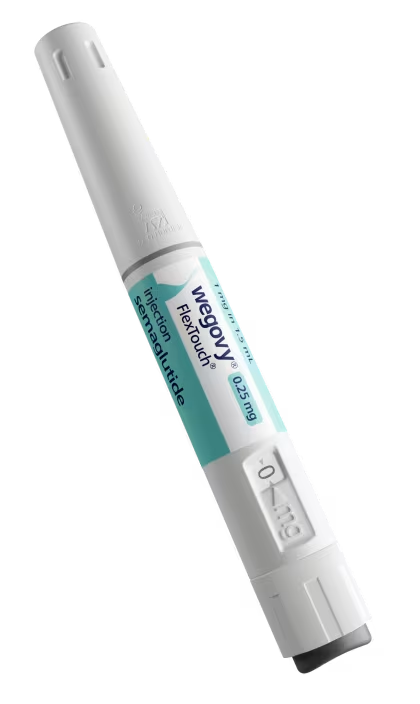
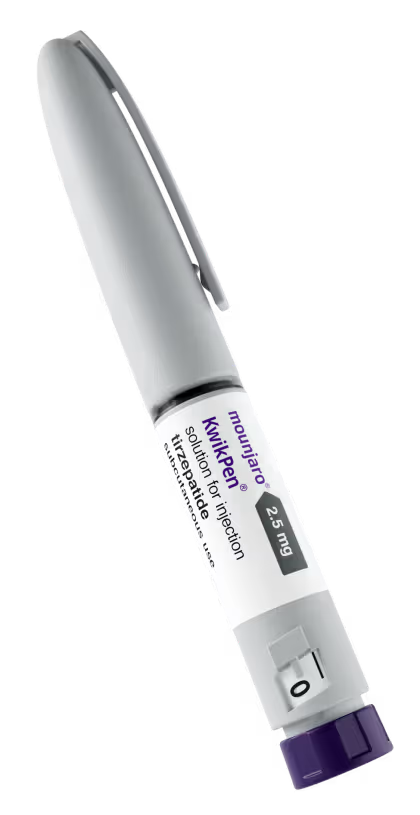
For people using GLP-1 medications like Mounjaro (tirzepatide) or Wegovy (semaglutide), appetite is already significantly reduced. Choosing nutrient-dense, low-calorie foods becomes even more important because you're eating less overall.
Watermelon fits well here. It's hydrating (dehydration is a common issue when appetite is suppressed), provides vitamins and minerals, and is easy to eat even when your appetite is low. The volume-to-calorie ratio means you can eat a reasonable amount without using up much of your reduced calorie budget.
If you're curious about whether weight loss medication might be appropriate for you, Totiva's weight loss service offers clinician-led online consultations for Mounjaro, Wegovy, and other treatments. You only pay if you're approved.
The honest bottom line#
Watermelon is a genuinely useful food for weight loss. It's low in calories, high in water, and there's real evidence that it promotes satiety. Eating it regularly as a snack or part of meals is a practical, enjoyable way to reduce your overall calorie intake without feeling like you're restricting yourself.
It won't melt belly fat, boost your metabolism dramatically, or replace a broader approach to eating well. But as one part of a balanced diet that's in a modest calorie deficit, it does exactly what it promises.
If you're finding weight loss slow despite eating well, or if your BMI suggests you'd benefit from additional support, it's worth knowing that clinical options are available. Totiva's online consultation is free, and a clinician can help assess whether a GLP-1 treatment like Wegovy or Mounjaro would suit your situation. Start a free consultation here.
Medical Information: This article is for informational purposes only and does not constitute medical advice. Always consult a qualified healthcare professional before starting, stopping, or changing any treatment.