Is Rice Good for Weight Loss?
Rice doesn't have to be off the menu when you're losing weight. Here's what the evidence says about portions, varieties, and how rice fits a calorie deficit.
Written by:

Medically reviewed by Callum Armstrong, MPharm, Independent Prescriber (IP)
Key Takeaways
Rice fits into a weight loss diet when portioned sensibly. What matters is your total daily calorie intake, not rice itself. Brown, basmati, and cooled rice have modest advantages, but any variety works as part of a balanced, calorie-controlled meal.
Rice gets an unfair reputation when it comes to weight loss. Because it's a carbohydrate-rich staple, many people assume it needs to go when they start a calorie deficit. The reality is more straightforward: rice can absolutely be part of a weight loss diet. What matters is how much you eat, what you pair it with, and how you prepare it.
This isn't a loophole or a workaround. It follows directly from how weight loss works. You lose weight by consistently consuming fewer calories than you burn. No individual food causes weight gain in isolation, and rice is no exception.
How a Calorie Deficit Actually Works#
Your body needs a certain number of calories each day to maintain its current weight. Eat consistently below that number and you'll lose weight over time. Eat above it and you'll gain weight. This principle applies regardless of whether your calories come from rice, bread, pasta, or anything else.
Rice is primarily a source of carbohydrates. Carbohydrates are not inherently fattening. They're the body's preferred fuel source, particularly for the brain and during physical activity. The idea that carbs alone drive weight gain has been largely debunked by nutrition research. What drives weight gain is excess calories, and those can come from any macronutrient.
For the many UK South Asian, East Asian, West African, and Caribbean communities for whom rice is a daily staple, this matters. Telling someone to simply cut rice out ignores both the cultural significance of the food and the practical reality that sustainable weight loss requires an approach you can actually maintain long-term.
The Calorie Content of Rice (With Actual Numbers)#
One reason rice causes confusion is that people often don't distinguish between raw and cooked weight. Rice roughly triples in weight when cooked, which means the same visual serving looks very different depending on when you weigh it.
Here's a practical guide to cooked rice calories per 100g:
- White basmati rice (cooked): approximately 130 kcal per 100g
- White long-grain rice (cooked): approximately 130 kcal per 100g
- Jasmine rice (cooked): approximately 135 kcal per 100g
- Brown rice (cooked): approximately 140 kcal per 100g
- Red rice (cooked): approximately 145 kcal per 100g
A typical UK restaurant portion of cooked rice is around 200-250g, which puts it at roughly 260-350 kcal depending on variety. A home-cooked portion for someone managing their intake might be closer to 150-180g of cooked rice, around 195-240 kcal.
For context, a typical microwave rice pouch (the 250g Tilda or Uncle Ben's variety widely sold in UK supermarkets) usually contains around 320-360 kcal for the full pouch. These are perfectly fine for a calorie-controlled diet, provided you account for them. Many people find microwaveable pouches helpful because the portion is pre-set and the calorie information is clearly labelled under the traffic light system on UK packaging.
White Rice vs Brown Rice for Weight Loss#
Brown rice retains its bran and germ layers, giving it more fibre, B vitamins, and minerals than white rice. White rice has been milled to remove those outer layers, which improves shelf life and cooking characteristics but strips away some nutritional value.
From a weight loss perspective, the practical differences are smaller than most people assume.
Brown rice has a slightly lower glycaemic index (GI around 50-55) compared to white rice (GI around 64-72, depending on variety). A lower GI means glucose enters the bloodstream more gradually, which tends to produce a more sustained energy release and may support better appetite control. The higher fibre content of brown rice also contributes to satiety.
However, the calorie difference between the two is minimal, around 10 kcal per 100g cooked. If white rice is what you enjoy and what fits your cultural cooking traditions, swapping to brown rice is not a prerequisite for weight loss. Eating a slightly smaller portion of white rice, pairing it well with protein and vegetables, and keeping your overall daily calories in check will produce weight loss regardless of which variety you choose.
Jasmine rice, popular in Thai and Southeast Asian cooking, tends to have a higher GI than basmati. Basmati, widely used in South Asian cooking, has one of the lower GIs among white rice varieties, around 50-58 when cooked, making it a reasonable choice if glycaemic response is a concern.
The Resistant Starch Effect#
Here's something the standard rice-and-weight-loss conversation rarely covers: cooling cooked rice changes its nutritional profile in a useful way.
When rice is cooked and then cooled (in the fridge for several hours or overnight), some of the digestible starch converts to resistant starch. Resistant starch behaves more like dietary fibre. It resists digestion in the small intestine, meaning the body absorbs fewer calories from it and it passes to the large intestine where it acts as a prebiotic.
Research suggests that this conversion can reduce the calorie availability of rice by a meaningful amount, and it also lowers the glycaemic impact of the meal. Reheating cooled rice preserves a significant portion of the resistant starch, so meal-prepped rice (cooked, refrigerated, then reheated) may be marginally better for weight management than freshly cooked rice eaten hot.
This also makes cold rice dishes, like rice salads or rice bowls prepared ahead, a sensible option for people tracking calories.
Important note on food safety: only reheat rice once, and make sure it's piping hot throughout. Rice can harbour Bacillus cereus spores that multiply at room temperature. Cook, cool quickly, refrigerate within an hour, and reheat thoroughly.
Cooking Methods Matter#
How you cook rice affects its calorie content more than which variety you choose. Plain boiled or steamed rice contains no added fat. Pilau rice, fried rice, or rice cooked with butter, ghee, or coconut oil can add 50-150 kcal or more per serving.
For reference:
- Plain boiled white rice (180g cooked): approximately 235 kcal
- Pilau rice with oil and spices (180g): approximately 280-320 kcal
- Egg fried rice with oil (180g): approximately 350-400 kcal
- Rice cooked with a tablespoon of ghee (180g): add approximately 120 kcal
None of these cooking methods make rice off-limits, but if you're closely monitoring your intake, it's worth accounting for what's added during cooking.
Got questions? Speak to a pharmacist on WhatsApp now
Prefer to browse first? View treatments
Portion Guidance and the Eatwell Guide#
The NHS Eatwell Guide recommends that starchy carbohydrates like rice, bread, pasta, and potatoes should make up just over a third of your overall diet. Importantly, it doesn't suggest eliminating them.
For a calorie-controlled meal, a cooked portion of around 150-200g of rice (roughly 4-6 heaped tablespoons) alongside a protein source and plenty of vegetables is a reasonable target. This gives you a satisfying base without using up a disproportionate share of your daily calorie budget.
The British Dietetic Association (BDA) advises that carbohydrate portions should be tailored to individual energy needs rather than cut dramatically, particularly for active individuals or those with higher baseline calorie requirements.
If you're using GLP-1 medications like Wegovy or Mounjaro as part of a medically supervised weight loss programme, your appetite will typically reduce naturally. Many patients on these medications find they eat smaller portions of everything, including rice, without needing to consciously restrict it. Totiva's weight loss service includes clinician-led consultations to help you understand how dietary choices fit alongside any prescribed treatment.
Three Sample Rice-Based Meals Under 500 Calories#
Practical examples help more than general advice. Here are three balanced, calorie-counted meals based on ingredients readily available in UK supermarkets:
1. Chicken and vegetable rice bowl
- 150g cooked basmati rice (195 kcal)
- 120g grilled chicken breast (140 kcal)
- Mixed stir-fry vegetables (broccoli, peppers, spinach) with light soy sauce (60 kcal)
- Total: approximately 395 kcal
2. Dhal and rice
- 150g cooked white rice (195 kcal)
- 150g red lentil dhal made with minimal oil (160 kcal)
- Handful of wilted spinach (10 kcal)
- Total: approximately 365 kcal
3. Prawn stir-fry with brown rice
- 150g cooked brown rice (210 kcal)
- 100g king prawns (70 kcal)
- Mixed vegetables with ginger and light soy sauce (80 kcal)
- Total: approximately 360 kcal
These meals demonstrate that rice-based dinners can be genuinely satisfying and well within a typical 400-600 kcal per-meal target for someone managing their weight.
What NICE and NHS Guidance Says#
NICE guideline NG238 on obesity and weight management reinforces that sustainable dietary changes, rather than elimination of specific foods, are the foundation of effective long-term weight management. This includes maintaining cultural food preferences where possible, a point the guideline explicitly acknowledges.
The NHS does not advise cutting out rice, bread, or other starchy carbohydrates for weight loss. It recommends eating them in appropriate portions as part of a balanced diet and choosing wholegrain options where practical.
For those with type 2 diabetes (particularly relevant given the higher prevalence in UK South Asian communities), the glycaemic impact of rice is worth discussing with a healthcare professional. Basmati rice and cooled/reheated rice both have lower glycaemic effects than standard white rice eaten hot, which may be helpful. But this is a nuanced conversation, not a simple instruction to avoid rice.
Ready to see if treatment could work for you?
Rice vs Other UK Carbohydrate Staples#
How does rice compare to other common carbohydrate sources on a calorie and satiety basis?
| Food (cooked/as eaten) | Calories per 100g | Approx. GI | Fibre per 100g |
|---|---|---|---|
| White basmati rice | 130 kcal | 50-58 | 0.4g |
| Brown rice | 140 kcal | 50-55 | 1.8g |
| White pasta (cooked) | 160 kcal | 45-50 | 1.8g |
| Boiled potato | 80 kcal | 78 | 1.3g |
| Wholemeal bread (per slice) | 89 kcal | 51 | 1.9g |
Boiled potato is notably lower in calories per 100g than rice, and it scores highly on the satiety index (meaning it keeps you fuller for longer relative to its calorie content). That doesn't make rice a bad choice. It means that if you're finding you're hungry after a rice-based meal, you might experiment with reducing the rice portion slightly and adding more vegetables or swapping a portion of rice for boiled potatoes.
Rice and GLP-1 Weight Loss Medications#
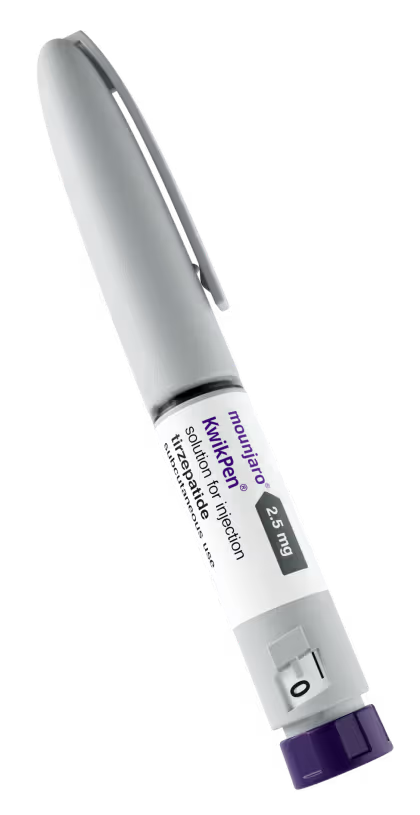
For people using GLP-1 receptor agonists like Wegovy (semaglutide) or Mounjaro (tirzepatide), rice is generally not a problem food. These medications work by reducing appetite and slowing gastric emptying, so most patients naturally eat smaller portions of everything.
Some people on GLP-1 medications find that high-carbohydrate foods eaten in larger quantities can worsen nausea, particularly in the early weeks of treatment. Eating smaller portions of rice, taken as part of a balanced meal with protein and vegetables, tends to be well tolerated.
If you're considering a clinically supervised weight loss programme and wondering how your usual diet fits in, Totiva offers pharmacist-led online consultations for GLP-1 treatments including Wegovy and Mounjaro. The consultation is free and there's no obligation to proceed. You can find out more at Totiva's weight loss service page.
The Practical Summary#
Rice is not a weight loss obstacle. It's a versatile, relatively affordable carbohydrate that fits comfortably into a calorie deficit when portioned sensibly. Choose a variety you enjoy, cook it in a way that doesn't add unnecessary calories, pair it with lean protein and vegetables, and account for it in your daily intake.
Brown rice, basmati, and cooled/reheated rice all have modest advantages from a glycaemic and fibre perspective. But the most important factor in any weight management approach is overall consistency, not whether you chose basmati over jasmine on a Tuesday.
If you're looking for additional support with weight loss, whether through dietary guidance or clinically approved medication, Totiva's pharmacist-led consultations are a straightforward starting point. You can begin a free consultation here with no upfront cost.
Medical Information: This article is for informational purposes only and does not constitute medical advice. Always consult a qualified healthcare professional before starting, stopping, or changing any treatment.