Does Red Light Therapy Work for Hair Loss?
Red light therapy shows real clinical evidence for androgenetic alopecia, but results are modest and it's not a licensed treatment in the UK. Here's what to expect.
Written and medically reviewed by:

Key Takeaways
Red light therapy (LLLT) can modestly increase hair density in androgenetic alopecia with consistent use over 4 to 6 months. It is not NHS-available or UK-licensed. Licensed medicines have stronger evidence.
Red light therapy does appear to work for some types of hair loss, but the effect is modest and it works best for male and female pattern hair loss rather than other causes. It is not a licensed medical treatment in the UK, unlike finasteride and minoxidil, and results vary considerably between individuals.
How it stimulates hair follicles#
Red light therapy for hair loss is also called low-level laser therapy (LLLT) or photobiomodulation. Devices emit red or near-infrared light at wavelengths of roughly 630–680 nm, applied directly to the scalp. The light is absorbed by mitochondria (the energy-producing structures inside cells) in hair follicle cells. This is thought to increase production of ATP, the cell's energy molecule, which may help shift dormant follicles from the resting phase (telogen) back into the active growth phase (anagen) and improve local blood flow.
These mechanisms are plausible and supported by laboratory work, but they are still being studied. The effect is not as well understood as the mechanisms behind finasteride or minoxidil.
What the clinical trials actually found#
The evidence is encouraging but not conclusive. A well-designed 2013 randomised controlled trial found that men using a red-light laser helmet every other day for 16 weeks saw roughly a 35–39% increase in hair count compared to a placebo group that saw no meaningful change. A separate 26-week trial using the HairMax Laser Comb (emitting 650 nm light) in 110 participants found significantly greater hair density gains versus a sham device.
A 2025 systematic review and meta-analysis found that combining LLLT with minoxidil produced better outcomes than minoxidil alone in people with androgenetic alopecia, which suggests LLLT may be a useful add-on rather than a standalone replacement.
Most trials are relatively short (16–26 weeks), involve small numbers of participants, and are sometimes funded by device manufacturers. Head-to-head comparisons with finasteride or minoxidil are limited. On current evidence, licensed medicines still have a stronger and more consistent evidence base.
Which types of hair loss respond, and which do not#
LLLT has the most evidence for androgenetic alopecia (male and female pattern hair loss). There is weaker and more mixed evidence for telogen effluvium (diffuse shedding triggered by stress, illness, or nutritional deficiency). It is unlikely to help with scarring alopecias, where the follicle itself has been destroyed, or with alopecia totalis or universalis.
If your hair loss has an underlying cause such as a thyroid problem, iron deficiency, or an autoimmune condition, treating that cause is more important than adding a light device.
Realistic timelines#
Most people using LLLT consistently see no visible change in the first four to eight weeks. If the treatment is going to work for you, early signs (reduced shedding, slight thickening) typically appear around months two to three. More noticeable density improvements, if they occur, usually take four to six months of regular use. Results seen at 12 months appear to be the ceiling for most trials.
Stopping treatment reverses any benefit over time, similar to stopping minoxidil. Hair loss is likely to return toward baseline within months of discontinuing.
Safety and UK regulation#
LLLT is generally well tolerated. The most commonly reported side effects are mild scalp irritation or transient itching. Serious adverse events are rare. It is not suitable if you have an active scalp infection or a photosensitive skin condition. If you take medicines that can cause photosensitivity — such as certain antibiotics or antifungals — speak to a pharmacist or prescriber before use, as this varies by specific medicine.
In the UK, LLLT devices are classified as medical devices and must carry UKCA or CE marking to be legally sold here. CE marking is currently still accepted in Great Britain under transitional arrangements; however, it is worth checking that any device you buy is appropriately marked and has been registered with the MHRA. The MHRA has not issued specific guidance endorsing LLLT for hair loss, and NICE has no current guidance on photobiomodulation for androgenetic alopecia. It is not available on the NHS for hair loss.
Got questions? Speak to a pharmacist on WhatsApp now
Prefer to browse first? View treatments
Combining LLLT with licensed treatments#
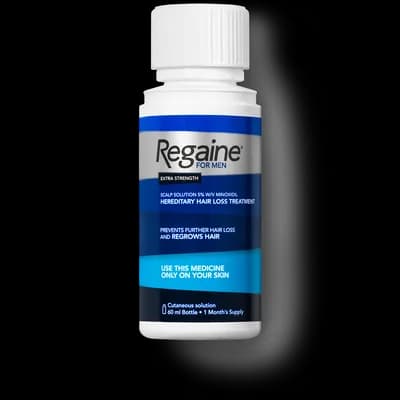
LLLT can be used alongside finasteride or minoxidil. There is no known interaction, and the combination may offer slightly better outcomes than either approach alone, based on the 2025 meta-analysis. If you are considering licensed treatments for male pattern hair loss, the finasteride and minoxidil comparison guide covers how the two medicines differ in mechanism and results. For a realistic sense of how long minoxidil takes to show results, the minoxidil timeline guide is a useful reference.
Medical Information: This article is for informational purposes only and does not constitute medical advice. Always consult a qualified healthcare professional before starting, stopping, or changing any treatment.