

Is Minoxidil Toxic to Cats? Yes, Even Small Exposures Count
Minoxidil is toxic to cats and can harm dogs too. Learn how pets get exposed, which signs to watch for, and what UK owners should do in the first hour.


Key Takeaways
Minoxidil is toxic to cats, and even small amounts can make them seriously ill. Keep it away from pets, let your scalp dry before contact, and call a vet straight away if you suspect exposure.
Yes, minoxidil is toxic to cats. Small amounts can make a cat seriously ill, and cats seem more at risk than dogs. You can still use minoxidil if you have a cat, but you need a strict routine so your pet never licks it, touches it or swallows it.
Why a hair product can harm a cat#
Minoxidil was first made as a blood pressure tablet. It relaxes the walls of blood vessels and makes them wider. On the scalp, that seems to help hair follicles. In a small animal, the same effect can drop blood pressure, speed up the heart and strain it.
In cats, vets have also reported fluid building up around the lungs (called pleural effusion). That makes breathing hard. Nobody knows exactly why cats are so sensitive.
The evidence comes mostly from case reports and poison-centre records, not controlled trials. That is normal for pet poisonings, but it means we have no safe dose to quote.
How pets get exposed#
Most cases are accidents, not pets eating the bottle. Cats groom constantly, so anything on their fur ends up in their mouth.
- Licking your scalp, forehead or hands after you apply it
- Sleeping on a pillowcase or towel that still has residue
- Being splashed or sprayed while you apply it
- Rubbing against you when you cuddle or sit on your lap
- Being groomed by another pet that has been in contact with it
- Raiding a bin for a used tissue, bottle or applicator
Cuddling counts too. In a household with several people, a partner or child who touches your hair or pillow can pass it on.
How serious are the numbers?#
A 2021 review of 211 pet exposures from a US poison centre found that 87 animals became unwell, 62 of them cats. Among those cats, almost 6 in 10 had a moderate or major illness, and 8 died. Many of these cats had only small exposures.
A 2025 review of 68 cats and 26 dogs found that about 15 in 100 cats died. None of the dogs did. Dogs can still be poisoned, so treat both species seriously.
Free 2-minute hair loss assessment
Tell us about your hair loss and a pharmacist will recommend the treatment most likely to work for you.
A rough risk ladder#
| Exposure | Concern level | What to do |
|---|---|---|
| Cat licked a dry pillowcase or your scalp | Moderate to high | Call a vet the same day |
| Cat was splashed or sprayed, or licked wet liquid | High | Call a vet now |
| Cat chewed an applicator, bottle or damp tissue | High | Call a vet now |
| Any pet swallowed a tablet | High | Call a vet now |
| Dog licked a small amount | Moderate | Call a vet for advice |
There is no tested amount below which a cat is safe. If you are unsure, treat it as urgent. Phoning for advice costs far less than a collapsed cat.
Signs and timing#
Signs usually appear within hours, and reports describe them from about 1 to 48 hours after exposure. A pet that looks fine at first can still become ill, so watch it closely for at least 2 days.
Look out for:
- Tiredness or hiding
- Fast or laboured breathing, or breathing with the mouth open
- Vomiting or going off food
- Weakness, wobbling or collapse
- Pale or bluish gums
Breathing trouble is an emergency. Go to the vet straight away.
What to do in the first hour#
- Stop further contact. Move the pet away from the source. Wipe its fur gently with a damp cloth if it has liquid on it, wearing gloves. Do not bathe a cat that is struggling to breathe.
- Phone your own vet, or the nearest out-of-hours emergency vet. Do this even if your pet seems well. Most UK practices have an out-of-hours arrangement.
- Do not make your pet vomit unless a vet tells you to.
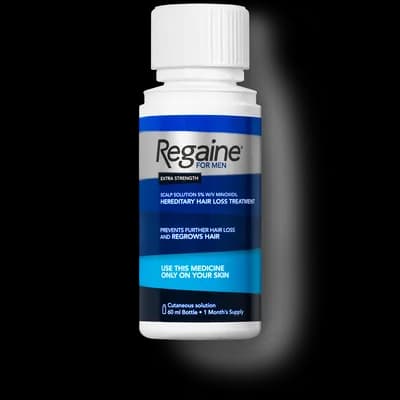
- Have the details ready. Know the product name (for example Regaine or Regaine Foam), the strength, roughly how much was involved, and when it happened. Bring the packaging.
- Expect questions about decontamination. Vets may give activated charcoal, put the pet on a drip, and check heart rate, blood pressure and heart rhythm. Some pets need a chest scan or a stay in hospital.
UK vets can phone the Veterinary Poisons Information Service (VPIS) for specialist advice. Owners can also call the Animal PoisonLine, which is run by VPIS and charges a fee. Emergency fees apply out of hours, and a hospital stay can cost hundreds of pounds. Tell your insurer, and check whether your policy covers accidental poisoning.
If a pet has a bad reaction, you can report it to the Veterinary Medicines Directorate. Reactions in people go to the MHRA Yellow Card scheme.
Hair loss treatments we prescribe
The gold-standard hair loss combo
A pet-safe routine#
- Apply in a room your pet cannot enter, such as the bathroom, with the door shut.
- Wear gloves, or wash your hands thoroughly straight afterwards. Wash under the nails too.
- Let your scalp dry fully before touching your pet, lying on furniture or going to bed. Liquid and foam can take a while to dry, so check by touch rather than guessing.
- Wash pillowcases and towels often. Keep your pet off your bed and pillow, especially if your hair is still damp.
- Store the bottle high up in a closed cupboard, not on a bathroom shelf or bedside table.
- Bin waste properly. Put empty bottles, applicators and tissues in a sealed bag in a bin with a lid. Keep pets away from bin bags.
- Wipe up splashes on furniture and floors straight away.
Tell everyone in your home. A partner or child who applies the treatment, or touches your scalp, needs the same routine.
Liquid, foam and tablets#
Liquid and foam both leave residue on skin, hair and fabric. Foam is less likely to run, but neither is pet-proof. The routine above applies to both.
Oral minoxidil is a different risk. It is used off-label for hair loss and is prescription-only in the UK. Once you have swallowed it, there is little residue for a pet to find. The danger is a pet eating a tablet from a bedside table, bag or the floor. Tablets are small, and splitting them can drop fragments. Split them over a tray or sink, never over a carpet, and check the floor afterwards. If any tablet is eaten, treat it as an emergency.
The law expects medicines to be kept out of reach of children, and the same sense applies to pets. Ask your pharmacist about safe storage when you collect your treatment.
Other options if you do not want the risk#
Finasteride is a once-daily tablet that works differently from minoxidil. It lowers DHT, the hormone behind male pattern hair loss. It has no skin residue, so there is little chance a pet will meet it by licking you. I know of no pet-poisoning pattern like the one with minoxidil, but keep the packet out of reach like any medicine, and ask your vet if a pet swallows a tablet. Our guide to finasteride versus minoxidil compares the two.
Low-level laser devices and microneedling have some evidence of benefit, but it is weaker, and results vary. Microneedling is often combined with minoxidil, which brings the same pet precautions.
If you want to talk through treatment options with a UK clinician, Totiva's hair loss service is available for men. Whatever you choose, tell the clinician you have pets at home.
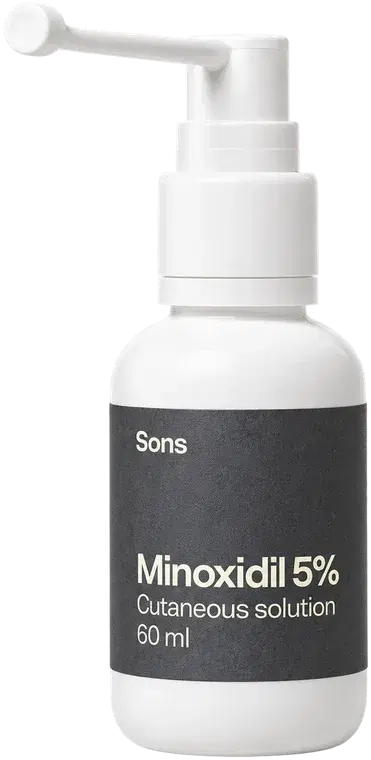
Is Minoxidil 5% right for you?
From£19.99
A short online consultation is all it takes. A pharmacist reviews your answers, and you only pay if you're approved.
- GPhC-registered pharmacists
- Free online consultation
- Discreet, tracked delivery
Frequently asked questions
- 1
Tater KC et al. (2021). Topical minoxidil exposures and toxicoses in dogs and cats: 211 cases (2001-2019). Journal of the American Animal Hospital Association
- 2
McMullen E et al. (2025). Minoxidil toxicosis in cats and dogs: a scoping review and call to action. Journal of the American Academy of Dermatology
- 3
Song JH et al. (2022). Successful management of suspected minoxidil toxicosis in a cat following accidental dermal exposure. Veterinarni Medicina
View source - 4
Ahn W et al. (2024). A case report of successful treatment of minoxidil toxicosis using hemodialysis in a cat. Veterinary Sciences
- 5
Veterinary Poisons Information Service (VPIS) (2025). VPIS: poisons advice for veterinary professionals and the Animal PoisonLine. VPIS
Medical Information: This article is for informational purposes only and does not constitute medical advice. Always consult a qualified healthcare professional before starting, stopping, or changing any treatment.


