Is 20 Minutes of Exercise a Day Enough?
Short on time? A UK pharmacist explains whether 20 minutes of daily exercise genuinely counts, what the guidelines say, and how to make it work.
Written by:

Medically reviewed by Callum Armstrong, MPharm, Independent Prescriber (IP)
Key Takeaways
Yes. Twenty minutes of moderate exercise daily gets you close to the UK CMO's 150-minute weekly guideline and delivers real cardiovascular, metabolic, and mood benefits. Add resistance training if weight loss is your goal, to protect muscle.
Yes, 20 minutes of exercise a day is enough to produce real health benefits, provided the intensity is at least moderate. It is not the ideal target for everyone, but for most time-poor adults it is a solid, evidence-backed starting point.
What the UK guidelines actually say#
The UK Chief Medical Officers (CMO) recommend 150 minutes of moderate-intensity activity per week, or 75 minutes of vigorous activity. That works out to roughly 21 minutes a day if you move every day, or about 25 minutes across six days. A daily 20-minute session gets you very close to the guideline target. Even falling slightly short matters less than you might think: research consistently shows a dose-response relationship between physical activity and health outcomes, meaning any regular movement reduces risk, and more movement reduces it further.
The CMO guidelines also specify that all activity counts, including brisk walking, cycling, and climbing stairs. You do not need a gym or specialist equipment.
What counts as moderate intensity#
Moderate intensity means your heart rate rises and you feel slightly breathless, but you can still hold a conversation in short sentences. This is sometimes called the talk test. On a 1-to-10 effort scale, it sits around 5 or 6.
Practical examples:
- Brisk walking (around 100 steps per minute)
- Cycling on flat ground at a comfortable pace
- Swimming at a steady pace
- Dancing
- A light jog
If you want to cut your exercise time further, vigorous intensity (breathless, can only manage a few words at a time) roughly halves the time needed to hit the same health benefit.
What 20 minutes actually does for your body#
Cardiovascular fitness improves with consistent moderate exercise at this duration. Your heart pumps more efficiently, resting blood pressure tends to fall, and aerobic capacity (VO2 max) increases over weeks of regular activity.
Blood sugar regulation also improves. Even a single 20-minute session increases insulin sensitivity for several hours afterwards. Consistent training compounds this effect over time.
Mood lifts reliably after 20 minutes of aerobic exercise. Movement triggers the release of endorphins and reduces cortisol, the body's main stress hormone. The effect is detectable after a single session, not just after weeks of training.
The muscle loss question#
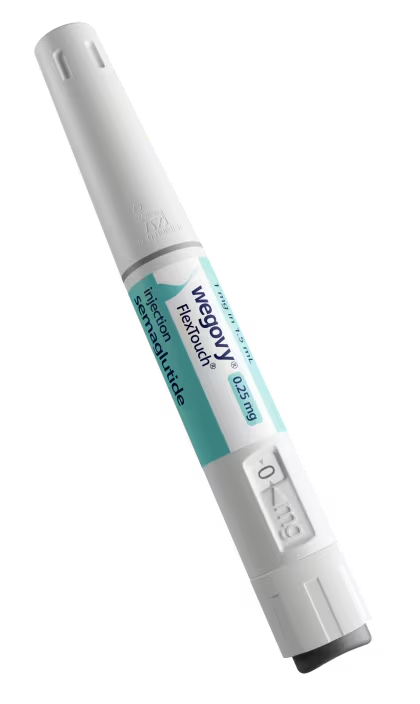
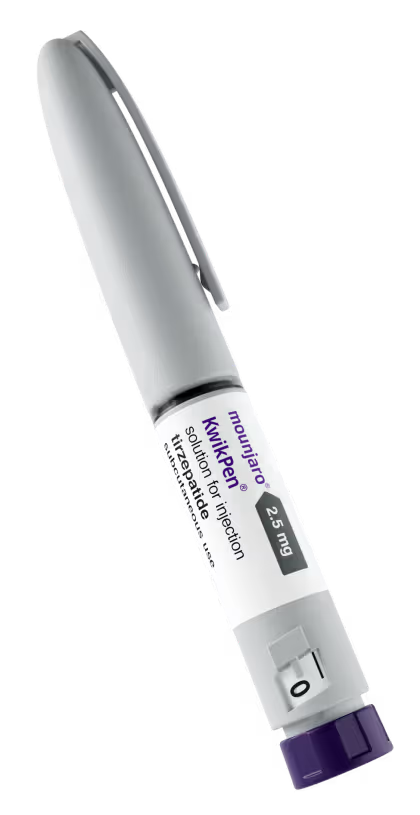
Cardio alone does not protect muscle. This is especially relevant for anyone losing weight rapidly, whether through diet or with weight-loss medications such as Wegovy (semaglutide, available as an injection or oral tablet), Mounjaro (tirzepatide, a dual GIP and GLP-1 receptor agonist), or Foundayo (oral semaglutide). These medications can cause significant calorie restriction, and without resistance training, some of that weight loss will come from muscle rather than fat.
A 20-minute resistance session, even using bodyweight exercises at home, can meaningfully reduce that muscle loss. A basic no-equipment session might look like this:
- 3 minutes: marching on the spot or light movement to warm up
- 14 minutes: four rounds of press-ups (30 seconds), squats (30 seconds), lunges (30 seconds), then 30 seconds of rest
- 3 minutes: slow walking and stretching to cool down
This fits in a living room, costs nothing, and reaches moderate to vigorous intensity for most adults.
Five days versus seven#
Five 20-minute sessions a week gives you 100 minutes of moderate activity. That is below the 150-minute CMO target, but it is well within the range where measurable cardiovascular and metabolic benefits occur. The evidence supports the idea that some regular exercise is substantially better than none, and that even activity at below-guideline levels reduces the risk of cardiovascular disease, type 2 diabetes, and premature death compared with being sedentary. Framing 100 minutes as equivalent to meeting the full guideline would be inaccurate; framing it as clinically meaningless would be equally wrong.
If you can work up to seven days, or add one longer session at the weekend, you reach or exceed the CMO target.
Got questions? Speak to a pharmacist on WhatsApp now
Prefer to browse first? View treatments
Free UK tools worth knowing about#
The NHS Active 10 app tracks brisk walking and nudges you towards 10 minutes of brisk movement at a time, which can be stacked across a day. NHS Couch to 5K is a structured nine-week programme built around 20-to-30 minute sessions, widely used across the UK and available as a free app. Both are good entry points for anyone starting from low fitness.
If you are on a weight-loss medication and want to understand how food choices fit alongside exercise, the UK Weight Loss Diet Plan on the Totiva blog covers evidence-based meal planning in practical detail.
Medical Information: This article is for informational purposes only and does not constitute medical advice. Always consult a qualified healthcare professional before starting, stopping, or changing any treatment.