
Redensyl vs Minoxidil: One Is a Medicine, the Other a Cosmetic Ingredient
Minoxidil is a licensed hair loss medicine with decades of trial data. Redensyl is a cosmetic ingredient with small studies. Here is how they compare in the UK.


Key Takeaways
Minoxidil is a licensed medicine with decades of trial data. Redensyl is a cosmetic ingredient with small, mostly manufacturer-linked studies. For male pattern hair loss, choose minoxidil first.
Minoxidil is the better choice if you have male pattern hair loss and want the option with the strongest proof. It is a licensed medicine backed by many randomised trials. Redensyl is a cosmetic ingredient in 'natural' serums. Its evidence is limited, small and mostly linked to the manufacturer. Some people use Redensyl as a gentle extra, but it should not replace minoxidil if you want the best-studied treatment.
The two side by side#
| Minoxidil | Redensyl | |
|---|---|---|
| What it is | Medicine (active ingredient) | Cosmetic ingredient made by Givaudan |
| UK status | Licensed by the MHRA, sold in pharmacies | Falls under UK cosmetics rules, no medicine licence |
| What is in it | Minoxidil 2% or 5% | Plant-derived compounds (DHQG, EGCG2) and the amino acid glycine |
| Evidence | Many randomised trials over several decades | Lab work, small studies, often manufacturer-linked or testing blends |
| Trial length | 16 to 48 weeks in major trials | About 84 to 90 days in the studies quoted |
| Time to judge | 4 to 6 months | Studies suggest 3 months, brands say 3 to 6 |
| Main side effects | Scalp irritation, extra facial hair, rare heart symptoms | Little data. Irritation or allergy to the serum is possible |
| Can it claim to treat hair loss? | Yes | No, not legally |
The last row matters. Under UK cosmetics rules, a serum cannot claim to treat or cure hair loss, because that is a medicinal claim. Phrases like 'clinically proven to regrow hair' on a cosmetic can break advertising rules set by the ASA. If a product says it, be cautious.
What the Redensyl research actually looks like#
Redensyl is described as a plant-based blend that wakes up stem cells in the hair follicle. Most of the early work was lab-based, and much of it came from the company that sells the ingredient.
There are a few small human studies. One compared 5% minoxidil with a three-ingredient mix (Redensyl, Capixyl and Procapil) in men with androgenetic alopecia. Another was a small randomised, single-blinded trial of a topical active blend against a vehicle (a dummy serum). Both tested blends, not Redensyl alone, so you cannot tell which ingredient did what.
We found no large, independent trial that compares Redensyl alone with minoxidil. Claims of 'comparable results' rest on small studies. Minoxidil has been tested in far larger trials, including 2% against 5% in men.
Free 2-minute hair loss assessment
Tell us about your hair loss and a pharmacist will recommend the treatment most likely to work for you.
Why a serum 'with Redensyl' may not match the studies#
Redensyl is an ingredient, not a product. Manufacturers usually recommend a low percentage of it in the finished formula, often quoted as a small single-digit figure. Many serums do not state the amount at all.
So a bottle listing Redensyl may contain far less than the studied formula. It may also lack the other ingredients used alongside it. Check the ingredient list, because ingredients are listed in order of amount. If Redensyl (or its chemical names) sits near the end, the dose is probably small.
Before-and-after photos need the same caution. Studies often report 'density' as hairs per square centimetre, which is a measured count. Photos can be changed by lighting, hair length and styling. Ask whether the photos come from a trial or from the seller.
How minoxidil works in practice#
Minoxidil is a lotion or foam you put on the scalp. It helps thinning hairs grow thicker and stay in the growth phase longer. It works best for male pattern hair loss, especially at the crown, and in early or moderate thinning. The same approach is covered in our guide to how long minoxidil takes to work.
- Strength: 5% is the usual strength for men. Women's products in the UK include a 2% solution and a 5% foam, each with its own licence and directions, so follow the pack and ask your GP or pharmacist which suits you.
- Dose: For a men's solution, 1ml (about 20 drops) goes on a clean, dry scalp twice a day. Foam and women's products have their own directions, and how often you apply them depends on the product and strength, so always follow the instructions on the pack.
- Age: Topical minoxidil is licensed for adults aged 18 to 65.
- Early shedding: Some people shed more in the first 2 to 4 months as older hairs drop out. This usually settles.
- Judging results: Give it at least 4 to 6 months of daily use. Take a photo under the same light every month.
- Missed dose: Carry on with the next dose as normal. Do not double up.
- Stopping: The benefit fades. Hair gained usually thins again within months, so it is a long-term treatment. Research on people who quit shows many stop because of slow results or the routine.
Oral minoxidil is a different matter. It is an old blood pressure tablet used at low doses for hair loss, which is off-label in the UK. It needs a prescriber, and the risks differ from the lotion, including fluid retention and effects on the heart. Do not buy it from an unregulated seller.
If you want the choice between foam and solution, see our guide to minoxidil foam vs liquid.
Safety and side effects on each#
Minoxidil lotion and foam. The most common problem is a dry, itchy or red scalp. Solutions contain propylene glycol, which causes irritation in some people, and foam may suit them better. Hair can grow on the face or neck if the product spreads there. Rarely, it gets into the bloodstream and causes a fast heartbeat, dizziness, chest pain or swollen ankles. Stop and get medical help if that happens. More detail is in our guide to minoxidil side effects.
Practical cautions when using minoxidil:
- Only apply it to a healthy scalp. Do not use it on broken, inflamed or sore skin.
- Wash your hands thoroughly after each application.
- Avoid your eyes. If the product gets into them, rinse well with water.
- If your scalp becomes severely irritated, stop using it and seek medical advice.
- Do not use it if you are under 18 or over 65, as it is not licensed for those ages.
Do not use minoxidil if you are pregnant or breastfeeding. Keep it away from cats, as even small exposures can be toxic (see our guide on minoxidil and cats).
Redensyl serums. There is little published safety data, so 'natural' should not be read as 'safe'. The ingredient itself seems well tolerated in the small studies. The more likely problem is another ingredient in the serum, such as fragrance or alcohol. Patch test a new serum on your inner arm first.
Hair loss treatments we prescribe
The gold-standard hair loss combo
Can you use both?#
There is no safety trial of the two together. Layering a Redensyl serum on top of minoxidil is unlikely to be harmful for most people. But you cannot be sure it adds anything, and extra products can irritate your scalp. If you want to try, add one product at a time so you can tell what causes a reaction.
Finasteride is a different kind of treatment. It is a prescription-only tablet that lowers DHT, the hormone behind male pattern hair loss. The MHRA warns about mood changes and sexual side effects, and finasteride comes with a patient card. Many men use it with minoxidil. Our guide on finasteride vs minoxidil explains how they differ.
Which suits which person#
You are a man with a receding hairline or thinning crown that has crept on over years. Minoxidil 5% is the sensible first choice. It is licensed for exactly this pattern.
You are a man who wants the strongest approach. Ask a pharmacist or prescriber about adding finasteride, and weigh up the MHRA warnings first.
You are sceptical of medicines and want a cosmetic extra. A Redensyl serum is low risk if you choose one with a clear ingredient list and accept that the proof is thin. Set a 3 to 4 month limit and track your photos.
You have mild thinning and have not tried anything. Do not spend months on a serum while hair is being lost. Early treatment keeps more hair.
You are a woman with thinning. See your GP first. Causes include low iron, thyroid problems, PCOS, menopause or shedding after pregnancy. Totiva's hair loss service is for men only.
Your hair loss is sudden, patchy, painful, scarring, or you have a bald area with sore or red skin. This is not typical pattern baldness. See your GP, since neither a serum nor minoxidil will fix it. The NHS does not usually fund treatment for male pattern baldness, but your GP can arrange blood tests when another cause is suspected.
What minoxidil costs#
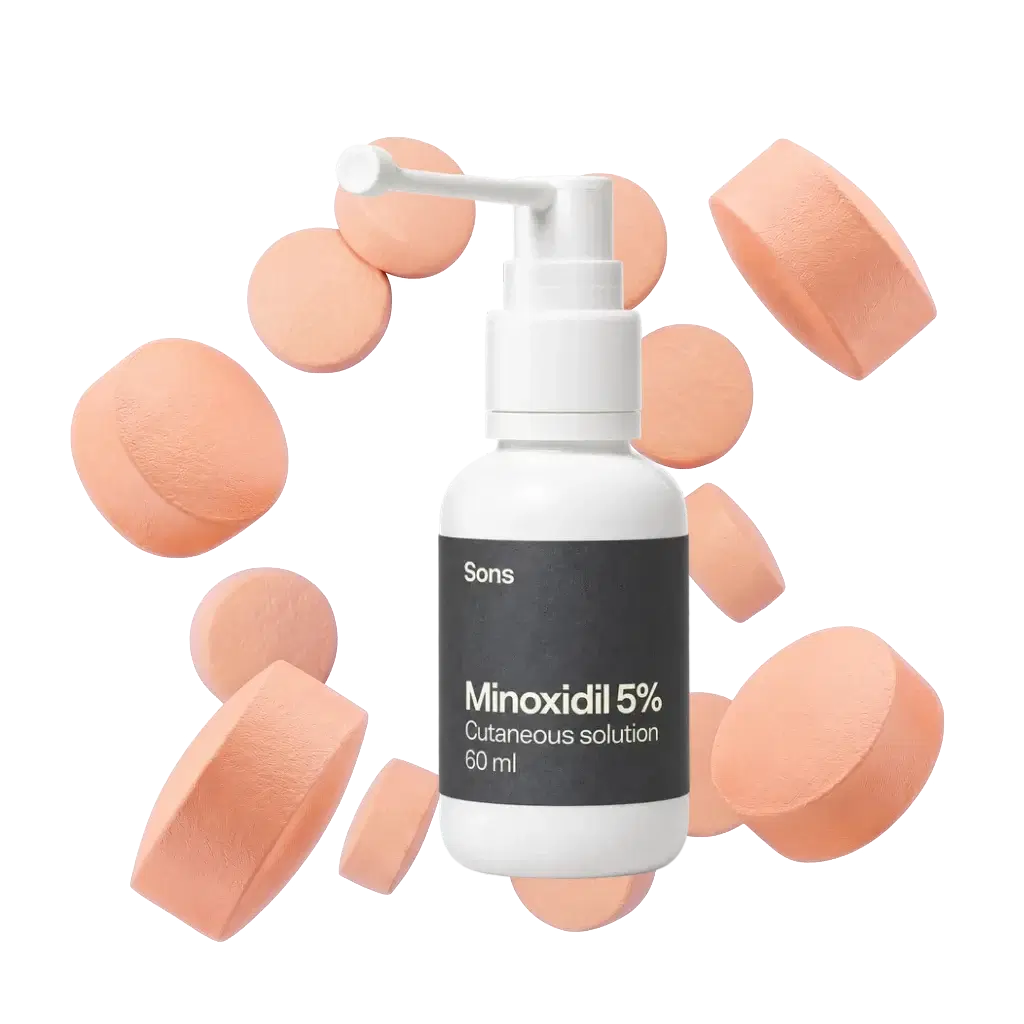
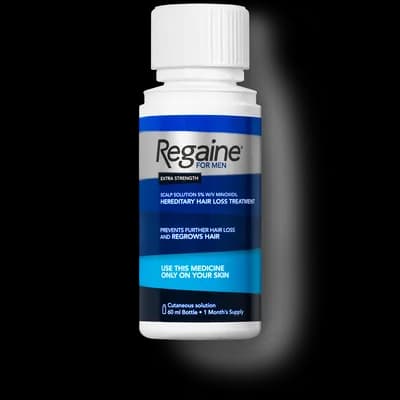
Prices vary between pharmacies. At Totiva, Minoxidil 5% solution (60ml) is £19.99 and the 180ml bottle is £49.99. Regaine solution is £33.60 for 60ml. The 180ml Regaine bottle is £59.99. Check that any online seller shows a GPhC registration number and logo before you buy.
For more on options, see where to buy minoxidil in the UK.
If you are a man with pattern hair loss and want to know whether minoxidil suits you, you can start a free hair loss consultation and pay only once treatment is approved.
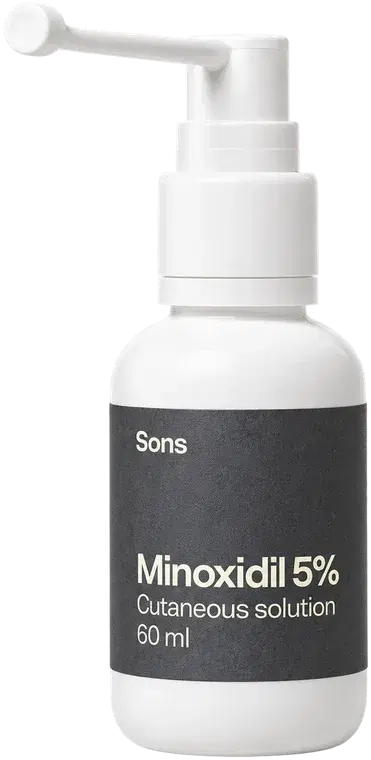
Is Minoxidil 5% right for you?
From£19.99
A short online consultation is all it takes. A pharmacist reviews your answers, and you only pay if you're approved.
- GPhC-registered pharmacists
- Free online consultation
- Discreet, tracked delivery
Frequently asked questions
- 1
NICE CKS (2024). Alopecia - androgenetic. NICE Clinical Knowledge Summaries
- 2
NHS (2023). Hair loss. NHS website
View source - 3
Messenger AG, Rundegren J (2004). Minoxidil: mechanisms of action on hair growth. British Journal of Dermatology
View source - 4
Suchonwanit P et al. (2019). Minoxidil and its use in hair disorders: a review. Drug Design, Development and Therapy
View source - 5
Gupta AK et al. (2022). Minoxidil: a comprehensive review. Journal of Dermatological Treatment
View source - 6
Karaca N et al. (2019). A Comparative Study between Topical 5% Minoxidil and Topical 'Redensyl, Capixyl, and Procapil' Combination in Men with Androgenetic Alopecia. Hilaris open-access journal
View source - 7
Katoulis AC et al. (2020). A randomized, single-blinded, vehicle-controlled study of a topical active blend in the treatment of androgenetic alopecia. Dermatologic Therapy
View source - 8
Shadi Z et al. (2023). Compliance to Topical Minoxidil and Reasons for Discontinuation among Patients with Androgenetic Alopecia. PubMed Central
View source
Medical Information: This article is for informational purposes only and does not constitute medical advice. Always consult a qualified healthcare professional before starting, stopping, or changing any treatment.

